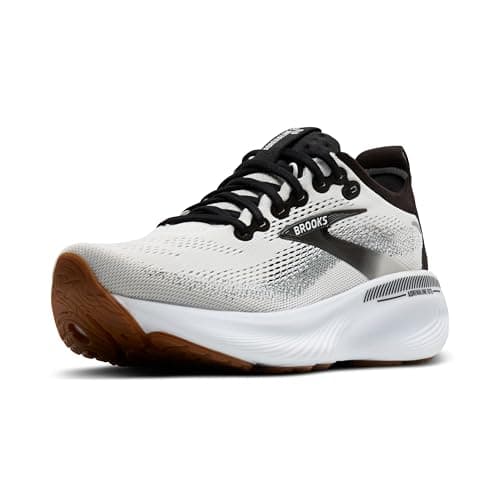
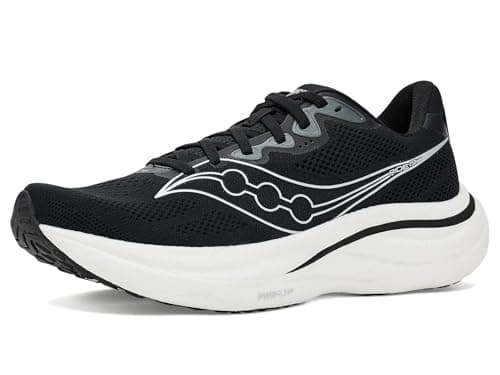
Saucony vs Brooks: Which Brand's Running Shoes Should You Buy?
Two of the oldest names in running, and the difference between them is consistent enough to decide on. Saucony builds lighter and lower; Brooks builds steadier and in more widths. Here is each range matched job for job on published numbers.
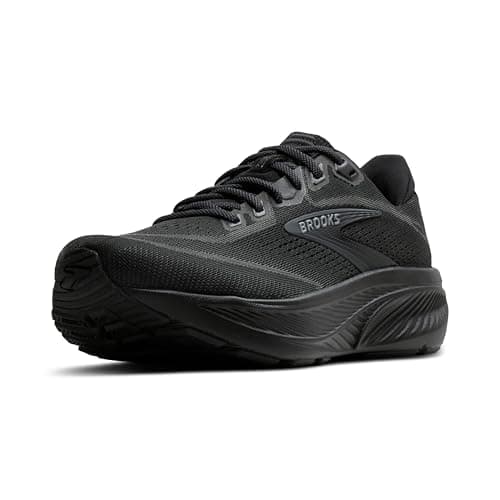
Heavier at 9.99 oz lab-measured and a 10 mm listed drop, but offered in four widths from Narrow to Extra Wide. Good to know: not the shoe for tempo work.
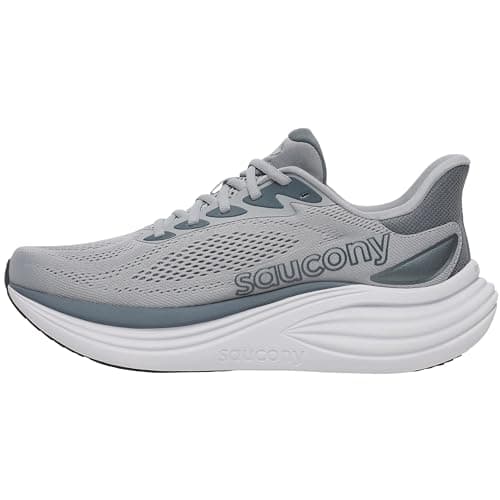
Saucony lists 8.8 oz men's on a 43 / 33 mm platform — unusually light for that much foam. Good to know: the 10 mm drop is the highest in Saucony's road range.
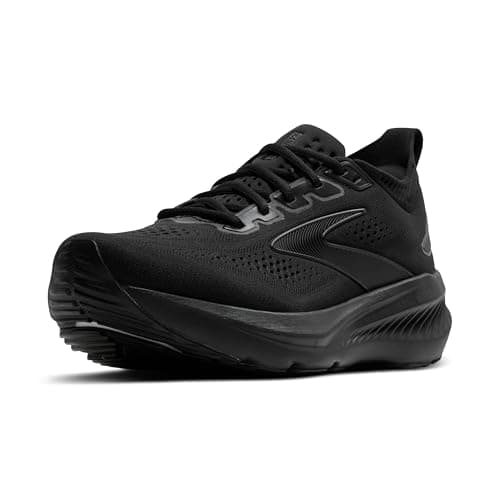
A softer, dual-density DNA Tuned midsole in standard, wide and extra wide. Good to know: 10.7 oz in RunRepeat's lab makes it the heaviest shoe on this page.
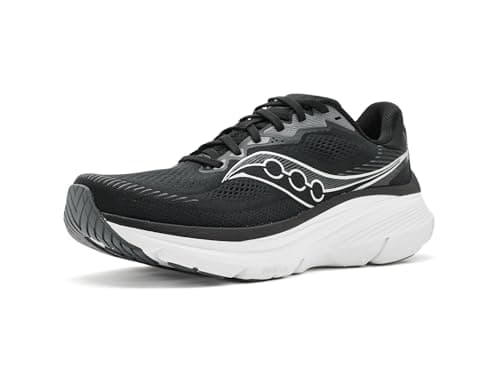
CENTERPATH sidewalls on a 6 mm drop, in Medium, Wide and Extra Wide for both genders. Good to know: 10.3 oz, so it is a steady shoe rather than a quick one.
GuideRails on a 10 mm drop, with four widths in men's and four in women's — the broadest size run here. Good to know: 10.6 oz is the heaviest stability option of the two.
#ad · Price as of November 13, 2026 · Affiliate disclosure for the link to Brooks Adrenaline GTS 25
The short answer
Buy Saucony if you want a lighter shoe with a lower heel-to-toe drop, and Brooks if you need a width other than medium or you want the steadier ride. That is not a personality read — it is what the published figures say, consistently, across all three of the roles both brands sell into.
Role for role, Saucony's shoe is the lighter one: 9.09 oz for the Ride 19 against 9.99 oz for the Ghost 18, and 8.8 oz for the Triumph 24 against 10.7 oz for the Glycerin 23. Saucony also sits lower at the heel — a 6 mm drop on the Guide 19 against 10 mm on the Adrenaline GTS 25. Brooks answers with fit: the Ghost 18 and Adrenaline GTS 25 each come in four widths, and the Adrenaline is sold in four widths in women's too.
The ranges, matched by job
Both companies are old enough that the ranges have settled into the same three slots. Saucony was founded in 1898 in Kutztown, Pennsylvania and has been part of Wolverine World Wide since 2012. Brooks Sports was founded in 1914 in Philadelphia, is a subsidiary of Berkshire Hathaway, and cut its product line in 2001 to focus the brand solely on running — which is why the Brooks range has fewer odd corners in it than most.
Everyday trainer. Saucony Ride 19 against Brooks Ghost 18. The first shoe either brand will sell you and the one most runners should start with.
Max cushion. Saucony Triumph 24 against Brooks Glycerin 23. More foam, for long runs and easy days.
Stability. Saucony Guide 19 against Brooks Adrenaline GTS 25. Both guide the foot with geometry and sidewalls rather than the old firm medial post.
If you are not sure which of those three you want, start with running shoe types explained — the category decides far more about how a shoe feels than the logo does.
Saucony runs lighter and lower
This is the clearest pattern in the two ranges, and it holds in every matched pair:
Daily trainer. RTINGS weighed the Ride 19 at 9.09 oz and the Ghost 18 at 9.99 oz in men's US 9 — nearly a full ounce, on the same scale.
Max cushion. Saucony lists the Triumph 24 at 8.8 oz men's on a 43 / 33 mm stack; RunRepeat measured the Glycerin 23 at 10.7 oz on a shorter 37.2 / 29.0 mm platform. Saucony is giving you more foam for less weight, which is the single most striking number on this page.
Drop. Saucony's road range sits lower: 8 mm listed on the Ride 19, 6 mm on the Guide 19, 4 mm on the Kinvara 16. Brooks is a 10 mm house at the core — 10 mm listed on both the Ghost 18 and the Adrenaline GTS 25, 8 mm on the Glycerin 23.
Drop matters more than most runners expect, because it changes where load lands. A higher drop takes some demand off the calf and Achilles and puts more through the knee; a lower drop does the reverse. If you are coming off a calf or Achilles problem, the Brooks geometry is the gentler change — see heel drop and stack height explained for what the numbers actually do, and best running shoes for Achilles tendonitis if that is the reason you are reading this.
Brooks fits more feet
Brooks sells the broadest size run of any major running brand, and it is the strongest single argument for buying one. RTINGS lists the Ghost 18 in Narrow, Medium, Wide and Extra Wide. The Adrenaline GTS 25 goes further: Brooks publishes Narrow (1B), Medium (1D), Wide (2E) and Extra Wide (4E) for men, and Narrow (2A), Medium (1B), Wide (1D) and Extra Wide (2E) for women — a genuine four-width women's run, which is rare.
Saucony is narrower in both senses. The Ride 19 comes in Regular and Wide for men and women; Saucony lists the Triumph 24 in Regular and Wide men's. The Guide 19 is the exception and a good one — Running Warehouse lists it in Medium, Wide and Extra Wide in both men's and women's.
Every figure below is the maker's published number or a named lab's measurement, and each links to its source. Where a brand figure and a lab figure disagree, both are shown.
The stability pair. Figures as published by the maker or the named reviewer; each value links to its source.
Daily trainer: Ride 19 vs Ghost 18
The matchup most readers are actually here for. The Ride 19 is the lighter, lower, slightly more versatile shoe — 9.09 oz, an 8 mm listed drop, a reformulated PWRRUN+ midsole that Saucony pitches for easy miles, long steady runs and faster training alike. The Ghost 18 is the steadier one: 9.99 oz, a 10 mm listed drop, nitrogen-infused DNA LOFT v3, and four widths.
Pick the Ride if you want one shoe that can pick up the pace, or if a 10 mm drop has ever felt like too much shoe under your heel. Pick the Ghost if you want the most forgiving, hardest-to-get-wrong daily trainer in running, or if you need a width. For a new runner that second argument usually wins — see best running shoes for beginners.
Max cushion: Triumph 24 vs Glycerin 23
The widest gap in the two ranges. Saucony lists the Triumph 24 at 8.8 oz men's and 7.6 oz women's on a 43 / 33 mm stack, built on incrediLUX, and names daily running, long distance and recovery as its intended uses. The Glycerin 23 is heavier and shorter — 10.7 oz in RunRepeat's lab on a measured 37.2 / 29.0 mm platform — but it is the softer, more cradling shoe of the two, with a dual-density DNA Tuned midsole and an extra wide option Saucony does not match here.
So: Triumph if you want maximum foam without maximum weight, Glycerin if you want the plushest feel or you need the width. Both land in our best max cushion running shoes roundup, and Brooks Ghost vs Glycerin settles the in-house Brooks question if you have narrowed to that brand already.
Stability: Guide 19 vs Adrenaline GTS 25
Both shoes do the same job the same modern way — guide the foot with sidewalls and geometry rather than jam a firm wedge under the arch. The difference is geometry and size run. Running Warehouse lists the Guide 19 at 10.3 oz on a 37 / 31 mm stack with a 6 mm drop and CENTERPATH sidewalls. Brooks lists the Adrenaline GTS 25 at 10.6 oz with a 10 mm drop and the GuideRails system, on a RunRepeat-measured 36.1 / 25.9 mm platform.
That 6 mm versus 10 mm drop is a real difference in feel — the Guide sits flatter and the Adrenaline tips you forward more. The Adrenaline's four-width run in both genders is the practical trump card. Our best stability running shoes page ranks the whole category, and best running shoes for overpronation covers what the research actually supports about choosing a shoe this way.
Fast days and race day
Above the everyday shoes the two ranges stop looking alike, and here Saucony has the deeper bench. The Endorphin line runs Speed (nylon-plated, PWRRUN PB), Pro (carbon, 7.3 oz listed) and Elite at the top, with the Kinvara 16 sitting below as a 7.3 oz, 4 mm minimal trainer. Brooks fields the Launch 12 as a traditional light trainer, the Hyperion Max 4 for uptempo work and the Hyperion Elite 6 for racing.
For most runners this decides nothing, because the first two pairs you buy are a daily trainer and then either a second daily trainer or a tempo shoe. It starts to matter at the half and the marathon, where the rotation grows. See tempo shoe vs race shoe for what each job needs and Endorphin Speed vs Endorphin Pro if you are already inside the Saucony range.
Who should buy which
Buy Saucony if you want the lighter shoe at a given level of cushioning, you prefer a drop under 10 mm, or you want a deep choice of plated and uptempo shoes above your daily trainer.
Buy Brooks if you need Narrow, Wide or Extra Wide, you want the steadiest ride available, or you are buying your first running shoes and want the lowest-risk option.
Either is fine if you are a medium-width runner buying a daily trainer and neither drop nor weight is a sore point. The Ride 19 and Ghost 18 are priced against each other and both are good — go with the one that fits better.
And there is no rule against mixing them. A rotation is organized by job, not by logo; plenty of runners pair a Brooks daily trainer with a Saucony tempo shoe. Our running shoe rotation guide explains the order to buy in, and the best Saucony running shoes and best Brooks running shoes pages go deeper on each range on its own.
In detail
The contenders, in full
Saucony's daily trainer
Saucony Ride 19
C25K10KHALFMARATHON
9.4 /10
The lighter of the two everyday shoes at 9.09 oz in RTINGS' lab, with an 8 mm listed drop. Good to know: Saucony lists it in Regular and Wide only.
#ad · Price as of November 13, 2026 · Affiliate disclosure for the link to Saucony Ride 19
Brooks' daily trainer
Brooks Ghost 18
C25K10KHALFMARATHON
9.3 /10
Heavier at 9.99 oz lab-measured and a 10 mm listed drop, but offered in four widths from Narrow to Extra Wide. Good to know: not the shoe for tempo work.
#ad · Price as of November 13, 2026 · Affiliate disclosure for the link to Brooks Ghost 18
Saucony's max cushion
Saucony Triumph 24
C25K10KHALFMARATHON
9.4 /10
Saucony lists 8.8 oz men's on a 43 / 33 mm platform — unusually light for that much foam. Good to know: the 10 mm drop is the highest in Saucony's road range.
#ad · Price as of November 13, 2026 · Affiliate disclosure for the link to Saucony Triumph 24
Brooks' max cushion
Brooks Glycerin 23
C25K10KHALFMARATHON
9.1 /10
A softer, dual-density DNA Tuned midsole in standard, wide and extra wide. Good to know: 10.7 oz in RunRepeat's lab makes it the heaviest shoe on this page.
#ad · Price as of November 13, 2026 · Affiliate disclosure for the link to Brooks Glycerin 23
Saucony's stability shoe
Saucony Guide 19
C25K10KHALFMARATHON
9.3 /10
CENTERPATH sidewalls on a 6 mm drop, in Medium, Wide and Extra Wide for both genders. Good to know: 10.3 oz, so it is a steady shoe rather than a quick one.
#ad · Price as of November 13, 2026 · Affiliate disclosure for the link to Saucony Guide 19
Brooks' stability shoe
Brooks Adrenaline GTS 25
C25K10KHALFMARATHON
9.4 /10
GuideRails on a 10 mm drop, with four widths in men's and four in women's — the broadest size run here. Good to know: 10.6 oz is the heaviest stability option of the two.
+Brooks pitches it both as a daily driver in a training rotation and as a safe go-to for runners just starting out, and lists walking as a use
+Four widths in each gender, from Narrow to Extra Wide (4E men's, 2E women's)
+GuideRails support system, which Brooks says helps keep excess movement in check, paired with more nitrogen-infused cushioning in the heel and forefoot than before
+RunRepeat's lab measured a 36.1 mm heel and 25.9 mm forefoot: solid cushion without a towering stack
Good to know
Choose something else if you want a light, bouncy shoe for tempo days; this is a steady 10.6 oz support trainer built for everyday miles.
#ad · Price as of November 13, 2026 · Affiliate disclosure for the link to Brooks Adrenaline GTS 25
How we chose these
Researched, compared, scored for your level
We start from what a published training plan actually asks of a runner at your level, compare every model's published specs (stack height, drop, weight, plate, stability features, widths) against that job, and score each pick on a public rubric. Each spec links to where it came from, so you can shortlist in minutes and buy with the numbers in front of you.
Neither is better overall — they are better at different things. Saucony builds the lighter, lower-drop shoe in every matched pair (9.09 oz for the Ride 19 against 9.99 oz for the Ghost 18; 8.8 oz for the Triumph 24 against 10.7 oz for the Glycerin 23). Brooks builds the steadier shoe and sells it in far more widths, including a genuine four-width women's run on the Adrenaline GTS 25.
Which brand is better for wide feet?+
Brooks, clearly. The Ghost 18 comes in Narrow, Medium, Wide and Extra Wide, and the Adrenaline GTS 25 in four widths for men and four for women. Saucony's Ride 19 and Triumph 24 list Regular and Wide, with the Guide 19 the exception at Medium, Wide and Extra Wide. See best running shoes for wide feet.
Which brand is better for beginners?+
Brooks, narrowly. The Ghost 18 is the most forgiving daily trainer in running and comes in four widths, so a new runner is more likely to get the fit right first time. The Saucony Ride 19 is the better pick if you want one lighter shoe that can also handle faster running. Our beginner running shoes page ranks the full field.
Do Saucony shoes have a lower heel drop than Brooks?+
Yes, as a pattern. Saucony's road range lists 8 mm on the Ride 19, 6 mm on the Guide 19 and 4 mm on the Kinvara 16. Brooks lists 10 mm on both the Ghost 18 and the Adrenaline GTS 25 and 8 mm on the Glycerin 23. A higher drop shifts load away from the calf and Achilles toward the knee, so the difference is worth knowing if either area has given you trouble.
Are Saucony and Brooks the same price?+
They are priced against each other almost model for model, and the real answer moves week to week with discounts, so check the current price on each card above rather than trusting a figure printed here. Both brands also keep a cheaper entry shoe, which our best running shoes under $100 page covers.
Every figure above is traceable. Specs come from the maker's own pages or the named reviewer's published measurements (linked above); level definitions come from published training plans; prices come from Amazon's own API and carry the date they were checked, so you buy on a current number. Read the full method.