Saucony Ride 19 vs Guide 19: Do You Need the Support?
Saucony's two everyday shoes sit side by side at the same price, and the only word separating them in the catalog is 'support.' RTINGS measured both: the Guide is genuinely steadier, and it costs you 1.3 oz, 3.1 mm of drop and most of the Ride's energy return to get there. Here is whether that trade is worth it for you.
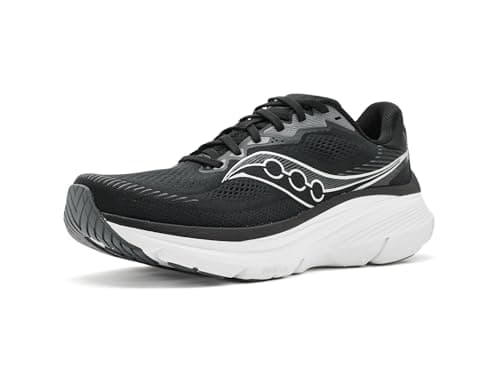
9.09 oz in RTINGS' lab with a 7.8 energy-return score, a 10 for forefoot height and 9.8 for forefoot width — the roomiest fit scores on this page. The cons: no guidance at all, a measured 9.8 mm drop against a listed 8 mm, and Regular and Wide only.
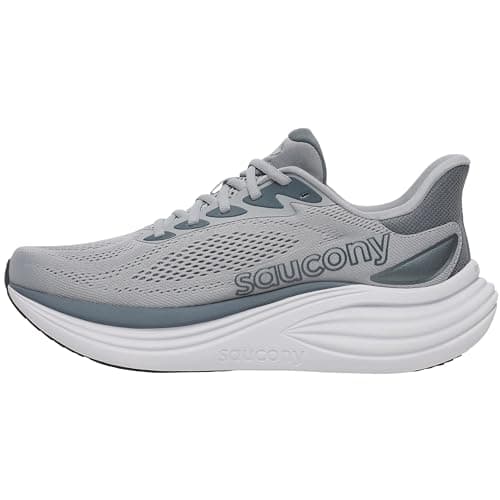
8.9 for stability, a 9.8 arch-width score and Medium, Wide and Extra Wide sizing. The cons: 10.39 oz in the lab, a 1.9 heel energy-return score — the lowest figure on this page by a distance — and a 6.7 mm measured drop that will feel low if you are used to 10 mm.
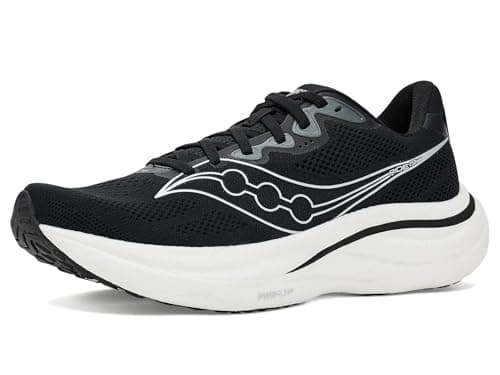
Saucony's 43 / 33 mm max-cushion trainer on incrediLUX, at a listed 8.8 oz men's. The cons: a 10 mm drop rather than the Ride's 8, and Regular and Wide only.
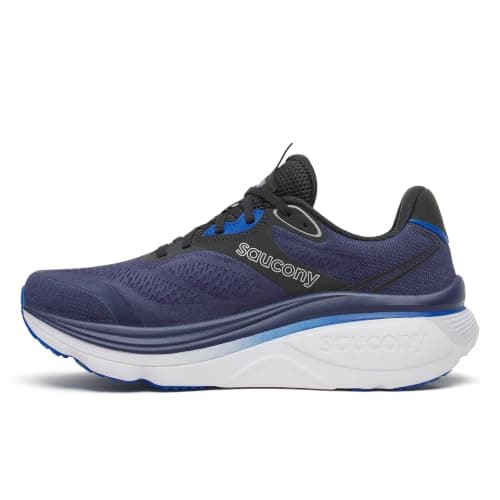
41 / 35 mm on incrediLUX, sold in Saucony's stability category as max-cushion support. The cons: only Medium and Wide, and it is a lot of shoe for a short easy run.
#ad · Price as of October 26, 2026 · Affiliate disclosure for the link to Saucony Hurricane 26
The short answer
The Ride and the Guide are Saucony's everyday pair: same role, same price bracket, same place on the store wall, with “neutral” and “support” as the only labels telling them apart. That framing makes the Guide sound like a Ride with something added. The lab says it is more of a trade: you gain steadiness, and you give up weight, bounce and 3.1 mm of measured drop.
Most runners should buy the Ride. The Guide earns its place for a narrower group: runners who notice their form collapsing late in long runs, runners who have been fitted into support shoes and get on with them, and runners who need an Extra Wide, which the Ride does not offer. If you are not sure which group you are in, the section on whether you actually need a stability shoe below is the one to read.
The same-lab numbers
Figures from different reviewers are mostly noise, because labs disagree with each other and with the brands. RTINGS measured both of these shoes on one protocol. Every figure below is theirs, not ours — this site does not test shoes.
RTINGS lab measurement or score
Ride 19
Guide 19
Weight (men's)
257.6 g (9.09 oz)
294.5 g (10.39 oz)
Heel stack
37.6 mm
36.2 mm
Measured drop
9.8 mm (8 mm listed)
6.7 mm (6 mm listed)
Energy return
7.8 (7.9 forefoot / 7.4 heel)
4.5 (5.6 forefoot / 1.9 heel)
Cushioning
7.7 (7.8 heel / 7.6 forefoot / 7.0 long-run)
7.2 (7.0 heel / 7.3 forefoot / 6.8 long-run)
Stability
8.0
8.9
True to size
9.6
9.6
Forefoot width / height
9.8 / 10
9.4 / 7.1
Arch width
8.5
9.8
Source: RTINGS Saucony Ride 19 and RTINGS Saucony Guide 19, both checked 2026-10-26. RTINGS published bounciness, snappiness and roll scores for the Ride 19 (6.7, 7.2 and 7.1) but not for the Guide 19, so those rows are left out rather than half-filled.
What the Guide's support actually is
There is no medial post in the Guide 19. Saucony guides the foot with what it calls CENTERPATH — raised sidewalls that cradle the foot — over PWRRUN cushioning, per Running Warehouse's product page. The Ride 19 runs reformulated PWRRUN+ with nothing structural at all.
You can see the approach in the fit scores rather than the stability score alone. The Guide scored 9.8 for arch width against the Ride's 8.5, and 7.1 for forefoot height against the Ride's 10. In plain terms, the Guide holds your midfoot more firmly and sits closer over the top of your toes; the Ride lets your foot move. That is the mechanism, and it is also the comfort cost.
Sidewall guidance is a gentler design than the posted shoes of ten years ago, and it is what most brands have moved to — neutral vs stability running shoes covers what the evidence does and does not support about the whole category.
The cost: 7.8 vs 4.5 energy return
This is the number that should decide it for most readers. The Ride 19 scored 7.8 overall for energy return — 7.9 at the forefoot, 7.4 at the heel — which is a genuinely high figure for a shoe in this category. The Guide 19 scored 4.5, with 5.6 at the forefoot and 1.9 at the heel.
A 1.9 heel score means almost nothing comes back when you land on the heel. For a heel-striking runner doing easy miles, the Guide will feel noticeably flatter and more dead than the Ride, and that is not a small difference in how a shoe feels over an hour. It is the direct consequence of the firmer sidewall structure that produces the 8.9 stability score: you cannot have a foam that both holds your foot still and springs back hard.
The flip side, and it is a real one: for a tired runner at mile 16, “flat and stable” can be exactly the right sensation. Energy return is not a quality score.
Drop: 9.8 mm vs 6.7 mm
These two shoes are three millimeters apart in measured heel-to-toe drop, which is more than enough to feel and enough to matter if you have a history of calf or Achilles trouble. RTINGS measured 9.8 mm on the Ride against a listed 8 mm, and 6.7 mm on the Guide against a listed 6 mm. Both are within a millimeter of their listed figures, which is better than most of the industry manages.
Practically: moving from the Ride to the Guide drops your heel about 3 mm closer to the ground, which asks a little more of the calf and Achilles. That is not dangerous, but it is a change, and it is worth making gradually rather than on the morning of a long run. Our heel drop and stack height explained page covers what the research actually found about drop and injury, which is less than most shoe marketing implies.
Figures as published by the maker or the named reviewer; each value links to its source. A dash means the figure isn't in our cited sources.
Note the two sets of weight and stack figures. Running Warehouse lists the Guide 19 at 10.3 oz with a 37 / 31 mm stack; RTINGS weighed 10.39 oz and measured a 36.2 mm heel on its own sample. Brand and lab numbers come off different shoes on different scales. We show both rather than picking whichever reads better.
Fit and widths
Both shoes scored 9.6 for true-to-size and 10 for length fit, so order your normal size in either. The cross-section is where they separate:
Forefoot height: 10 (Ride) vs 7.1 (Guide). A perfect 10 is unusual — the Ride 19 has genuinely generous room over the top of the toes. If you have a high instep, bunions or hammertoes, this alone should decide it.
Forefoot width: 9.8 vs 9.4. Both roomy; the Ride slightly more so.
Arch width: 8.5 vs 9.8. This runs the other way. The Guide holds the midfoot more firmly, which is the guidance working as designed — and which a high-arched or wide-midfoot runner may find tight.
Width options. The Ride 19 comes in Regular and Wide for men and women; the Guide 19 comes in Medium, Wide and Extra Wide for both. If you need a 4E, the Guide is the only one of the two that offers it.
Three situations where the Guide is a defensible buy:
You already run well in support shoes. The simplest and best reason. If your last two pairs were Guides or Adrenalines and nothing hurt, keep going.
Your form visibly falls apart late in long runs. Stability matters most when you are tired, and the last hour of a long run is the most tired you will be all week.
You need an Extra Wide. A 4E that fits beats a neutral shoe that does not, every time.
And the honest counterpoint: the Ride 19 scored 8.0 for stability with no support structure at all. A well-shaped neutral shoe is steadier than the category labels suggest, which is why “neutral or support?” is a less important question than “does this shoe fit?”
Level by level
Couch to 5K. The NHS Couch to 5K plan is nine weeks of run/walk intervals three times a week. The Ride, unless a fitter put you in support shoes. It is lighter, roomier over the toes and the energy return makes short runs more pleasant. Our best running shoes for beginners page ranks the field.
First 10K. The Ride. A 10K plan has a faster day most weeks and the Guide's 4.5 energy return is not what you want on it.
Half marathon.Hal Higdon's Novice 1 Half builds to a 10-mile long run. This is where the Guide starts making sense as the long-run shoe in a two-pair rotation, with the Ride taking everything shorter.
You want more foam, neutral. The Saucony Triumph 24 is the max-cushion Ride: 43 / 33 mm on incrediLUX at a listed 8.8 oz men's. It is the long-run shoe in a Saucony rotation. See best max-cushion running shoes.
You want more foam, supported. The Saucony Hurricane 26 sits in Saucony's stability category as max-cushion support: 41 / 35 mm on incrediLUX with a 6 mm drop, in Medium and Wide. See best stability running shoes.
And if you are weighing Saucony against the brands you are more likely to be handed in a store, ASICS vs Brooks maps those two line-ups role for role, and best Saucony running shoes covers the rest of this range.
Who should buy which
Buy the Ride 19 if: you have no reason to want support; you have a high instep or wide forefoot; you notice weight; you want a shoe with some life in it; this is going to be your only pair.
Buy the Guide 19 if: support shoes have worked for you before; you need an Extra Wide; your form goes late in long runs; you want the steadier shoe and the dead-feeling heel does not bother you.
Buy neither if: what you actually want is more cushioning. Neither of these is a plush shoe — the Guide scored 6.8 for forefoot long-run cushioning. Go up to the Triumph or the Hurricane instead.
In detail
The contenders, in full
The lighter, livelier, neutral one
Saucony Ride 19
C25K10KHALFMARATHON
8.3 /10
9.09 oz in RTINGS' lab with a 7.8 energy-return score, a 10 for forefoot height and 9.8 for forefoot width — the roomiest fit scores on this page. The cons: no guidance at all, a measured 9.8 mm drop against a listed 8 mm, and Regular and Wide only.
#ad · Price as of October 26, 2026 · Affiliate disclosure for the link to Saucony Ride 19
The steadier, heavier, supported one
Saucony Guide 19
C25K10KHALFMARATHON
8.0 /10
8.9 for stability, a 9.8 arch-width score and Medium, Wide and Extra Wide sizing. The cons: 10.39 oz in the lab, a 1.9 heel energy-return score — the lowest figure on this page by a distance — and a 6.7 mm measured drop that will feel low if you are used to 10 mm.
#ad · Price as of October 26, 2026 · Affiliate disclosure for the link to Saucony Guide 19
If you want more foam, neutral
Saucony Triumph 24
C25K10KHALFMARATHON
8.2 /10
Saucony's 43 / 33 mm max-cushion trainer on incrediLUX, at a listed 8.8 oz men's. The cons: a 10 mm drop rather than the Ride's 8, and Regular and Wide only.
#ad · Price as of October 26, 2026 · Affiliate disclosure for the link to Saucony Triumph 24
If you want more foam, supported
Saucony Hurricane 26
C25K10KHALFMARATHON
8.1 /10
41 / 35 mm on incrediLUX, sold in Saucony's stability category as max-cushion support. The cons: only Medium and Wide, and it is a lot of shoe for a short easy run.
#ad · Price as of October 26, 2026 · Affiliate disclosure for the link to Saucony Hurricane 26
How we chose these
Researched, compared, scored for your level
We start from what a published training plan actually asks of a runner at your level, compare every model's published specs (stack height, drop, weight, plate, stability features, widths) against that job, and score each pick on a public rubric. Each spec links to where it came from, so you can shortlist in minutes and buy with the numbers in front of you.
Is the Saucony Guide 19 just the Ride 19 with support added?+
No — it is a trade rather than an addition. RTINGS scored the Guide 8.9 for stability against the Ride's 8.0, but the Guide is 1.3 oz heavier, sits 3.1 mm lower in measured drop, and scored 4.5 for energy return against the Ride's 7.8. You gain steadiness and give up weight and bounce.
Which is better for beginners?+
The Ride 19 for most beginners: it is lighter, it scored a perfect 10 for forefoot height, and its 7.8 energy return makes short run/walk intervals more pleasant. The exception is a beginner who has already been fitted into support shoes and gets on with them. See our beginner running shoes page.
What does a 1.9 heel energy-return score mean in practice?+
That almost none of the energy you put into a heel landing comes back. For a heel striker on easy miles the Guide 19 will feel flatter and more dead than the Ride 19, which scored 7.4 at the heel. It is the direct cost of the firmer structure that produces the Guide's higher stability score — and on tired legs late in a long run, flat and stable is not always the wrong thing.
Does the Guide 19 come in Extra Wide?+
Yes. Running Warehouse lists the Guide 19 in Medium, Wide and Extra Wide for men and women both. The Ride 19 comes in Regular and Wide only, so if you need a 4E the Guide is the only one of the two that has it.
Do I need a stability shoe if I overpronate?+
Not automatically. The evidence for matching shoe category to foot type is much weaker than store fittings suggest, and the Ride 19 scored 8.0 for stability with no support structure at all. What matters more is whether the shoe fits and whether running hurts. If it hurts, see a clinician — neutral vs stability running shoes goes through what the research supports.
Can I run a half marathon in the Guide 19?+
Yes, and the long run is where it makes the most sense, because stability matters most when you are tired. For race day most runners want something lighter — see best half marathon race shoes.
Why does the Ride 19 measure a 9.8 mm drop when Saucony lists 8 mm?+
Brand drop comes off a spec sheet; lab drop is measured on a built shoe. RTINGS measured 9.8 mm on the Ride against a listed 8 mm and 6.7 mm on the Guide against a listed 6 mm. Both are within a millimeter and a bit, which is tighter than most brands manage.
Every figure above is traceable. Specs come from the maker's own pages or the named reviewer's published measurements (linked above); level definitions come from published training plans; prices come from Amazon's own API and carry the date they were checked, so you buy on a current number. Read the full method.