ASICS vs Brooks for Running: Which Brand's Line-Up Fits Your Level?
Both brands build a neutral trainer, a max-cushion shoe and a stability shoe for every level from Couch to 5K to the marathon, at the same prices, on the same store wall. The difference is in how they build them: ASICS goes taller and livelier, Brooks goes lower, steadier and wider. Here is the choice, pair by pair.
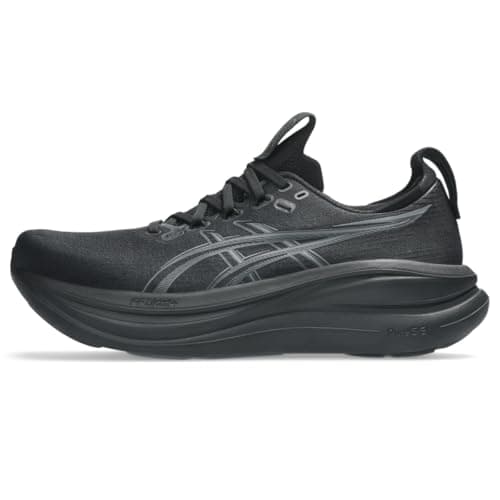
RunRepeat measured 39.5 / 34.3 mm of stack and a 5.2 mm drop against ASICS' listed 8 mm. The cons: 9.8 oz in the lab, and the measured drop is nothing like the listed one.
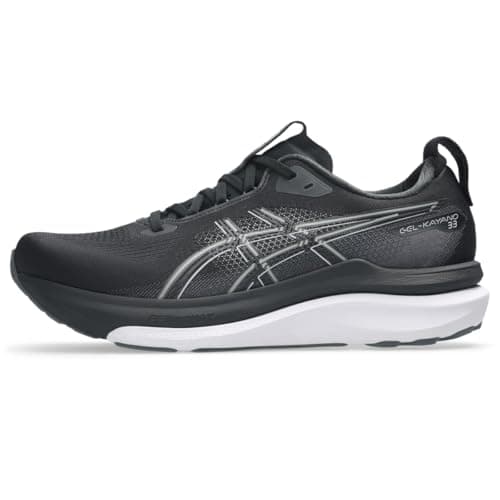
41 / 33 mm of stack with FluidSupport instead of a post, in men's D/2E/4E and women's 2A/B/D. The cons: 10.4 oz is heavy, and the support is built into the foam rather than adjustable.
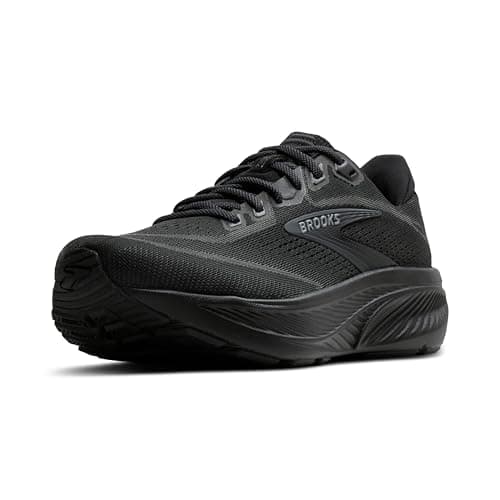
37.2 / 29.0 mm measured, with a lab drop of 8.2 mm against a listed 8 mm — the honest spec sheet of the six. The cons: 10.7 oz, and less forefoot foam than the Nimbus.
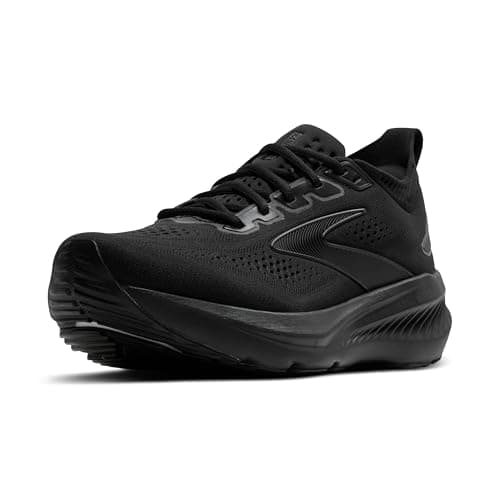
GuideRails support with four widths for both men and women. The cons: 10.6 oz, and RunRepeat measured only 36.1 / 25.9 mm of stack, the lowest of the six.
#ad · Price as of October 26, 2026 · Affiliate disclosure for the link to Brooks Adrenaline GTS 25
The short answer
ASICS and Brooks are the two brands you are most likely to be handed in a running store, and their line-ups map onto each other almost exactly: a neutral everyday trainer, a max-cushion shoe above it, a stability shoe beside it, and a plated race shoe at the top. Pick a role first and a brand second, and the decision gets a lot easier.
Across the three pairs below, one pattern repeats: the ASICS is taller and more energetic, the Brooks is lower and steadier. The exception is widths, where Brooks wins outright. If this is your first pair of running shoes, either brand is a fine place to start and our best running shoes for beginners page ranks the whole field.
The line-ups, matched by role
Role
ASICS
Brooks
Everyday neutral trainer
Novablast 6
Ghost 18
Max cushion
Gel-Nimbus 28
Glycerin 23
Stability
Gel-Kayano 33
Adrenaline GTS 25
Tempo / uptempo
Magic Speed 5, Superblast 3
Hyperion Max 4
Carbon race shoe
Metaspeed Sky Tokyo, Metaspeed Edge Tokyo
Hyperion Elite 6
Entry price
Gel-Contend 9
Revel 9, Launch 12
That is the whole decision in one grid. The rest of this page is about what actually differs inside each row.
How each brand builds a shoe
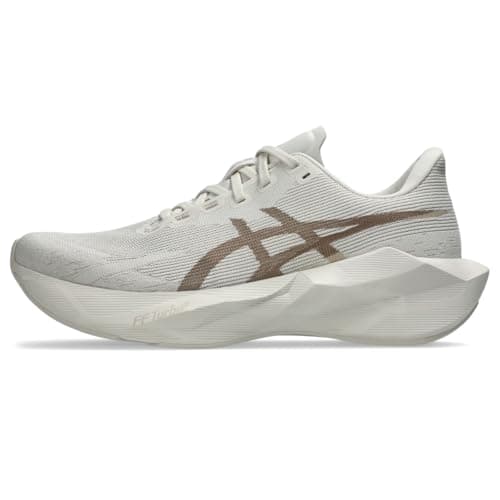
ASICS has spent the last few years pushing foam height and foam liveliness. The Novablast runs FF BLAST MAX with an FF TURBO² layer in the forefoot — a foam family borrowed from the faster end of its range — and the Kayano uses FF BLAST MAX over FF BLAST PLUS with a FluidSupport system rather than a traditional medial post. The result across the line is taller shoes that want to bounce.
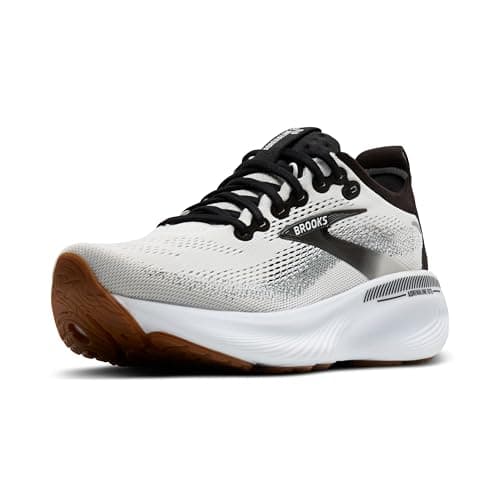
Brooks has gone the other way: nitrogen-infused DNA LOFT v3 in the Ghost, dual-density DNA Tuned in the Glycerin, GuideRails in the Adrenaline. These are shoes tuned to feel the same at mile 1 and mile 12, on a lower platform, with a broad base. Brooks also keeps a size run that most of the industry has quietly abandoned.
Neither philosophy is a marketing fiction — the lab numbers below back both of them up. What they mean for you is simple: ASICS if you want the shoe to give something back, Brooks if you want it to stay out of the way.
Daily trainer: Novablast 6 vs Ghost 18
This is the pair most people are actually choosing between, and RTINGS measured both in one lab, which makes the comparison unusually clean.
Both brands' plush, long-run shoes, both measured by RunRepeat. The ASICS is the bigger shoe: RunRepeat put the Gel-Nimbus 28 at 39.5 mm heel and 34.3 mm forefoot against the Glycerin 23's 37.2 mm and 29.0 mm — a 5.3 mm gap under the forefoot, which is the part of a max-cushion shoe you feel late in a long run. The Nimbus is also lighter in the lab, 9.8 oz against 10.7 oz.
The Glycerin wins on a quieter point: honesty. RunRepeat measured its drop at 8.2 mm against a listed 8 mm, while the Nimbus measured 5.2 mm against a listed 8 mm and 39.5 / 34.3 mm against ASICS' listed 43.5 / 35.5 mm. If you are buying on drop — because you have a history of Achilles trouble, say, or because you know what works for you — that 2.8 mm discrepancy matters more than the stack does. Our heel drop and stack height explained page covers why listed and measured numbers diverge across the whole industry.
Width is the other separator. ASICS lists the Nimbus in standard, wide and extra wide for men and narrow, standard and wide for women; Brooks lists the Glycerin in standard, wide and extra wide. Both are better than average; neither matches the Adrenaline. Best max-cushion running shoes ranks both against the rest of the category.
Stability: Kayano 33 vs Adrenaline GTS 25
Both of these replaced the old-fashioned medial post years ago, and both now guide the foot with geometry and firmer foam instead. They are not equivalent shoes.
Size. Running Warehouse lists the Gel-Kayano 33 at 41 mm heel and 33 mm forefoot with an 8 mm drop; RunRepeat measured the Adrenaline GTS 25 at 36.1 mm and 25.9 mm, against a 10 mm listed drop. The Kayano is a substantially bigger shoe — about 7 mm more foam under the forefoot.
How the support works. The Kayano uses ASICS' FluidSupport, built into the midsole itself; the Adrenaline uses GuideRails, which sit either side of the heel and only engage when your foot moves past a certain point. GuideRails is the less intrusive of the two by design.
Weight. Near-identical: 10.4 oz for the Kayano, 10.6 oz for the Adrenaline, both men's. Stability shoes are heavy; this is the cost of the category.
Widths. The Kayano comes in men's D, 2E and 4E and women's 2A, B and D. The Adrenaline comes in four widths for each: men's 1B, 1D, 2E, 4E and women's 2A, 1B, 1D, 2E.
Widths: the thing that usually decides it
If your feet sit at either end of the width range, this comparison is already over and the lab numbers do not get a vote. Here is the published size run for the six shoes on this page:
Shoe
Published widths
ASICS Novablast 6
Regular, Wide (men's and women's)
ASICS Gel-Nimbus 28
Men's standard / wide / extra wide; women's narrow / standard / wide
ASICS Gel-Kayano 33
Men's D / 2E / 4E; women's 2A / B / D
Brooks Ghost 18
Narrow, Medium, Wide, Extra Wide
Brooks Glycerin 23
Standard, wide, extra wide
Brooks Adrenaline GTS 25
Men's 1B / 1D / 2E / 4E; women's 2A / 1B / 1D / 2E
Brooks offers four widths on two of its three everyday shoes; ASICS tops out at three and offers only two on the Novablast. Note the women's coding trap: a women's D is a wide, while a men's D is a medium, so a women's Kayano in D is not the same fit as a men's. Our pages on running shoes for wide feet and running shoes for narrow feet go through the whole field.
Figures as published by the maker or the named reviewer; each value links to its source. A dash means the figure isn't in our cited sources.
Faster shoes and race day
Above the everyday shoes, the two ranges stop looking alike. ASICS fields a deep uptempo bench — the Magic Speed 5 as a plated trainer you can race in, the Superblast 3 as an unplated long-run and tempo shoe that a lot of runners treat as a do-everything — plus the Metaspeed Sky and Edge at the top, split by whether you lengthen your stride or quicken your cadence. Brooks runs a narrower line: the Hyperion Max 4 for uptempo work and the Hyperion Elite 6 for racing.
For most runners this does not decide anything, because the first two pairs you buy are a daily trainer and then either a second daily trainer or a tempo shoe. It starts to matter at the half and marathon, where the rotation grows. See tempo shoe vs race shoe for what each job needs, and best carbon-plated running shoes for where the Metaspeeds and the Hyperion Elite rank.
Level by level
This site picks by pace and weekly mileage rather than by brand, so here is how the choice lands at each tier.
Couch to 5K. The NHS Couch to 5K plan is nine weeks of run/walk intervals three times a week. Brooks, narrowly: the Ghost 18 is steadier and comes in four widths, which matters when you do not yet know what your feet want.
First 10K.ASICS, narrowly. A 10K plan puts a faster day in most weeks, and the Novablast is the better of the two at that. See best running shoes for 5K and 10K.
Half marathon. A toss-up on the trainer, ASICS on the second shoe. Hal Higdon's Novice 1 Half builds to a 10-mile long run, and ASICS' uptempo bench gives you more to pair with.
Marathon.Novice 1 Marathon runs 18 weeks to a 20-mile long run. ASICS if you want the biggest long-run shoe (the Nimbus has 5.3 mm more forefoot foam than the Glycerin); Brooks if you need a width ASICS does not make. Our best marathon training shoes page sets out the rotation.
Who should buy which
Buy ASICS if: you want more foam for the weight; you like a shoe that feels springy; you sometimes run fast and want a deeper bench of uptempo options; your long run is the session that hurts.
Buy Brooks if: you need Narrow or Extra Wide; you want predictable over exciting; you are new to running and your legs are still adapting; you care that the listed drop matches the measured one.
Buy neither if: you have already decided you want a rockered, maximal ride — that is HOKA's territory, and HOKA vs Brooks covers it.
In detail
The contenders, in full
ASICS daily trainer
ASICS Novablast 6
C25K10KHALFMARATHON
8.5 /10
8.74 oz on a 41.9 mm heel in RTINGS' lab, with a 7.2 energy-return score. The cons: stability scored 7.1, and ASICS sells it in Regular and Wide only.
#ad · Price as of October 26, 2026 · Affiliate disclosure for the link to ASICS Novablast 6
ASICS max cushion
ASICS Gel-Nimbus 28
C25K10KHALFMARATHON
7.8 /10
RunRepeat measured 39.5 / 34.3 mm of stack and a 5.2 mm drop against ASICS' listed 8 mm. The cons: 9.8 oz in the lab, and the measured drop is nothing like the listed one.
#ad · Price as of October 26, 2026 · Affiliate disclosure for the link to ASICS Gel-Nimbus 28
ASICS stability
ASICS Gel-Kayano 33
C25K10KHALFMARATHON
8.2 /10
41 / 33 mm of stack with FluidSupport instead of a post, in men's D/2E/4E and women's 2A/B/D. The cons: 10.4 oz is heavy, and the support is built into the foam rather than adjustable.
#ad · Price as of October 26, 2026 · Affiliate disclosure for the link to Brooks Ghost 18
Brooks max cushion
Brooks Glycerin 23
C25K10KHALFMARATHON
7.7 /10
37.2 / 29.0 mm measured, with a lab drop of 8.2 mm against a listed 8 mm — the honest spec sheet of the six. The cons: 10.7 oz, and less forefoot foam than the Nimbus.
#ad · Price as of October 26, 2026 · Affiliate disclosure for the link to Brooks Glycerin 23
Brooks stability
Brooks Adrenaline GTS 25
C25K10KHALFMARATHON
8.3 /10
GuideRails support with four widths for both men and women. The cons: 10.6 oz, and RunRepeat measured only 36.1 / 25.9 mm of stack, the lowest of the six.
+Brooks pitches it both as a daily driver in a training rotation and as a safe go-to for runners just starting out, and lists walking as a use
+Four widths in each gender, from Narrow to Extra Wide (4E men's, 2E women's)
+GuideRails support system, which Brooks says helps keep excess movement in check, paired with more nitrogen-infused cushioning in the heel and forefoot than before
+RunRepeat's lab measured a 36.1 mm heel and 25.9 mm forefoot: solid cushion without a towering stack
What it doesn't
−10.6 oz for the men's shoe is heavy for faster running
−A 10 mm drop is on the high side if you prefer a flatter, lower-drop shoe
−Brooks rates the cushion 'Balanced'; runners who want Brooks' 'Plush' tier with GuideRails need the Glycerin GTS 23
Skip this if…
…you want a light, bouncy shoe for tempo days; this is a steady 10.6 oz support trainer built for everyday miles
#ad · Price as of October 26, 2026 · Affiliate disclosure for the link to Brooks Adrenaline GTS 25
How we chose these
Researched, compared, scored for your level
We start from what a published training plan actually asks of a runner at your level, compare every model's published specs (stack height, drop, weight, plate, stability features, widths) against that job, and score each pick on a public rubric. Each spec links to where it came from, so you can shortlist in minutes and buy with the numbers in front of you.
Brooks, narrowly, and for one specific reason: the Ghost 18 scored 8.1 for stability against the Novablast 6's 7.1 in the same lab, and Brooks sells it in four widths. New runners benefit from a steady shoe and from being able to order the right width rather than hoping a medium works. Our beginner running shoes page ranks the full field.
Which brand is better for wide feet?+
Brooks. The Ghost 18 and Adrenaline GTS 25 both come in four widths up to Extra Wide (4E men's), and the Glycerin 23 goes to extra wide. ASICS tops out at three widths, and the Novablast 6 offers only Regular and Wide. See best running shoes for wide feet.
Is the Gel-Kayano the same kind of shoe as the Adrenaline GTS?+
Same job, different execution and different size. Both guide the foot with geometry and firmer foam rather than a medial post, but Running Warehouse lists the Kayano 33 at 41 / 33 mm while RunRepeat measured the Adrenaline GTS 25 at 36.1 / 25.9 mm. The Kayano is the taller, more cushioned shoe; the Adrenaline is the lower, less intrusive one with a wider size run.
Which brand lasts longer?+
Neither brand publishes a mileage figure and we have not run any of these shoes to failure, so anyone quoting you a number is guessing. What does extend shoe life is rotating two pairs so each dries and decompresses between runs. See when to replace running shoes.
Why does the Gel-Nimbus 28 measure a 5.2 mm drop when ASICS lists 8 mm?+
Brand drop comes off a spec sheet; lab drop is measured on a finished, built shoe. RunRepeat measured 5.2 mm on the Nimbus 28 against ASICS' listed 8 mm, and also measured less stack than ASICS lists (39.5 / 34.3 mm against 43.5 / 35.5 mm). Discrepancies like this are common across the industry rather than specific to ASICS — the Glycerin 23 happens to be unusually close, at 8.2 mm measured against 8 mm listed.
Can I mix brands in a rotation?+
Yes, and there is no reason not to. A rotation is organized by job — easy shoe, long-run shoe, fast shoe — not by logo. Plenty of runners pair a Brooks daily trainer with an ASICS uptempo shoe. Our running shoe rotation guide explains the order to buy in.
Which brand is cheaper?+
They are priced against each other almost model for model, and the real answer changes week to week with discounts, so we do not print a number here that would be stale by the time you read it. Check the current price on each card. Both brands also keep a genuinely cheap entry shoe — the ASICS Gel-Contend 9 and the Brooks Revel 9 — which our best running shoes under $100 page covers.
Every figure above is traceable. Specs come from the maker's own pages or the named reviewer's published measurements (linked above); level definitions come from published training plans; prices come from Amazon's own API and carry the date they were checked, so you buy on a current number. Read the full method.