ASICS Novablast 6 vs Brooks Ghost 18: Which Daily Trainer?
These are the two shoes most runners end up choosing between for everyday miles, and they are not two versions of the same idea. RTINGS measured both in one lab: the Novablast 6 is 5.3 mm taller at the heel and 1.25 oz lighter, while the Ghost 18 scores higher for stability and comes in four widths. Here is which one your week actually wants.
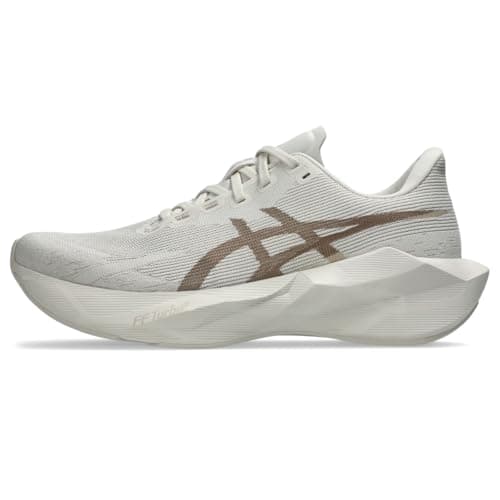
8.74 oz on a 41.9 mm heel in RTINGS' lab, with a 7.2 energy-return score and 8.5 for cushioning. The honest cons: stability scored 7.1 against the Ghost's 8.1, the lab measured the drop at 8.8 mm, and ASICS sells it in Regular and Wide only.
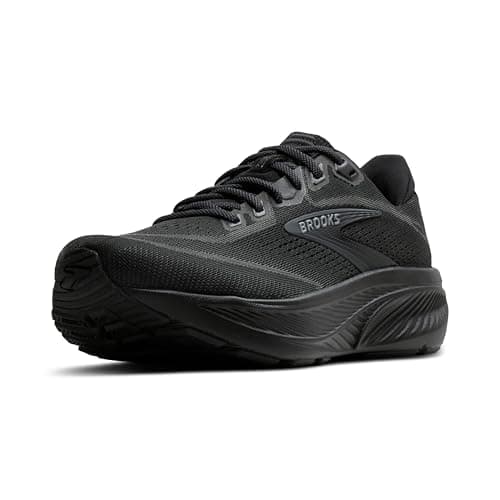
36.6 mm at the heel and 8.1 for stability, in Narrow, Medium, Wide and Extra Wide. The cons: 9.99 oz is 1.25 oz heavier, energy return scored 4.8 forefoot and 3.0 heel, and forefoot long-run cushioning came in at 5.1.
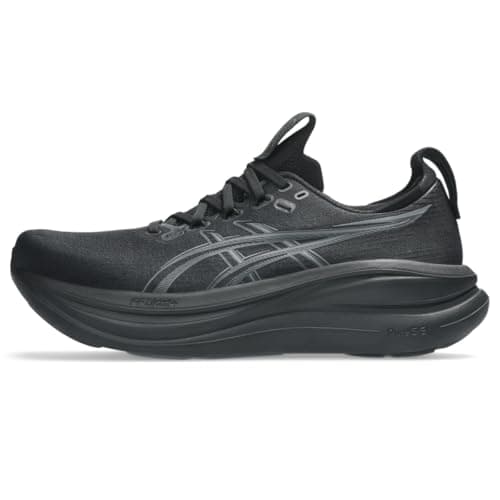
ASICS' max-cushion trainer: more foam and a calmer ride than the Novablast for easy and long days. The cons: heavier than both shoes above and not a shoe you will want for strides.
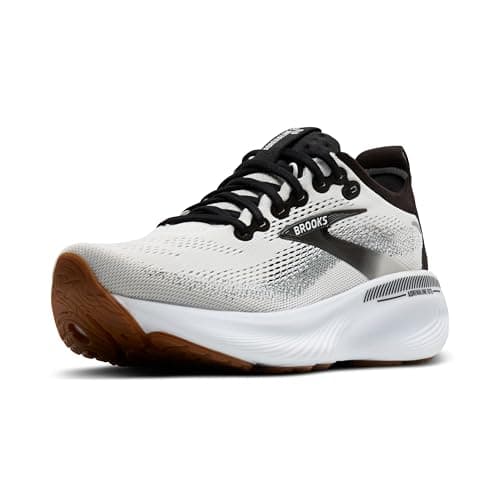
The Ghost's stablemate with GuideRails instead of a neutral midsole, in the same wide size range. The cons: the guidance is there whether you need it or not, and it adds weight over the Ghost.
#ad · Price as of October 19, 2026 · Affiliate disclosure for the link to Brooks Adrenaline GTS 25
The short answer
Walk into any running store and these two are on the same wall, at roughly the same price, both described as “neutral daily trainers.” The category label is doing a lot of hiding. One of them is a 41.9 mm high-stack shoe built to feel springy; the other is a 36.6 mm shoe built to feel the same on mile 1 and mile 12. The question is not which is better — it is which of those two sensations you want under you four or five mornings a week.
If this is your first pair of running shoes, both work, and our best running shoes for beginners page explains the trade-off at that level. If you already run most days, the deciding question is whether this shoe is the only shoe you own (Novablast) or the reliable base of a rotation (Ghost).
The same-lab numbers
Comparing figures across reviewers is mostly noise, because labs disagree with each other and with the brands. RTINGS measured both of these shoes in one lab on one protocol, which makes this comparison unusually clean. Every figure below is theirs, not ours — this site does not test shoes.
RTINGS lab measurement or score
Novablast 6
Ghost 18
Weight (men's)
247.7 g (8.74 oz)
283.3 g (9.99 oz)
Heel stack
41.9 mm
36.6 mm
Measured drop
8.8 mm (8 mm listed)
10.8 mm (10 mm listed)
Energy return
7.2 overall (7.6 forefoot / 6.4 heel)
4.8 forefoot / 3.0 heel
Cushioning
8.5 overall (8.8 heel / 8.3 forefoot)
7.7 heel / 5.6 forefoot / 5.1 forefoot long-run
Stability
7.1
8.1
Bounciness
6.9
4.6
Snappiness
6.6
6.7
Roll
6.5
5.8
True to size
9.4
9.4
Forefoot width / height
9.3 / 6.0
9.3 / 6.8
Plate
None
None
Source: RTINGS ASICS Novablast 6 and RTINGS Brooks Ghost 18, both checked 2026-10-19. RTINGS did not publish a forefoot stack or a breathability score for the Ghost 18, so those rows are omitted rather than filled in from another source.
Stack: 41.9 mm vs 36.6 mm
The single biggest difference between these shoes is height. RTINGS measured the Novablast 6 at 41.9 mm under the heel and the Ghost 18 at 36.6 mm — a 5.3 mm gap, which is more than the whole heel-to-toe drop difference between a 10 mm shoe and a 4 mm shoe. Stand in both and you can feel it immediately.
Height buys two things and costs one. It buys foam between you and the road, and it buys the leverage a tall midsole needs to compress and spring back. It costs ground feel and, all else equal, a little side-to-side steadiness, because your foot is further from the pavement. That is the whole trade in one sentence, and it is why the Novablast scored 8.5 for cushioning and 7.1 for stability while the Ghost scored 7.7 at the heel and 8.1 for stability.
The forefoot numbers tell the same story from the other end. Per the figures in our registry entries, both taken from the same RTINGS reviews, the Novablast carries 33.1 mm of forefoot stack against the Ghost's 25.8 mm. That is a 7.3 mm difference under the ball of your foot — the part that hits the ground last and hardest when you speed up. For more on what those numbers actually do, read heel drop and stack height explained.
Weight, bounce and energy return
The Novablast 6 came in at 247.7 g (8.74 oz) against the Ghost 18's 283.3 g (9.99 oz). A 35.6 g difference per shoe sounds trivial written down and is not trivial at mile 10 — you lift each shoe somewhere around 900 times per mile, so the Novablast asks your legs to move about 64 kg less total mass over a ten-mile run.
Energy return is where the gap gets wide. RTINGS scored the Novablast 7.2 overall, with 7.6 at the forefoot and 6.4 at the heel; the Ghost scored 4.8 at the forefoot and 3.0 at the heel. Bounciness followed: 6.9 against 4.6. In plain terms, the Novablast gives more of your landing energy back to you and the Ghost absorbs more of it. Neither is wrong. Absorbing energy is literally what a cushioned trainer is for on an easy day; returning it is what you want on a progression run.
Snappiness is the one place they are level: 6.6 for the Novablast and 6.7 for the Ghost. Snappiness in RTINGS' scoring is about how the forefoot bends and releases, and neither shoe has a plate, so neither is going to feel like a race shoe. If you want that sensation, our tempo shoe vs race shoe page explains what actually delivers it.
Stability: 7.1 vs 8.1
Both of these are neutral shoes. Neither has a medial post, GuideRails or any other correction device. The full point difference in RTINGS' stability score comes from geometry: the Ghost sits lower, on firmer foam, with a broader and less rounded platform.
That matters most in three situations: when you are tired at the end of a long run, when you are running on a cambered road or a rough sidewalk, and when you are new enough to running that your ankles and feet have not caught up with your enthusiasm yet. In all three, a steadier shoe feels like less work. If you have been told you overpronate or you have had a history of rolling ankles, neither shoe is really the answer — neutral vs stability running shoes walks through what is.
The flip side is honest too: 7.1 is not an unstable score. The Novablast is a high-stack shoe that measures reasonably steady for its height, which is the whole reason it works as a do-everything trainer rather than just a cruiser.
Figures as published by the maker or the named reviewer; each value links to its source. A dash means the figure isn't in our cited sources.
The foam names matter more than they usually do here. The Novablast 6 runs ASICS' FF BLAST MAX with an FF TURBO² layer in the forefoot — the same family of foam ASICS puts in its faster shoes, placed exactly where you push off. The Ghost 18 uses nitrogen-infused DNA LOFT v3 throughout, tuned for consistency rather than return. Both of those descriptions come from Running Warehouse's Novablast 6 and Ghost 18 product pages, not from us.
Fit, widths and toebox
Both shoes scored 9.4 for true-to-size and 10 for length fit in RTINGS' testing, and both scored 9.3 for forefoot width. So in your normal size, both should fit the length and the width of your foot the same way.
Two differences do show up. Forefoot height scored 6.0 for the Novablast and 6.8 for the Ghost, so there is slightly more vertical room over the top of the toes in the Brooks — relevant if you have a high instep or bunions. And the width ranges are not close: Brooks sells the Ghost 18 in Narrow, Medium, Wide and Extra Wide, while ASICS offers the Novablast 6 in Regular and Wide for both men and women.
This site picks shoes by pace and weekly mileage rather than by category, so here is how the two land at each tier.
Couch to 5K. The NHS Couch to 5K plan is nine weeks of run/walk intervals three times a week, on tired legs that are not used to impact. The Ghost 18 is the safer answer: steadier, lower, available in four widths, and forgiving of a form that is still being built. The Novablast works too and is more fun, but it is more shoe than the plan needs.
First 10K. Either. This is the level where the Novablast starts earning its keep, because a 10K plan has you doing a faster day most weeks and the Novablast can take it. See best running shoes for 5K and 10K.
Half marathon.Hal Higdon's Novice 1 Half builds to a 10-mile long run on four running days a week. If this is your only pair, the Novablast's lower weight and higher return are worth real minutes of comfort by the end of those long runs.
Marathon.Novice 1 Marathon runs to a 20-mile long run and 18 weeks of accumulated mileage, which is where most runners own two pairs anyway. Our best marathon training shoes page sets out the full rotation.
Can you own both?
Yes, and it is a genuinely good two-shoe rotation — better than most pairings of two shoes from the same category, because these two do not overlap. The Ghost takes the easy days, the recovery days and the runs where your legs are already beaten up. The Novablast takes the long run and the day with some pace in it. Rotating also spreads the mileage, which is the one maintenance habit that reliably extends how long both pairs last.
If you are only buying one pair this year, buy the Novablast — it covers more of the week. If you are buying two, buy the Ghost first and add the Novablast when you start doing a faster day. Our running shoe rotation guide explains the order and the mileage split, and when to replace running shoes covers what rotation does to shoe life.
The two alternatives
Plenty of runners read this comparison and find that neither shoe is quite the answer. Two obvious adjustments, both already in our registry:
The Novablast is too lively. If you want the stack without the bounce, the ASICS Gel-Nimbus 28 is ASICS' max-cushion trainer: more foam, calmer ride, aimed at easy and long days rather than at pace. It also sits at the center of our best max-cushion running shoes page.
The Ghost is right but you want support. The Brooks Adrenaline GTS 25 is the Ghost's stablemate with GuideRails, in the same wide size range. Brooks Ghost vs Adrenaline compares those two directly.
Buy the Novablast 6 if: you want one shoe for the whole week; you notice weight; you like a soft, springy ride; you sometimes run fast; you are training for a half or a marathon and the long run is the session that hurts.
Buy the Ghost 18 if: you want predictable over exciting; you need Narrow or Extra Wide; you are new to running and your legs are still adapting; you run on cambered roads or broken sidewalks; this shoe is going to be the easy-day half of a rotation.
Buy neither if: you need built-in support, in which case look at the Adrenaline GTS 25 or our best stability running shoes page. Both of these are neutral shoes and no amount of stack height changes that.
In detail
The contenders, in full
The taller, lighter, bouncier one
ASICS Novablast 6
C25K10KHALFMARATHON
8.5 /10
8.74 oz on a 41.9 mm heel in RTINGS' lab, with a 7.2 energy-return score and 8.5 for cushioning. The honest cons: stability scored 7.1 against the Ghost's 8.1, the lab measured the drop at 8.8 mm, and ASICS sells it in Regular and Wide only.
#ad · Price as of October 19, 2026 · Affiliate disclosure for the link to ASICS Novablast 6
The firmer, steadier one
Brooks Ghost 18
C25K10KHALFMARATHON
8.0 /10
36.6 mm at the heel and 8.1 for stability, in Narrow, Medium, Wide and Extra Wide. The cons: 9.99 oz is 1.25 oz heavier, energy return scored 4.8 forefoot and 3.0 heel, and forefoot long-run cushioning came in at 5.1.
#ad · Price as of October 19, 2026 · Affiliate disclosure for the link to Brooks Ghost 18
If the Novablast feels too lively
ASICS Gel-Nimbus 28
C25K10KHALFMARATHON
7.8 /10
ASICS' max-cushion trainer: more foam and a calmer ride than the Novablast for easy and long days. The cons: heavier than both shoes above and not a shoe you will want for strides.
#ad · Price as of October 19, 2026 · Affiliate disclosure for the link to ASICS Gel-Nimbus 28
If you want the Ghost with support
Brooks Adrenaline GTS 25
C25K10KHALFMARATHON
8.3 /10
The Ghost's stablemate with GuideRails instead of a neutral midsole, in the same wide size range. The cons: the guidance is there whether you need it or not, and it adds weight over the Ghost.
+Brooks pitches it both as a daily driver in a training rotation and as a safe go-to for runners just starting out, and lists walking as a use
+Four widths in each gender, from Narrow to Extra Wide (4E men's, 2E women's)
+GuideRails support system, which Brooks says helps keep excess movement in check, paired with more nitrogen-infused cushioning in the heel and forefoot than before
+RunRepeat's lab measured a 36.1 mm heel and 25.9 mm forefoot: solid cushion without a towering stack
What it doesn't
−10.6 oz for the men's shoe is heavy for faster running
−A 10 mm drop is on the high side if you prefer a flatter, lower-drop shoe
−Brooks rates the cushion 'Balanced'; runners who want Brooks' 'Plush' tier with GuideRails need the Glycerin GTS 23
Skip this if…
…you want a light, bouncy shoe for tempo days; this is a steady 10.6 oz support trainer built for everyday miles
#ad · Price as of October 19, 2026 · Affiliate disclosure for the link to Brooks Adrenaline GTS 25
How we chose these
Researched, compared, scored for your level
We start from what a published training plan actually asks of a runner at your level, compare every model's published specs (stack height, drop, weight, plate, stability features, widths) against that job, and score each pick on a public rubric. Each spec links to where it came from, so you can shortlist in minutes and buy with the numbers in front of you.
Is the ASICS Novablast 6 more cushioned than the Brooks Ghost 18?+
By RTINGS' measurements, yes, and not marginally: 41.9 mm of heel stack against 36.6 mm, and an 8.5 cushioning score against 7.7 at the heel and 5.6 at the forefoot. The gap is widest under the forefoot, where the Novablast carries 33.1 mm against the Ghost's 25.8 mm.
Which is better for beginners?+
The Ghost 18 for most beginners. It scored higher for stability (8.1 vs 7.1), sits lower to the ground, and comes in four widths, which matters when you do not yet know what your feet want. The Novablast is the better shoe if your plan already includes a faster day. Our beginner running shoes page ranks the whole category.
Can you race a half marathon in either one?+
Yes, and plenty of people do. The Novablast is the better of the two for it — lighter by 1.25 oz with far higher energy return — but neither has a plate and neither is a race shoe. If you want the shoe built for the job, see best half marathon race shoes.
Why do both shoes measure a higher drop than the brands list?+
Brand drop comes off a spec sheet; lab drop is measured on a finished shoe. RTINGS measured 8.8 mm on the Novablast against ASICS' listed 8 mm, and 10.8 mm on the Ghost against Brooks' listed 10 mm. Both gaps are under a millimeter, which is about as close as the industry gets.
Which lasts longer?+
Neither brand publishes a mileage figure and we have not run either shoe to failure, so anyone quoting you a number is guessing. What is true is that rotating two pairs beats running one into the ground. Our when to replace running shoes page covers the signs that actually matter.
Is the Novablast 6 stable enough for a marathon long run?+
For most neutral runners, yes — 7.1 is a reasonable stability score for a 41.9 mm shoe. The caveat is that stability matters most when you are tired, and the last hour of a 20-miler is the most tired you will be all week. If you already notice your form falling apart late in long runs, the Ghost or a true stability shoe is the safer pick.
Do I need the Wide version?+
Both shoes scored 9.3 for forefoot width in RTINGS' testing, so the standard fit is reasonably generous in both. The difference is what happens if that is not enough: Brooks offers Narrow, Medium, Wide and Extra Wide on the Ghost 18, while ASICS offers Regular and Wide on the Novablast 6. Order the width rather than hoping the standard fit stretches.
Every figure above is traceable. Specs come from the maker's own pages or the named reviewer's published measurements (linked above); level definitions come from published training plans; prices come from Amazon's own API and carry the date they were checked, so you buy on a current number. Read the full method.