Nike Pegasus 42 vs Vomero 18: Which Nike Daily Trainer?
Nike sells two everyday road shoes at two prices and describes both as cushioned trainers. RTINGS measured both in one lab, and the gap is not where the marketing suggests: the Vomero 18 has 5.3 mm more heel stack and a far higher cushioning score, but the two returned identical energy. Here is what you are actually paying for.
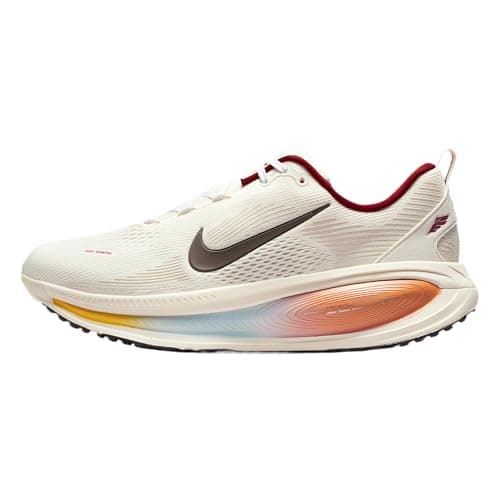
9.97 oz on a 37.4 mm heel in RTINGS' lab, with a 9.8 heel-firmness score and the Air Zoom unit Nike has built this shoe around for years. The honest cons: cushioning scored 6.0 against the Vomero's 7.6, forefoot long-run cushioning came in at 4.8, and forefoot height scored just 4.9.
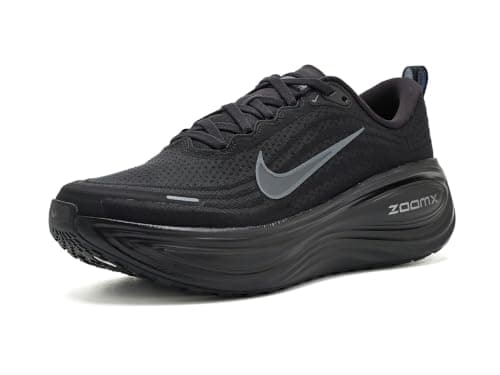
42.7 mm of heel stack, a 7.6 cushioning score and a 7.7 forefoot-height score, on ZoomX over ReactX. The cons: 10.49 oz is half an ounce heavier, energy return matched the Pegasus at 4.6, and it costs meaningfully more.
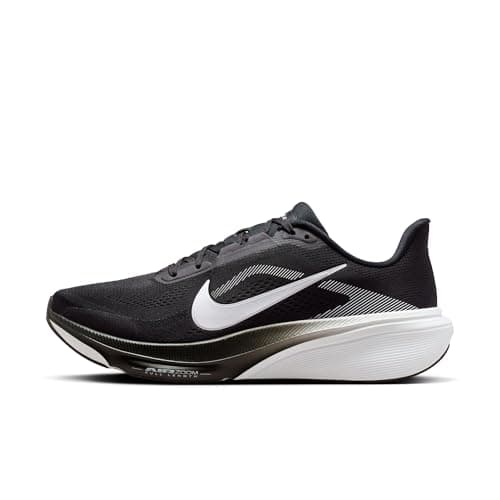
Nike's bigger max-cushion build above the Vomero 18, for runners whose problem is protection rather than pace. The cons: heavier again, and it is the least versatile shoe on this page.
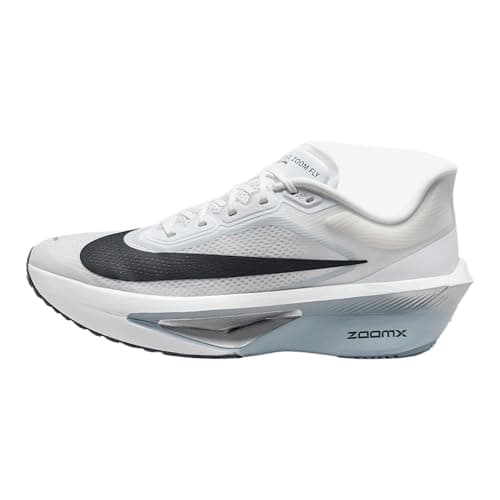
A plated tempo shoe rather than a daily trainer: this is the Nike for workout days. The cons: it is not a shoe for easy miles, and the plate makes it a poor first pair.
#ad · Price as of October 19, 2026 · Sold on Amazon through third-party sellers · Affiliate disclosure for the link to Nike Zoom Fly 6
The short answer
The Pegasus is the shoe Nike has sold to more runners than any other, and the Vomero is the one that sits above it on the shelf at a higher price. Shoppers reasonably read that ladder as “Vomero is the better Pegasus.” The lab does not support that reading. What separates them is volume — how much foam is under you and how much room is over your toes — not how well either shoe gives energy back.
If this is your first pair, either will do the job and our best running shoes for beginners page explains the trade-off at that level. If you are already running four or five days a week, the question is whether your complaint about your current shoes is “my legs hurt” (Vomero) or “this feels mushy and slow” (Pegasus).
The same-lab numbers
Figures from different reviewers are mostly noise, because labs disagree with each other and with the brands. RTINGS measured both of these shoes in one lab on one protocol. Every figure below is theirs, not ours — this site does not test shoes.
RTINGS lab measurement or score
Pegasus 42
Vomero 18
Weight (men's)
282.6 g (9.97 oz)
297.5 g (10.49 oz)
Heel stack
37.4 mm
42.7 mm
Measured drop
10.7 mm (10 mm listed)
10.3 mm (10 mm listed)
Energy return
4.6 (5.0 forefoot / 3.8 heel)
4.6 (5.0 forefoot / 3.6 heel)
Cushioning
6.0 (6.7 heel / 5.3 forefoot / 4.8 long-run)
7.6 (7.8 heel / 7.5 forefoot / 7.0 long-run)
Stability
7.9
8.1
Bounciness
4.6
5.1
Snappiness
6.5
6.8
Roll
5.7
6.0
True to size
9.2
9.3
Forefoot width / height
8.6 / 4.9
9.2 / 7.7
Arch width
9.6
8.2
Plate
None
None
Source: RTINGS Nike Pegasus 42 and RTINGS Nike Vomero 18, both checked 2026-10-19. RTINGS published breathability, time-to-dry and water-absorption scores for the Pegasus 42 (6.0, 5.7 and 7.1) but not for the Vomero 18, so that row is left out rather than half-filled.
Cushioning: 6.0 vs 7.6
This is the gap you are paying for. RTINGS scored the Vomero 18 at 7.6 for cushioning against the Pegasus 42's 6.0, and the sub-scores show where it comes from: 7.8 vs 6.7 at the heel, 7.5 vs 5.3 at the forefoot, and — the number that matters most to anyone training for a long race — 7.0 vs 4.8 for forefoot long-run cushioning.
That last pair of numbers is the one to read twice. Forefoot long-run cushioning is RTINGS' estimate of how protected the front of your foot stays once the foam has been loaded for a long time. A 4.8 is a shoe that starts to feel thin late in a long run. A 7.0 does not. If your weekly schedule includes a 90-minute long run, this is a bigger deal than the stack numbers suggest.
Against that, the Pegasus's firmness is a feature for a lot of runners. Its 9.8 heel-firmness score is the highest figure on this page, and a firm heel is what makes a shoe feel direct, quick and controlled on short and moderate runs. Firm is not the same as unforgiving. For what the stack and drop numbers actually do under your foot, read heel drop and stack height explained.
The surprise: identical energy return
Both shoes scored 4.6 overall for energy return, with the same 5.0 at the forefoot and 3.8 versus 3.6 at the heel. For a shoe that costs more and carries ZoomX — the foam Nike puts in its racing shoes — that is a genuinely useful thing to know before you buy.
The explanation is in the construction rather than the material. Nike's own product pages describe the Vomero 18 as ZoomX stacked on top of ReactX, a dual-density build where the livelier foam sits above a firmer carrier; the Pegasus 42 uses ReactX with a full-length Air Zoom unit. Neither has a plate. A thick, dual-density, plateless midsole is tuned for comfort, not for return, and the lab scores say exactly that.
So if you are buying the Vomero hoping it will make your easy pace faster, buy the Pegasus and put the difference towards a shoe that is actually built to go quick — see tempo shoe vs race shoe, or the Zoom Fly 6 further down this page.
Figures as published by the maker or the named reviewer; each value links to its source. A dash means the figure isn't in our cited sources.
Note the two weight figures. Nike lists the Pegasus 42 at approximately 10.5 oz and the Vomero 18 at approximately 11.5 oz for a men's US 10 on its Pegasus and Vomero product pages, while RTINGS weighed 9.97 oz and 10.49 oz on its own scale. Different sample sizes give different numbers; what survives both is the roughly half-ounce-to-one-ounce gap between them. We show both rather than picking whichever flatters the shoe.
Forefoot stack is the other number worth having: per the figures in our registry entries, both taken from these same RTINGS reviews, the Vomero carries 32.4 mm under the forefoot against the Pegasus's 26.7 mm. That 5.7 mm is where the long-run cushioning difference comes from.
Fit: the forefoot is the real difference
Both shoes fit true to length — 9.2 and 9.3 for true-to-size, 10 for length fit — so order your normal size in either. The difference is in cross-section, and it is large.
Forefoot height: 4.9 (Pegasus) vs 7.7 (Vomero). This is the vertical room over the top of your toes. A 4.9 is a snug, low-volume forefoot. If you have a high instep, hammertoes, bunions or you simply hate pressure on the top of your foot, that single score should decide this for you.
Forefoot width: 8.6 vs 9.2. The Vomero is also wider across the ball of the foot, though the gap is smaller than the height gap.
Arch width: 9.6 vs 8.2. This one runs the other way — the Pegasus is the roomier shoe through the midfoot, so a narrow-heeled runner may find the Vomero holds better there.
Nike sells both in Regular and Wide for men and women, which is a narrower size range than Brooks or New Balance offer. If you need more than a Wide, our best running shoes for wide feet and wide toe box pages go further afield.
Stability and rocker
Both are neutral shoes with no posts or guidance elements, and both scored well for a neutral trainer: 7.9 for the Pegasus, 8.1 for the Vomero. The Pegasus gets there through firmness (9.8 heel firmness, 8.7 external shape); the Vomero gets there through a broad, firm forefoot (8.9) under a softer heel. Two routes to a similar place.
Roll and snappiness also favor the Vomero slightly — 6.0 against 5.7 for roll, 6.8 against 6.5 for snappiness, with a notably better heel rocker score (8.3 vs 7.4). In practice that means the Vomero transitions from heel to toe a little more smoothly, which is what you want when you are tired. Neither shoe is rockered in the way a modern max-cushion trainer is. If you need real support rather than a steady neutral shoe, see neutral vs stability running shoes.
Level by level
This site picks by pace and weekly mileage, not by category, so here is where each shoe lands.
Couch to 5K. The NHS Couch to 5K plan is nine weeks of run/walk intervals three times a week. Either shoe works, and the Pegasus is the sensible buy: your runs are short, your legs are the limiting factor rather than the foam, and the money is better spent on a second pair later.
First 10K. Pegasus, unless the top of your foot is already complaining in your current shoes. Runs are still short enough that the long-run cushioning gap barely shows.
Half marathon.Hal Higdon's Novice 1 Half builds to a 10-mile long run. This is where the Vomero's 7.0 forefoot long-run cushioning starts paying for itself, especially if this is your only pair.
Marathon.Novice 1 Marathon runs to a 20-mile long run across 18 weeks. Take the Vomero for the long days and keep something lighter for everything else — our best marathon training shoes page sets out the whole rotation.
Can you own both?
You can, and it works better than most same-brand pairings because they do different jobs: the Pegasus for short and moderate runs where you want to feel the ground, the Vomero for long runs and the days after hard ones. What it is not is a fast/slow rotation — neither shoe is quick, and owning both still leaves you without a workout shoe.
If you are buying one pair, buy the one that matches your complaint: Pegasus if nothing hurts, Vomero if your feet and legs are sore after long runs. Our running shoe rotation guide explains the order to buy in, and when to replace running shoes covers what rotating does to how long each pair lasts.
The two Nikes to buy instead
The Vomero 18 is not enough shoe. The Nike Vomero Plus is the bigger max-cushion build above it, for runners whose problem is protection rather than pace. Nike Vomero 18 vs Vomero Plus compares those two directly.
You actually wanted the fast one. The Nike Zoom Fly 6 is Nike's plated tempo shoe — the one that does what people hope the Vomero will do. It belongs beside a daily trainer, not instead of one. See best tempo running shoes.
Buy the Pegasus 42 if: you like a firm, direct ride; your runs are mostly under an hour; you have a narrow or normal-volume foot; you want the cheaper shoe and would rather put the difference towards a second pair.
Buy the Vomero 18 if: you have a high instep or wide forefoot; your long runs leave your feet sore; you are training for a half or a marathon on one pair of shoes; you want the smoother heel-to-toe transition when you are tired.
Buy neither if: you want a responsive shoe. Both returned 4.6 for energy return in the same lab, and no amount of ZoomX in a dual-density stack changes that. Pair one of them with something plated instead.
In detail
The contenders, in full
The firmer, lighter, cheaper one
Nike Pegasus 42
C25K10KHALFMARATHON
7.9 /10
9.97 oz on a 37.4 mm heel in RTINGS' lab, with a 9.8 heel-firmness score and the Air Zoom unit Nike has built this shoe around for years. The honest cons: cushioning scored 6.0 against the Vomero's 7.6, forefoot long-run cushioning came in at 4.8, and forefoot height scored just 4.9.
#ad · Price as of October 19, 2026 · Sold on Amazon through third-party sellers · Affiliate disclosure for the link to Nike Pegasus 42
The taller, softer, roomier one
Nike Vomero 18
C25K10KHALFMARATHON
7.6 /10
42.7 mm of heel stack, a 7.6 cushioning score and a 7.7 forefoot-height score, on ZoomX over ReactX. The cons: 10.49 oz is half an ounce heavier, energy return matched the Pegasus at 4.6, and it costs meaningfully more.
#ad · Price as of October 19, 2026 · Sold on Amazon through third-party sellers · Affiliate disclosure for the link to Nike Vomero 18
If you want even more foam
Nike Vomero Plus
C25K10KHALFMARATHON
7.8 /10
Nike's bigger max-cushion build above the Vomero 18, for runners whose problem is protection rather than pace. The cons: heavier again, and it is the least versatile shoe on this page.
#ad · Price as of October 19, 2026 · Sold on Amazon through third-party sellers · Affiliate disclosure for the link to Nike Vomero Plus
If you want the fast one instead
Nike Zoom Fly 6
C25K10KHALFMARATHON
7.7 /10
A plated tempo shoe rather than a daily trainer: this is the Nike for workout days. The cons: it is not a shoe for easy miles, and the plate makes it a poor first pair.
#ad · Price as of October 19, 2026 · Sold on Amazon through third-party sellers · Affiliate disclosure for the link to Nike Zoom Fly 6
How we chose these
Researched, compared, scored for your level
We start from what a published training plan actually asks of a runner at your level, compare every model's published specs (stack height, drop, weight, plate, stability features, widths) against that job, and score each pick on a public rubric. Each spec links to where it came from, so you can shortlist in minutes and buy with the numbers in front of you.
Is the Nike Vomero 18 just a more cushioned Pegasus?+
Close to it, yes — and that is the honest answer rather than a dismissive one. RTINGS measured 5.3 mm more heel stack and scored it 7.6 for cushioning against the Pegasus's 6.0. What it is not is a livelier shoe: both scored 4.6 for energy return in the same lab.
Which is better for wide feet or a high instep?+
The Vomero 18, clearly. It scored 9.2 for forefoot width and 7.7 for forefoot height against the Pegasus's 8.6 and 4.9. The height score is the one that matters for a high instep. Both come in Regular and Wide only, so if a Wide is not enough see our wide feet page.
Is the Pegasus 42 good for a first marathon?+
It can get you there, but its 4.8 forefoot long-run cushioning score is the lowest number on this page and long runs are exactly where that shows. For an 18-week block we would put the Vomero (or a max-cushion trainer) on the long day and keep the Pegasus for everything shorter. Our best first marathon shoes page ranks the field.
Does the Vomero 18 have a carbon plate?+
No. RTINGS lists no plate in either shoe. Both are plateless, neutral daily trainers.
Why does Nike list heavier weights than RTINGS measured?+
Nike lists approximately 10.5 oz for the Pegasus 42 and approximately 11.5 oz for the Vomero 18 at a men's US 10; RTINGS weighed 9.97 oz and 10.49 oz on its own samples. Brand figures and lab figures use different sample sizes and different scales. The gap between the two shoes is consistent either way.
Which one is more stable?+
The Vomero by a hair — 8.1 against 7.9 — but they get there differently. The Pegasus is stable because it is firm (9.8 heel firmness); the Vomero is stable because it has a broad, firm forefoot (8.9) under softer foam. Both are neutral shoes, so if you need actual support see best stability running shoes.
Are Nike running shoes sold directly by Amazon?+
Current Nike running models on Amazon are generally listed by third-party sellers rather than by Nike itself, which is why our cards say so. Check the seller and the return terms before you buy, and if the size or colorway you want is not there at a sensible price, buy it from Nike or a running retailer instead — we would rather tell you that than push you at a bad listing.
Every figure above is traceable. Specs come from the maker's own pages or the named reviewer's published measurements (linked above); level definitions come from published training plans; prices come from Amazon's own API and carry the date they were checked, so you buy on a current number. Read the full method.