Best Nike Running Shoes: Pegasus, Vomero, Vaporfly or Alphafly
Nike's strength is the fast end of the range and its weakness is width. Eight shoes, split into the three you train in and the four built around a carbon Flyplate, with the honest note that most of these are only on Amazon through resellers.
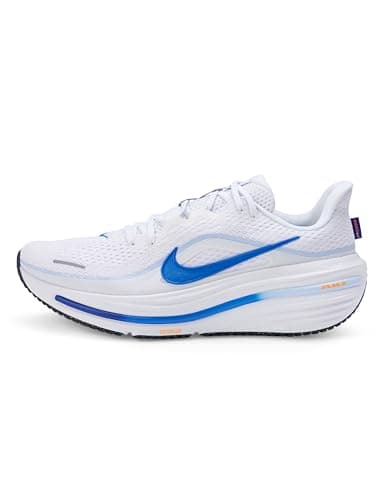
The only Nike that genuinely covers every level: ReactX foam with a full-length Air Zoom unit, a 37.4 mm heel and a 10 mm drop, in Regular and Wide. Start here unless you have a specific reason not to.
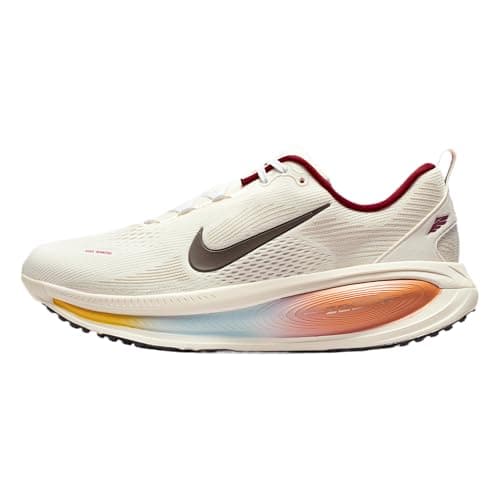
Full-length ZoomX at a 42.3 mm lab-measured heel, where RunRepeat measured 67.1% heel energy return against a 58.7% lab average. Bouncy rather than merely soft.
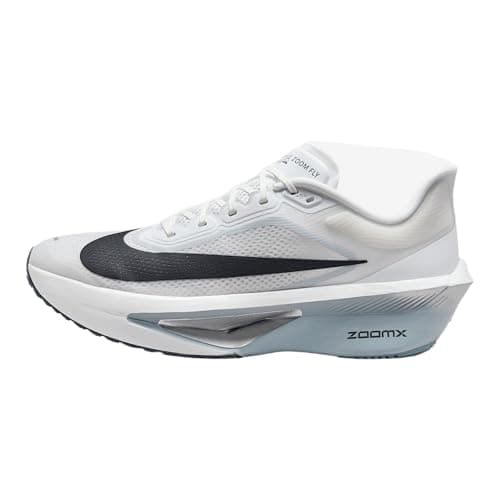
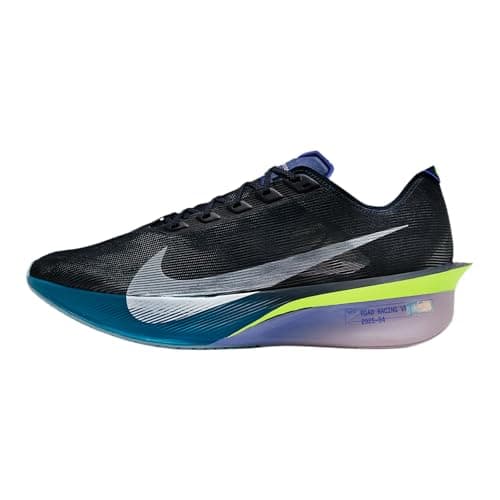
A carbon Flyplate under ZoomX and SR-02 foam at 8.6 oz on a 40 mm / 32 mm stack. The carbon shoe you can train in all week, which is the gap between the Pegasus and a racer.
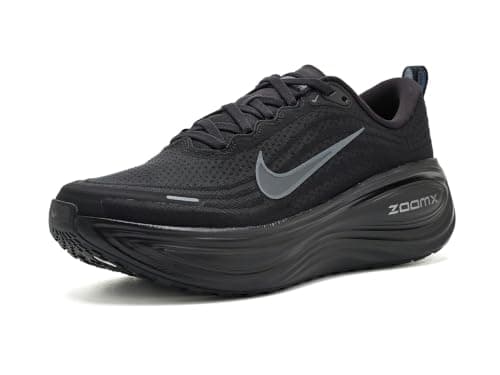
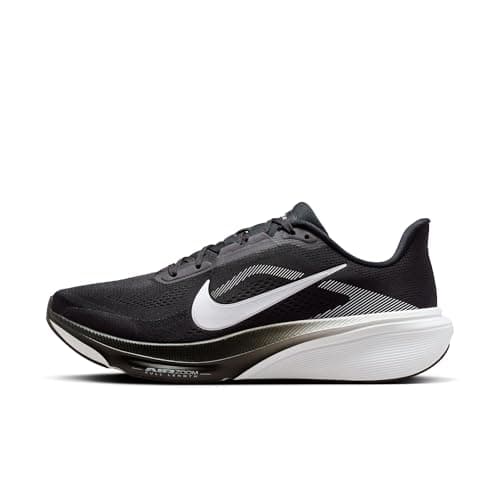
ZoomX stacked over ReactX at a 42.7 mm heel, which Nike calls its softest, most cushioned ride. At roughly 11.5 oz it is a heavy-duty easy-day shoe, not a versatile one.
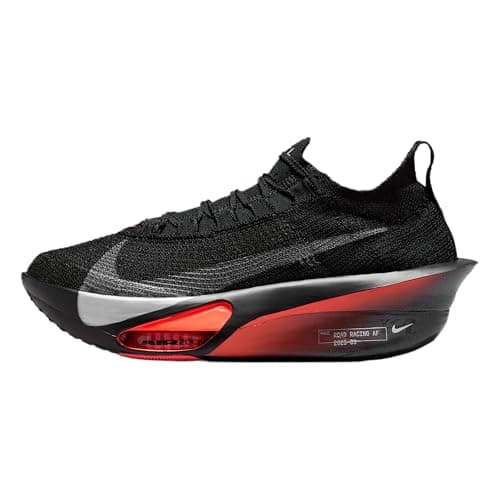
ZoomX, a carbon Flyplate and Air Pods on a 40 mm claimed heel; RunRepeat measured 38.1 mm, inside the World Athletics road limit. Nike's most cushioned racer, and a marathon tool first.
Cushlon 3.0 over a heel Air unit on a 44.3 mm heel, in Regular and Wide. RTINGS measured the drop at 12.5 mm against Nike's listed 10 mm, so it is a high-heeled shoe.
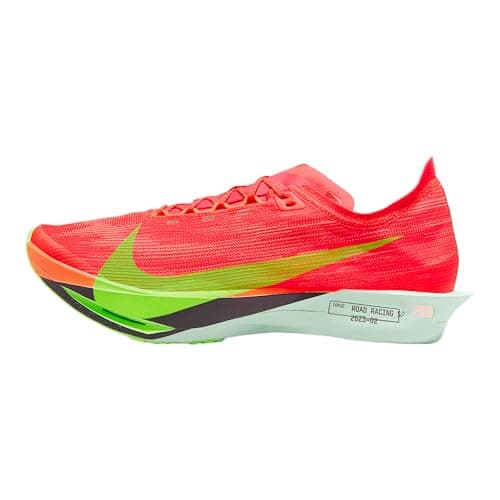
6.5 oz on a 35 mm claimed heel, lab-measured at 34.1 mm. The lighter all-distance racer; RunRepeat points heavier marathon runners to the Alphafly instead.
4.5 oz in the lab on a 27 mm heel with a full-length Flyplate, built on a track-spike last. A road-mile-to-10K shoe for forefoot runners, and nothing else.
#ad · Prices come live from Amazon, last checked October 11, 2026. Scores are ours, compiled from published specs and the maker's intended use. Product photos come from Amazon. Tap a row for the full write-up.
The best Nike running shoe for most runners is the Nike Pegasus 42: ReactX foam with a full-length Air Zoom unit on a 37.4 mm heel and a 10 mm drop, available in Regular and Wide, and the only Nike that genuinely suits every level from Couch to 5K to marathon training. For long runs, the Vomero Plus and its full-length ZoomX midsole. For tempo days, the Zoom Fly 6. For race day, the Vaporfly 4 at 10K and half distance, the Alphafly 3 for the marathon.
Decoding the Nike range
Pegasus — the all-rounder, and the only one to default to.
Vomero — the plush daily. Vomero Plus is the max-cushion version with full-length ZoomX.
Winflo — the value trainer.
Zoom Fly — carbon-plated super trainer: a race shoe's plate in a trainer's durability.
Vaporfly — the lighter carbon racer, strongest at 10K and half.
Alphafly — the marathon racer: more foam, more stack, Air Pods in the forefoot.
Streakfly — the short-distance racing flat.
Four of the eight shoes here are built around a carbon Flyplate. That tells you where Nike's engineering actually goes, and why the brand is a better choice for someone chasing a race time than for someone starting out.
Which Nike for your weekly mileage
Under 10 miles a week (Couch to 5K). Pegasus 42, or Winflo 12 if the budget is tight. Both cover the 30-minute sessions the NHS plan builds to. Our beginner roundup compares them with everything else.
10–20 miles a week (5K to 10K). Pegasus 42 for everything in Higdon's Novice 10K; Streakfly 2 only if you actually race 5Ks.
20–30 miles a week (half marathon). Pegasus 42 daily, Vomero Plus for the 10-mile long run in Novice 1 Half, Zoom Fly 6 for workouts, Vaporfly 4 on race day.
30–40 miles a week (marathon). Vomero Plus or Vomero 18 for long and recovery runs, Pegasus 42 daily, Zoom Fly 6 for tempo, Alphafly 3 for the race. The 20-mile long run in Novice 1 Marathon is where the Vomero Plus earns its stack.
You need support. Nike is the wrong brand. There is no current Nike stability shoe we rank — see best stability running shoes.
The four Flyplate shoes, from trainable to race-only.
Look at the weight column: the Streakfly 2 is 4.5 oz in RunRepeat's lab and the Vomero 18 is roughly 11.5 oz. That is a 7 oz spread inside one brand, and it is why "are Nikes good running shoes?" is an unanswerable question — which Nike, for which run?
Which Flyplate shoe, and is it legal
World Athletics caps road shoe sole thickness at 40 mm in its Book of Rules. All three Nike racers sit comfortably inside it on independent measurement: 38.1 mm on the Alphafly 3 against a 40 mm claim, and 34.1 mm on the Vaporfly 4 against a 35 mm claim. Choosing between them:
Marathon, or you are a heavier runner. Alphafly 3. RunRepeat explicitly points heavier marathon runners away from the Vaporfly and towards it.
10K or half. Vaporfly 4 at 6.5 oz.
Road mile to 10K, and you are a forefoot runner. Streakfly 2.
You want a carbon shoe you can also train in. Zoom Fly 6. This is the one most runners should actually buy, and our carbon plate guide explains why.
This is the honest limitation. Nike lists the Pegasus 42, Vomero 18, Vomero Plus and Winflo 12 in Regular and Wide only — no Narrow, no Extra Wide. The Vaporfly 4 and Alphafly 3 offer Normal and Wide; the Zoom Fly 6 and Streakfly 2 are standard width. If you need a 2A, a 4E or anything in between, Brooks, ASICS and New Balance are the brands to look at — see best Brooks running shoes or best running shoes for wide feet.
In detail
The picks, in full
1
Best Nike overall
Nike Pegasus 42
C25K10KHALFMARATHON
7.9 /10
The only Nike that genuinely covers every level: ReactX foam with a full-length Air Zoom unit, a 37.4 mm heel and a 10 mm drop, in Regular and Wide. Start here unless you have a specific reason not to.
#ad · Price as of October 11, 2026 · Sold on Amazon through third-party sellers · Affiliate disclosure for the link to Nike Pegasus 42
2
Best Nike for long runs
Nike Vomero Plus
C25K10KHALFMARATHON
7.8 /10
Full-length ZoomX at a 42.3 mm lab-measured heel, where RunRepeat measured 67.1% heel energy return against a 58.7% lab average. Bouncy rather than merely soft.
#ad · Price as of October 11, 2026 · Sold on Amazon through third-party sellers · Affiliate disclosure for the link to Nike Vomero Plus
3
Best Nike for tempo days
Nike Zoom Fly 6
C25K10KHALFMARATHON
7.7 /10
A carbon Flyplate under ZoomX and SR-02 foam at 8.6 oz on a 40 mm / 32 mm stack. The carbon shoe you can train in all week, which is the gap between the Pegasus and a racer.
#ad · Price as of October 11, 2026 · Sold on Amazon through third-party sellers · Affiliate disclosure for the link to Nike Zoom Fly 6
4
Plushest Nike daily
Nike Vomero 18
C25K10KHALFMARATHON
7.6 /10
ZoomX stacked over ReactX at a 42.7 mm heel, which Nike calls its softest, most cushioned ride. At roughly 11.5 oz it is a heavy-duty easy-day shoe, not a versatile one.
#ad · Price as of October 11, 2026 · Sold on Amazon through third-party sellers · Affiliate disclosure for the link to Nike Vomero 18
5
Best Nike marathon racer
Nike Alphafly 3
C25K10KHALFMARATHON
7.6 /10
ZoomX, a carbon Flyplate and Air Pods on a 40 mm claimed heel; RunRepeat measured 38.1 mm, inside the World Athletics road limit. Nike's most cushioned racer, and a marathon tool first.
#ad · Price as of October 11, 2026 · Sold on Amazon through third-party sellers · Affiliate disclosure for the link to Nike Alphafly 3
6
Best budget Nike
Nike Winflo 12
C25K10KHALFMARATHON
7.3 /10
Cushlon 3.0 over a heel Air unit on a 44.3 mm heel, in Regular and Wide. RTINGS measured the drop at 12.5 mm against Nike's listed 10 mm, so it is a high-heeled shoe.
#ad · Price as of October 11, 2026 · Affiliate disclosure for the link to Nike Winflo 12
7
Best Nike racer for 10K and half
Nike Vaporfly 4
C25K10KHALFMARATHON
7.1 /10
6.5 oz on a 35 mm claimed heel, lab-measured at 34.1 mm. The lighter all-distance racer; RunRepeat points heavier marathon runners to the Alphafly instead.
#ad · Price as of October 11, 2026 · Sold on Amazon through third-party sellers · Affiliate disclosure for the link to Nike Vaporfly 4
8
Best Nike for 5K racing
Nike Streakfly 2
C25K10KHALFMARATHON
6.6 /10
4.5 oz in the lab on a 27 mm heel with a full-length Flyplate, built on a track-spike last. A road-mile-to-10K shoe for forefoot runners, and nothing else.
Running a carbon racer into the ground. Race foams degrade faster than trainer foams, and the AAOS 500-mile guideline is generous for a super shoe. Keep them for races and key workouts.
How we chose these
Researched, compared, scored for your level
We start from what a published training plan actually asks of a runner at your level, compare every model's published specs (stack height, drop, weight, plate, stability features, widths) against that job, and score each pick on a public rubric. Each spec links to where it came from, so you can shortlist in minutes and buy with the numbers in front of you.
The Nike Pegasus 42 for most runners: ReactX foam with a full-length Air Zoom unit, a 37.4 mm heel and a 10 mm drop, in Regular and Wide, and the only Nike that suits every level. The Vomero Plus is the long-run pick and the Zoom Fly 6 is the carbon shoe you can train in.
What is the difference between the Nike Vaporfly and Alphafly?+
The Alphafly 3 is the marathon shoe: more foam, Air Pods in the forefoot and a 38.1 mm lab-measured heel at roughly 7 oz. The Vaporfly 4 is lighter at 6.5 oz on a 34.1 mm measured heel, and strongest at 10K and half distance. RunRepeat steers heavier marathon runners to the Alphafly.
Which Nike running shoe is best for beginners?+
The Pegasus 42, with the Winflo 12 as the budget option. Both come in Regular and Wide and have conventional 10 mm drops. Avoid starting in anything with a Flyplate — those are built for racing, not for a first training block.
Do Nike running shoes come in wide widths?+
Regular and Wide on the Pegasus 42, Vomero 18, Vomero Plus, Winflo 12, Vaporfly 4 and Alphafly 3 — but no Narrow and no Extra Wide. If you need 2A or 4E, Brooks, ASICS and New Balance publish much broader size runs.
Are Nike carbon-plated shoes legal for road races?+
Yes. World Athletics caps road shoe sole thickness at 40 mm, and independent lab measurements put the Alphafly 3 at 38.1 mm and the Vaporfly 4 at 34.1 mm, both inside the limit.
Every figure above is traceable. Specs come from the maker's own pages or the named reviewer's published measurements (linked above); level definitions come from published training plans; prices come from Amazon's own API and carry the date they were checked, so you buy on a current number. Read the full method.