If your ankles roll inward as you land, a stability shoe is the usual recommendation — and it is a reasonable one. It is also worth knowing that the biggest study on this found pronation did not predict injury at all. Seven shoes, and the honest version of the science.
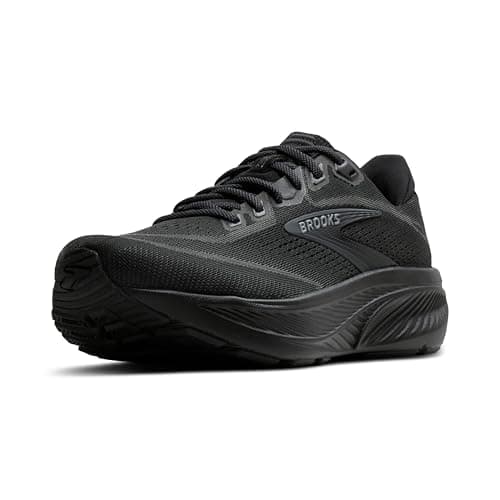
GuideRails support with four widths in both men's and women's, from Narrow to Extra Wide, and Brooks pitches it as a first shoe as well as a daily driver.
GuideRails support with four widths in both men's and women's, from Narrow to Extra Wide, and Brooks pitches it as a first shoe as well as a daily driver. Good to know: 10.6 oz is heavy for faster running and the 10 mm drop is on the high side.
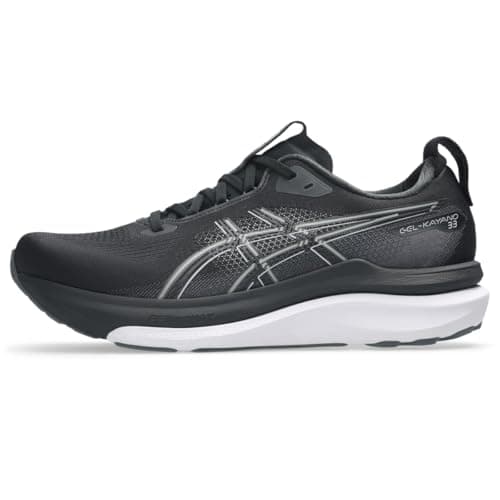
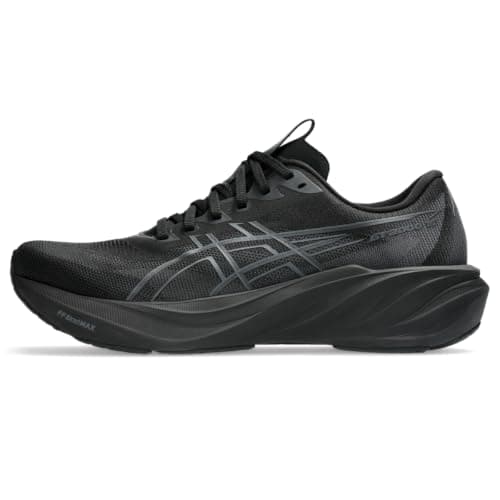
FF BLAST MAX over FF BLAST PLUS with the FluidSupport system and a 41 mm heel, so you get guidance without a firm ride. Good to know: 10.4 oz, and there is no women's extra wide.
CENTERPATH sidewalls rather than a medial post, a 6.7 mm measured drop in RTINGS' lab, and Medium, Wide and Extra Wide sizing. Good to know: it scored 4.5 for energy return in the same lab, including 1.9 at the heel.
New Balance's long-running support trainer, with Fresh Foam X under a medial-side stability build. Good to know: it is a fuller, taller shoe than the Guide and it rides firmer than the Kayano.
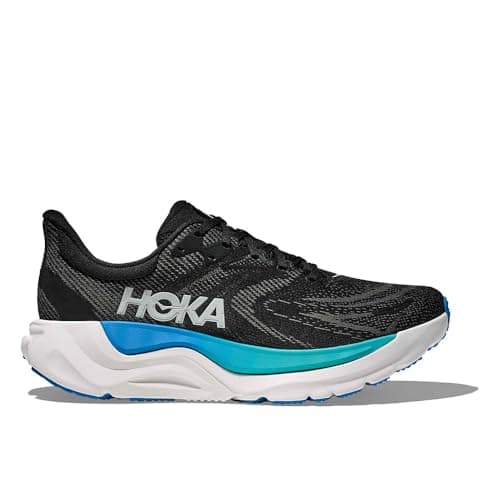
HOKA's J-Frame approach uses a firmer foam wrapped around the heel rather than a post, so it supports without the weight most support shoes carry. Good to know: HOKA's fit runs narrow through the midfoot for some runners.
The lighter, cheaper ASICS support shoe: 9.1 oz men's against the Kayano's 10.4, with the same basic job. Good to know: noticeably less foam underfoot than the Kayano for long runs.
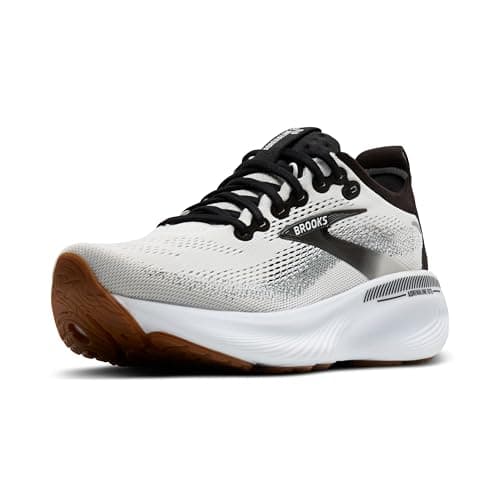
Here on purpose. The largest study on this put 927 novice runners in a neutral shoe and found pronators were not injured more often — so a neutral daily trainer is a legitimate starting point. Good to know: no guidance at all, which some runners genuinely miss on long runs.
The neutral shoe worth trying firstC25K10KHALFMARATHON
#ad · Prices come live from Amazon, last checked November 13, 2026. Scores are ours, compiled from published specs and the maker's intended use. Product photos come from Amazon. Tap a row for the full write-up.
The short answer
The best running shoe for overpronation is the Brooks Adrenaline GTS 25. It carries GuideRails support, it comes in four widths for both men and women — Narrow through Extra Wide — and Brooks sells it both as an everyday trainer and as a safe first running shoe. If you want the same support with more cushioning under the foot, the ASICS Gel-Kayano 33 is the pick; if you want it lighter, the HOKA Arahi 8.
One thing worth knowing before you spend: the largest study of pronation and running injuries found that pronators were not injured more often than neutral runners. A stability shoe is a reasonable choice if it feels better. It is not a medical necessity, and nobody should buy one out of fear.
What overpronation actually is
Pronation is the normal inward roll of the foot after it lands — it is how your foot absorbs load. Overpronation simply means that roll goes further or lasts longer than average. The Cleveland Clinic describes it as the foot rolling too far inward when you walk or run, and notes that it is extremely common and often causes no symptoms at all.
Two cheap ways to get a rough read on your own feet:
Look at an old pair of shoes. Set them on a flat table and look from behind. Heavy wear on the inside edge of the forefoot, or uppers that lean inward at the heel, points toward pronation.
Get a gait check at a running store. Free, takes ten minutes, and the person watching does it all day.
Neither of those is a diagnosis, and you do not need one to buy shoes. What you need is a shoe you can run in comfortably, which is a much easier test.
What the research found
This is where most pages on this topic stop short, so here is the whole finding. Nielsen and colleagues (British Journal of Sports Medicine, 2014) followed 927 novice runners — 1,854 feet — for a year. Every foot was classified with the Foot Posture Index, every runner was put in the same neutral shoe regardless of posture, and running was tracked by GPS watch. Over 326,803 km, 252 runners were injured.
Foot posture
Feet in study
Injury risk after 250 km vs neutral
Highly supinated
53
+11.0% (−10% to 32.1%), p=0.30
Supinated
369
−1.4% (−8.4% to 5.5%), p=0.69
Neutral
1,292
reference
Pronated
122
−8.1% (−17.6% to 1.3%), p=0.09
Highly pronated
18
+9.8% (−19.3% to 38.8%), p=0.51
Not one of those differences reached significance. And on injuries per 1,000 km, pronators came out lower than neutral runners — a difference of −0.37 per 1,000 km (−0.03 to −0.70, p=0.03). The authors' own conclusion is that the results “contradict the widespread belief that moderate foot pronation is associated with an increased risk of injury among novice runners taking up running in a neutral running shoe.”
The honest reading: buy a stability shoe because you like how it feels, not because a wear pattern frightened you. Plenty of runners genuinely prefer the planted feel of one — that is reason enough.
What we ranked on
The support system the maker publishes, and what kind it is — sidewalls, a frame, or firmer foam on the medial side.
Width range. A support shoe in the wrong width supports nothing. The spread here runs from two widths to four per gender.
Cushioning, because the old trade of “support means firm” no longer holds.
Weight, which still separates a 9.1 oz support shoe from a 10.6 oz one.
The three kinds of support
Guided sidewalls — Brooks GuideRails, Saucony CENTERPATH. Raised foam either side of the heel that limits excess movement rather than pushing the arch up. This is what most current support shoes use.
A frame — HOKA's J-Frame wraps a firmer foam around the heel and along the medial side. Same idea, lighter execution.
Geometry and firmer medial foam — ASICS FluidSupport, New Balance's medial build. Support comes from how the midsole is shaped and where the denser foam sits.
What almost nobody sells any more is the hard plastic medial post that defined support shoes a decade ago. If a page recommends “motion control” shoes to you, check whether the shoes it names still exist — our stability vs motion control running shoes page covers what happened to that category.
Widths, which matter more than the label
A foot that spreads under load needs room before it needs guidance. Here is what each pick actually publishes:
Shoe
Men's widths
Women's widths
Brooks Adrenaline GTS 25
1B, 1D, 2E, 4E
2A, 1B, 1D, 2E
ASICS Gel-Kayano 33
D, 2E, 4E
2A, B, D
Saucony Guide 19
Medium, Wide, Extra Wide
Medium, Wide
Brooks is the only one of the three offering four widths in both genders, which is a large part of why it leads this page. If you are at the wide end, best running shoes for wide feet has the full field; what shoe width letters mean explains the codes.
Level by level
Couch to 5K. The Adrenaline, or honestly the Ghost. At 20 to 30 minutes three times a week, comfort decides everything and the research above says posture does not. How to choose running shoes walks through the fitting itself.
First 10K. The Adrenaline or the GT-2000 15. One shoe covers the whole week at this volume.
Half marathon. The Kayano 33. Hal Higdon's Novice 1 Half builds to 10-mile long runs, and the extra foam starts to pay there.
Marathon. The Kayano 33 or the 860v15 for the long runs, with the wider stability field worth a look if you want a second pair in the rotation.
In detail
The picks, in full
1
Best overall for overpronation
Brooks Adrenaline GTS 25
C25K10KHALFMARATHON
9.4 /10
GuideRails support with four widths in both men's and women's, from Narrow to Extra Wide, and Brooks pitches it as a first shoe as well as a daily driver. Good to know: 10.6 oz is heavy for faster running and the 10 mm drop is on the high side.
+Brooks pitches it both as a daily driver in a training rotation and as a safe go-to for runners just starting out, and lists walking as a use
+Four widths in each gender, from Narrow to Extra Wide (4E men's, 2E women's)
+GuideRails support system, which Brooks says helps keep excess movement in check, paired with more nitrogen-infused cushioning in the heel and forefoot than before
+RunRepeat's lab measured a 36.1 mm heel and 25.9 mm forefoot: solid cushion without a towering stack
Good to know
Choose something else if you want a light, bouncy shoe for tempo days; this is a steady 10.6 oz support trainer built for everyday miles.
#ad · Price as of November 13, 2026 · Affiliate disclosure for the link to Brooks Adrenaline GTS 25
2
Best cushioned support
ASICS Gel-Kayano 33
C25K10KHALFMARATHON
9.4 /10
FF BLAST MAX over FF BLAST PLUS with the FluidSupport system and a 41 mm heel, so you get guidance without a firm ride. Good to know: 10.4 oz, and there is no women's extra wide.
#ad · Price as of November 13, 2026 · Affiliate disclosure for the link to ASICS Gel-Kayano 33
3
Best for a lower-drop feel
Saucony Guide 19
C25K10KHALFMARATHON
9.3 /10
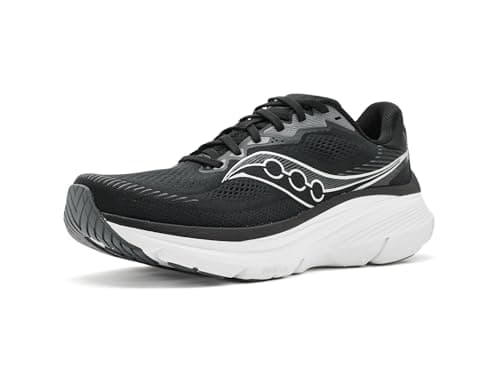
CENTERPATH sidewalls rather than a medial post, a 6.7 mm measured drop in RTINGS' lab, and Medium, Wide and Extra Wide sizing. Good to know: it scored 4.5 for energy return in the same lab, including 1.9 at the heel.
#ad · Price as of November 13, 2026 · Affiliate disclosure for the link to Saucony Guide 19
4
Best stability-and-cushion balance
New Balance Fresh Foam X 860v15
C25K10KHALFMARATHON
9.1 /10
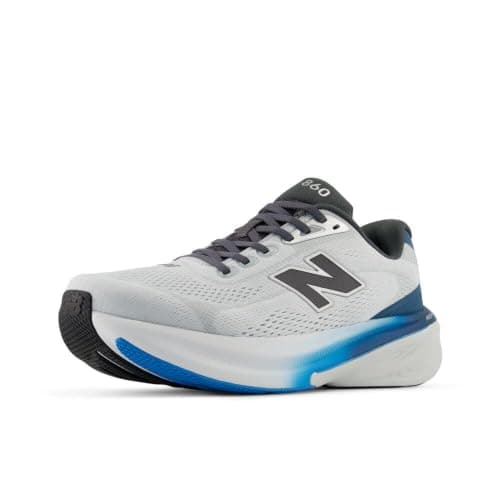
New Balance's long-running support trainer, with Fresh Foam X under a medial-side stability build. Good to know: it is a fuller, taller shoe than the Guide and it rides firmer than the Kayano.
#ad · Price as of November 13, 2026 · Affiliate disclosure for the link to New Balance Fresh Foam X 860v15
5
Best lightweight support
HOKA Arahi 8
C25K10KHALFMARATHON
9.4 /10
HOKA's J-Frame approach uses a firmer foam wrapped around the heel rather than a post, so it supports without the weight most support shoes carry. Good to know: HOKA's fit runs narrow through the midfoot for some runners.
#ad · Price as of November 13, 2026 · Sold on Amazon through third-party sellers · Affiliate disclosure for the link to HOKA Arahi 8
6
Best value support
ASICS GT-2000 15
C25K10KHALFMARATHON
9.5 /10
The lighter, cheaper ASICS support shoe: 9.1 oz men's against the Kayano's 10.4, with the same basic job. Good to know: noticeably less foam underfoot than the Kayano for long runs.
+9.1 oz for a men's 9 is among the lightest support shoes in this group
+The 3D Guidance System uses platform geometry for what Running Warehouse describes as unobtrusive, adaptive stability
+Men's D, 2E and 4E, and RunRepeat lists women's sizes from narrow to extra wide
+A taller stack than the GT-2000 14 (40 mm heel / 32 mm forefoot) with a softer FF BLAST MAX compound
Good to know
Choose something else if you want ASICS' dual-foam, taller-stack option; that's the Gel-Kayano 33, with FF BLAST MAX over FF BLAST PLUS and a 41 mm heel.
#ad · Price as of November 13, 2026 · Affiliate disclosure for the link to ASICS GT-2000 15
7
The neutral shoe worth trying first
Brooks Ghost 18
C25K10KHALFMARATHON
9.3 /10
Here on purpose. The largest study on this put 927 novice runners in a neutral shoe and found pronators were not injured more often — so a neutral daily trainer is a legitimate starting point. Good to know: no guidance at all, which some runners genuinely miss on long runs.
#ad · Price as of November 13, 2026 · Affiliate disclosure for the link to Brooks Ghost 18
The short answer, again
Our recommendation
If you only take one thing from this page, take the first of these two.
Buy this one
Brooks Adrenaline GTS 25
Best overall for overpronation
9.4 /10
GuideRails support with four widths in both men's and women's, from Narrow to Extra Wide, and Brooks pitches it as a first shoe as well as a daily driver.
#ad · Price as of November 13, 2026 · Affiliate disclosure for the link to ASICS Gel-Kayano 33
How we chose these
Researched, compared, scored for your level
We start from what a published training plan actually asks of a runner at your level, compare every model's published specs (stack height, drop, weight, plate, stability features, widths) against that job, and score each pick on a public rubric. Each spec links to where it came from, so you can shortlist in minutes and buy with the numbers in front of you.
What are the best running shoes for overpronation?+
The Brooks Adrenaline GTS 25 for most runners: GuideRails support and four widths in both men's and women's, from Narrow to Extra Wide. The ASICS Gel-Kayano 33 is the more cushioned option and the HOKA Arahi 8 the lighter one.
Do I need stability shoes if I overpronate?+
Not necessarily. The largest study on this — 927 novice runners followed for a year in the British Journal of Sports Medicine — put every runner in the same neutral shoe and found no significant difference in injury risk by foot posture, with pronators actually recording fewer injuries per 1,000 km. Buy a stability shoe if it feels better, not because you think you have to.
How do I know if I overpronate?+
Look at the wear on an old pair of running shoes from behind: heavy wear on the inside edge of the forefoot, or an upper that leans inward at the heel, points toward pronation. A free gait check at a running store is the other quick option. Neither is a diagnosis, and you do not need one to buy shoes.
Is overpronation bad for your knees?+
The evidence does not support treating it as a knee-injury risk on its own. If you have knee pain while running, that is a reason to see a clinician rather than to change shoes — our running shoes for knee pain page covers what a shoe can and cannot do there.
What is the difference between overpronation and supination?+
Overpronation is the foot rolling further inward than average after it lands; supination (or underpronation) is the opposite, with the foot staying rolled outward. The usual shoe recommendations are mirror images — stability for one, cushioned neutral for the other. Our best running shoes for supination page covers the other side.
Every figure above is traceable. Specs come from the maker's own pages or the named reviewer's published measurements (linked above); level definitions come from published training plans; prices come from Amazon's own API and carry the date they were checked, so you buy on a current number. Read the full method.