Best Running Shoes for Knee Pain, and What a Shoe Cannot Fix
Eight shoes that give an aching knee the easiest ride available — deep foam, a rocker that smooths the transition, or gentle guidance if your ankle collapses inward. Plus the honest part: the evidence that any shoe prevents knee pain is weak, and the NHS says not to run through it.
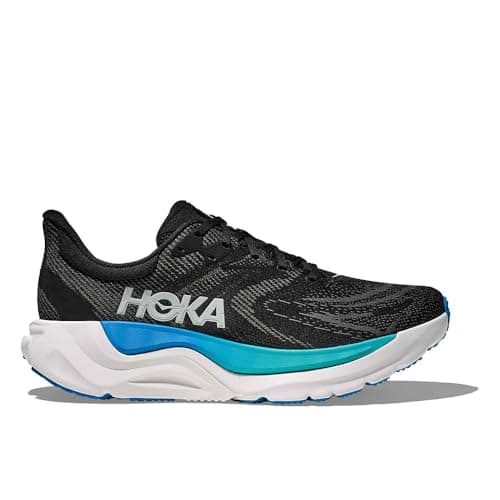
A 41.9 mm lab-measured heel at only 9.21 oz, with a MetaRocker that rolls you through the stride instead of asking the knee to do it. Also the easiest shoe here to walk in on a run/walk day.
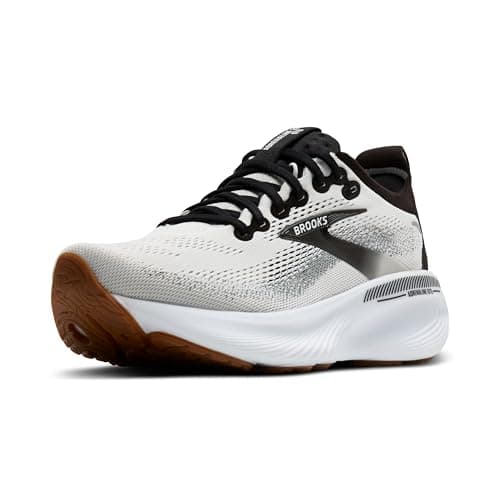
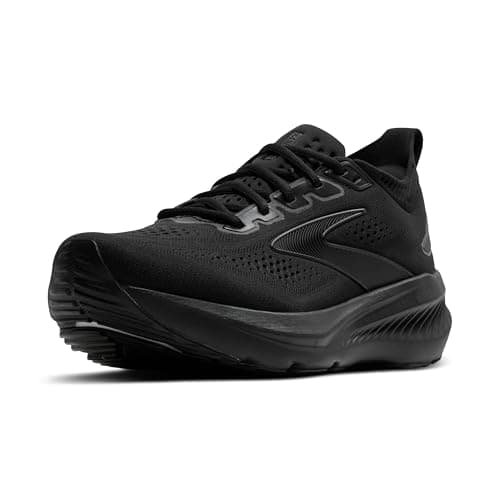
A GlideRoll rocker on a wide base at a 38.6 mm lab-measured heel. Brooks pitches it at slower and heavier runners, which is exactly the group that usually asks this question.
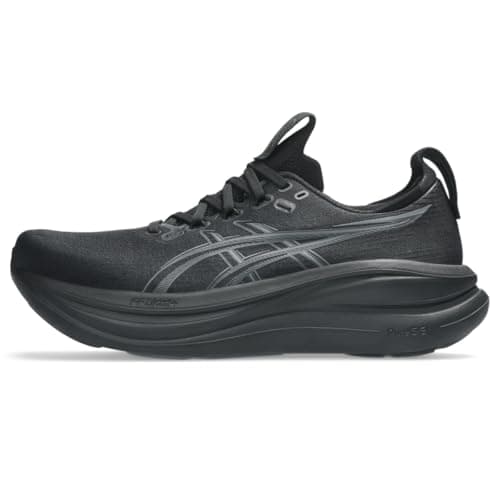
FF Blast+ over a PureGEL heel insert, 39.5 mm lab-measured. RunRepeat measured the drop at 5.2 mm against ASICS' listed 8 mm, so it is flatter than it looks on paper.
GuideRails are designed to limit excess movement rather than block pronation with a post. Four widths. The pick if a neutral shoe leaves your knee tracking inward late in a run.
Best if your ankle rolls inwardC25K10KHALFMARATHON
9.3 oz on a 41 mm stack with an H-Frame instead of a medial post: guidance you barely feel, which suits runners who find full stability shoes heavy and dead.
Dual-density DNA Tuned foam with a conventional 8 mm drop and wide and extra-wide sizes. Soft without the rocker geometry, if rockers feel unstable to you.
#ad · Prices come live from Amazon, last checked October 11, 2026. Scores are ours, compiled from published specs and the maker's intended use. Product photos come from Amazon. Tap a row for the full write-up.
The honest answer first
Most pages on this topic imply that the right shoe fixes a sore knee. It does not, and pretending otherwise is how people run themselves into a six-week layoff. Two published findings set the boundaries:
The 2022 Cochrane review on running shoes for preventing lower-limb injuries found the evidence weak and uncertain — including for the familiar practice of prescribing cushioning or motion control by foot type.
Nigg and colleagues (2015) argued the old paradigms (impact cushioning, pronation control) do not hold up, and proposed instead that runners self-select the footwear that feels comfortable and lets them move the way their body prefers.
So the realistic goal of this page is not treatment. It is: if you are going to keep running, and your knees are the thing complaining, these are the shoes that make each stride as undemanding as footwear can. Comfort is the selection criterion that actually has support behind it, which is the position Cleveland Clinic takes too.
What to look for in the shoe
A deep stack, measured rather than listed. Every pick here has a lab-measured heel above 36 mm, and five are above 38 mm. More foam does not guarantee less pain, but a thin, firm shoe is the one choice that reliably makes a sore knee worse on day one.
A rocker, if you like the feeling. The Clifton 11's MetaRocker and the Ghost Max 4's GlideRoll both roll the foot forward so less of the transition has to be driven at the ankle and knee. Some runners find rockers unstable; if that is you, the Glycerin 23 is the plush non-rocker option.
A broad base. A wide platform under the heel and forefoot keeps the shoe from tipping, which matters more as foam gets softer. The Ghost Max 4 and Bondi 9 are the widest platforms here.
Guidance only if you need it. If a neutral shoe lets your ankle roll inward, GuideRails (Adrenaline GTS 25) or an H-Frame (Arahi 8) is worth trying. Buy it because a neutral shoe feels unstable to you, not because of a shop's gait glance — see neutral vs stability running shoes.
Fit, before any of the above. The AAOS asks for about half an inch of toe room and a heel counter that grips. A shoe that lets your foot slide changes how you load the leg.
Watch the drop column. Listed and measured drops disagree on several of these shoes — RunRepeat measured 5.2 mm on the Gel-Nimbus 28 against ASICS' listed 8 mm, and 9.0 mm on the Ghost Max 4 against Brooks' listed 6 mm. Drop shifts load between the knee and the Achilles, so if you are sensitive to it, the lab figure is the one to read. Our heel drop and stack height guide explains why the two numbers differ.
Do not run if you have pain in your knee. That is the NHS's own wording, not ours.
Ice wrapped in a damp towel for up to 20 minutes, several times a day, is the first-line self-care it describes.
If the pain has not gone after a week, stop and get it looked at by a GP or physiotherapist. How soon you can run again depends on the cause and severity.
On prevention, the same NHS page says it is important to buy the correct running shoes and best to get fitted at a running shop — which is a statement about fit, not about buying a particular technology.
The things that help more than shoes
Volume, not footwear. Knee pain in new runners usually tracks a jump in mileage or intensity. The NHS Couch to 5K plan builds slowly with walk breaks for exactly this reason, and Higdon's Novice 1 Half only reaches a 10-mile long run after twelve weeks.
Walk breaks. Inserting walking into a run cuts cumulative load without cutting the session.
Retiring dead shoes. The AAOS puts a shoe's useful life at roughly 500 miles; a flattened midsole is a real change in how your leg is loaded. See when to replace running shoes.
Strength work and professional advice. Outside our lane, and better than anything on this page.
Which one for your mileage
Couch to 5K, under 10 miles a week. Clifton 11 or Ghost Max 4 — both suit run/walk.
5K to 10K. Clifton 11 or Gel-Nimbus 28.
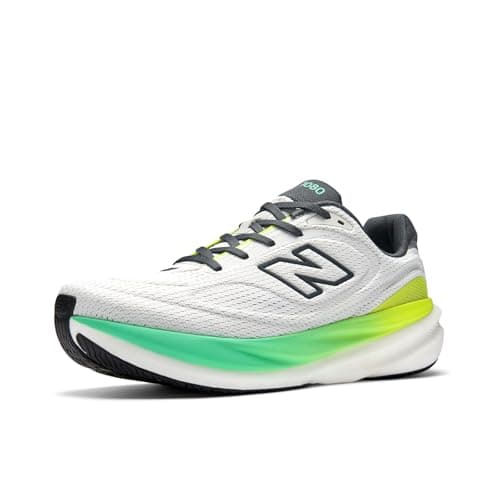
Half marathon. 1080 v15 or Gel-Nimbus 28 for long runs, Clifton 11 for the rest.
Your ankle collapses inward. Adrenaline GTS 25, or Arahi 8 for something lighter.
In detail
The picks, in full
1
Best overall for sore knees
HOKA Clifton 11
C25K10KHALFMARATHON
8.0 /10
A 41.9 mm lab-measured heel at only 9.21 oz, with a MetaRocker that rolls you through the stride instead of asking the knee to do it. Also the easiest shoe here to walk in on a run/walk day.
#ad · Price as of October 11, 2026 · Sold on Amazon through third-party sellers · Affiliate disclosure for the link to HOKA Clifton 11
2
Best broad, stable platform
Brooks Ghost Max 4
C25K10KHALFMARATHON
7.6 /10
A GlideRoll rocker on a wide base at a 38.6 mm lab-measured heel. Brooks pitches it at slower and heavier runners, which is exactly the group that usually asks this question.
#ad · Price as of October 11, 2026 · Affiliate disclosure for the link to Brooks Ghost Max 4
3
Most forgiving cushioning
ASICS Gel-Nimbus 28
C25K10KHALFMARATHON
7.8 /10
FF Blast+ over a PureGEL heel insert, 39.5 mm lab-measured. RunRepeat measured the drop at 5.2 mm against ASICS' listed 8 mm, so it is flatter than it looks on paper.
#ad · Price as of October 11, 2026 · Affiliate disclosure for the link to ASICS Gel-Nimbus 28
4
Best if your ankle rolls inward
Brooks Adrenaline GTS 25
C25K10KHALFMARATHON
8.3 /10
GuideRails are designed to limit excess movement rather than block pronation with a post. Four widths. The pick if a neutral shoe leaves your knee tracking inward late in a run.
+Brooks pitches it both as a daily driver in a training rotation and as a safe go-to for runners just starting out, and lists walking as a use
+Four widths in each gender, from Narrow to Extra Wide (4E men's, 2E women's)
+GuideRails support system, which Brooks says helps keep excess movement in check, paired with more nitrogen-infused cushioning in the heel and forefoot than before
+RunRepeat's lab measured a 36.1 mm heel and 25.9 mm forefoot: solid cushion without a towering stack
What it doesn't
−10.6 oz for the men's shoe is heavy for faster running
−A 10 mm drop is on the high side if you prefer a flatter, lower-drop shoe
−Brooks rates the cushion 'Balanced'; runners who want Brooks' 'Plush' tier with GuideRails need the Glycerin GTS 23
Skip this if…
…you want a light, bouncy shoe for tempo days; this is a steady 10.6 oz support trainer built for everyday miles
#ad · Price as of October 11, 2026 · Affiliate disclosure for the link to New Balance 1080 v15
6
Best light guided shoe
HOKA Arahi 8
C25K10KHALFMARATHON
8.3 /10
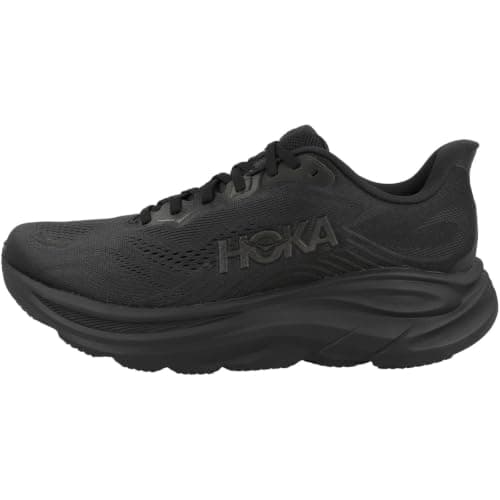
9.3 oz on a 41 mm stack with an H-Frame instead of a medial post: guidance you barely feel, which suits runners who find full stability shoes heavy and dead.
#ad · Price as of October 11, 2026 · Sold on Amazon through third-party sellers · Affiliate disclosure for the link to HOKA Arahi 8
7
Best traditional plush ride
Brooks Glycerin 23
C25K10KHALFMARATHON
7.7 /10
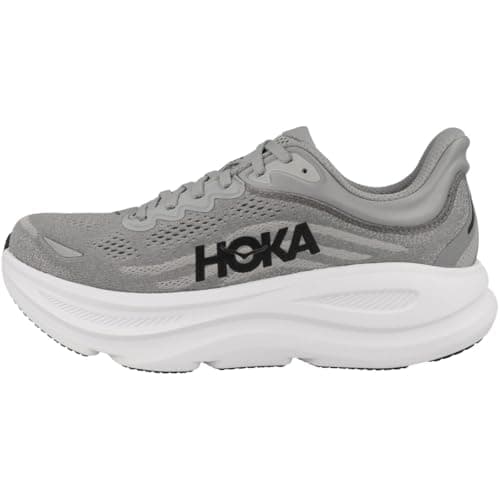
Dual-density DNA Tuned foam with a conventional 8 mm drop and wide and extra-wide sizes. Soft without the rocker geometry, if rockers feel unstable to you.
#ad · Price as of October 11, 2026 · Sold on Amazon through third-party sellers · Affiliate disclosure for the link to HOKA Bondi 9
Mistakes that make knee pain worse
Running through it because the new shoes should help. The NHS says do not run with knee pain. A shoe purchase is not a treatment plan.
Switching to a very different drop mid-flare. Moving from a 10 mm shoe to a 4 mm shoe shifts load to the calf and Achilles. Change one thing at a time, and not while something hurts.
Buying a motion-control shoe on a gait-analysis hunch. The Cochrane review found that practice poorly supported. Comfort is the better test.
Keeping a flattened pair "for easy runs". Easy runs are most of your mileage. That is the worst place for a dead shoe.
Adding mileage and a new shoe in the same week. If something then hurts, you cannot tell which change caused it.
How we chose these
Researched, compared, scored for your level
We start from what a published training plan actually asks of a runner at your level, compare every model's published specs (stack height, drop, weight, plate, stability features, widths) against that job, and score each pick on a public rubric. Each spec links to where it came from, so you can shortlist in minutes and buy with the numbers in front of you.
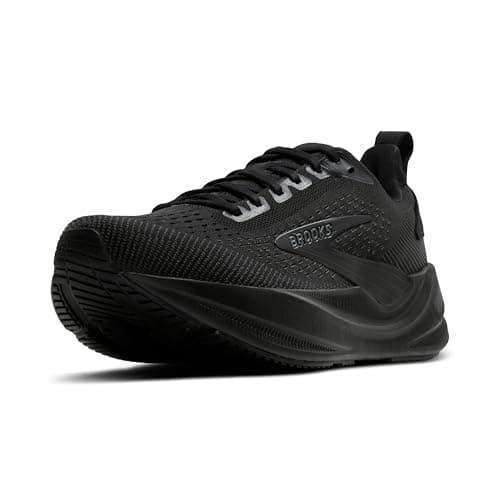
The HOKA Clifton 11 is our pick: a 41.9 mm lab-measured heel at 9.21 oz with a MetaRocker that smooths the stride. The Brooks Ghost Max 4 is the broader, more stable alternative, and the Brooks Adrenaline GTS 25 is the one to buy if your ankle rolls inward. None of them is a treatment for knee pain.
Can running shoes cause or cure knee pain?+
A worn-out or badly fitting shoe can contribute, and replacing it can help. But the 2022 Cochrane review found the evidence that any shoe type prevents lower-limb running injuries is weak, so no shoe should be sold to you as a cure. Training load is usually the bigger lever.
Should I run with knee pain if my shoes are comfortable?+
No. The NHS guidance is explicit: do not run if you have pain in your knee. It recommends ice for up to 20 minutes several times a day, and seeing a GP or physiotherapist if the pain has not cleared after a week.
Do I need maximum cushioning for knee pain?+
Not necessarily — but a thin, firm shoe is the one choice that usually feels worse immediately. Every pick here has a lab-measured heel above 36 mm. Beyond that, pick the one that feels best to run in; comfort is the criterion with the most support behind it.
Does a stability shoe help knee pain?+
It can if a neutral shoe lets your ankle collapse inward and your knee track with it. Try the Brooks Adrenaline GTS 25 or the lighter HOKA Arahi 8. Do not buy one purely because a shop watched you walk — that practice is poorly supported by the evidence.
Every figure above is traceable. Specs come from the maker's own pages or the named reviewer's published measurements (linked above); level definitions come from published training plans; prices come from Amazon's own API and carry the date they were checked, so you buy on a current number. Read the full method.