A road marathon asks a watch for four hours. An ultra asks for fifteen, in terrain where a breadcrumb trail is not a map. Five watches ranked on the two specs that decide it — published GPS battery life and whether real maps live on the watch.
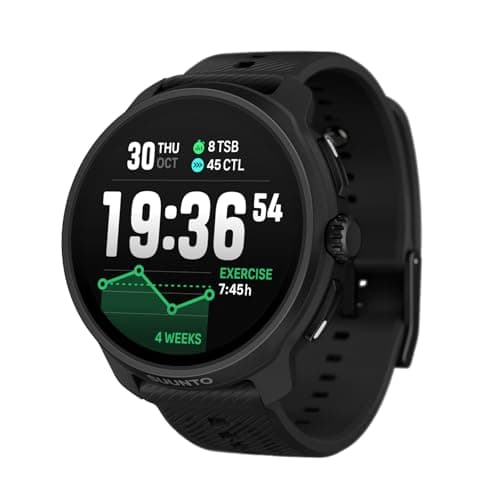
Up to 65 hours of multi-band GPS and up to 250 hours in Tour mode, 32 GB of offline maps with route planning and heatmaps, a sapphire lens and an LED flashlight.
Up to 65 hours of multi-band GPS and up to 250 hours in Tour mode, 32 GB of offline maps with route planning and heatmaps, a sapphire lens and an LED flashlight. Good to know: 87 g and 48.6 mm make it the biggest watch here, and it is far more watch than a road 10K needs.
Up to 55 hours of dual-band GPS and the same 32 GB of offline maps, in a sapphire-and-steel case that lists for a hundred dollars less than the Vertical 2. Good to know: a 49 mm case is a lot of watch on a smaller wrist.
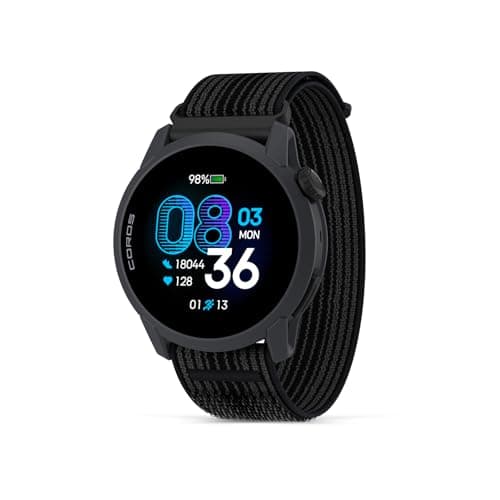
Up to 41 hours with all systems on, 31 in dual-frequency, downloadable global maps, and 32 g on the nylon band. Good to know: a mineral glass lens rather than sapphire, and no contactless payment on the spec list.
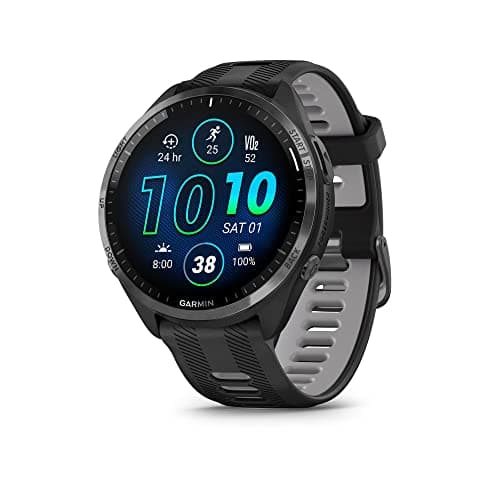
Preloaded road and trail maps, hill score, running tolerance, realtime stamina and an LED flashlight, in the ecosystem most training plans already sync with. Good to know: up to 26 hours of GPS-only battery is the shortest figure on this page.
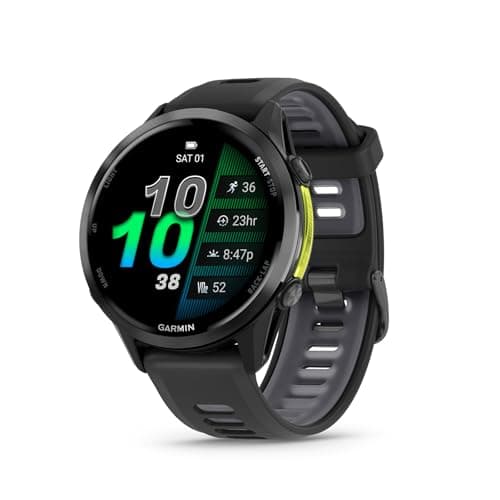
Up to 31 hours GPS-only and 23 days as a smartwatch with the same preloaded maps and 32 GB, for less than the 970. Good to know: no flashlight, no speaker or microphone, and none of Garmin's newest running metrics.
#ad · Prices come live from Amazon, last checked November 6, 2026. Scores are ours, compiled from published specs and the maker's intended use. Product photos come from Amazon. Tap a row for the full write-up.
Who this page is for
If you run roads and race up to a marathon, you do not need anything on this page. Our best GPS watch for marathon training roundup covers that, and a Forerunner 570 will outlive your longest run four times over.
This page is for the runner whose day out is measured in hours rather than miles: a 50K with a late start, a mountain race, a long self-supported day where the route is a line on a map rather than a marked course. Two specs decide it, and everything else is detail.
What we ranked on
We do not test watches. Every figure here is the maker's own published specification, linked on the spec that uses it, and read on 6 November 2026. Two criteria, in this order:
Published GPS battery life, in the mode you would actually use. Every brand quotes a headline number for its lowest-accuracy mode. The honest comparison is the multi-band or dual-frequency figure, because that is the mode that holds a track in a canyon or under trees.
Real maps on the watch. Not a breadcrumb of where you have been — a stored map with contours and trails you can zoom and follow when you have gone wrong.
Everything after that is tie-breaking: weight, lens material, whether there is a flashlight, and whose app your training plan already lives in.
The battery table
Published figures, from each maker's own spec page. Note how different the modes are.
Watch
Best-accuracy GPS
Longest listed mode
On-watch maps
Suunto Vertical 2
Up to 65 h (multi-band)
Up to 250 h (Tour)
32 GB offline
Suunto Race 2
Up to 55 h (dual-band)
—
32 GB offline
COROS Pace 4
Up to 31 h (all-systems dual-frequency)
Up to 41 h (all systems on)
Downloadable global maps
Garmin Forerunner 965
Up to 19 h (all-systems + multi-band)
Up to 31 h (GPS-only)
Preloaded road and trail
Garmin Forerunner 970
Up to 21 h (all-systems + multi-band)
Up to 26 h (GPS-only)
Preloaded road and trail
Read the first column, not the second. In the mode that keeps a trace honest under tree cover, the Vertical 2 lists three times the Forerunner 970's figure and the Race 2 lists more than two and a half times it. For a sub-24-hour race that is the difference between finishing on one charge and carrying a battery pack.
Maps, and why a breadcrumb is not one
Every watch here will draw the line you have already run. That is a breadcrumb, and it is only useful for retracing your steps. A map is different: stored terrain you can scroll ahead of yourself when the trail forks and the flagging has gone.
All five have real maps, which was not true of this category three years ago. The Suuntos and the COROS carry 32 GB and let you download regions; the Garmins ship with road and trail maps preloaded. The practical difference is preparation: Garmin's are there the day you open the box, Suunto's and COROS' you load for the area you are going to.
The Garmin question
Here is the honest case against our own top pick. If your training plan, your coach, your club and five years of history all live in Garmin Connect, a Forerunner is the right watch even though it lists a third of the battery. Switching ecosystems costs you continuity, and continuity is worth more than hours you may never use in a race you have not entered.
The 970 is the one to take if you want Garmin's newest trail tools — hill score, running tolerance and realtime stamina — and the 965 is the one to take if you want the battery and the maps for less money. We compare that pair in full in Garmin Forerunner 570 vs 970, and Garmin vs COROS covers the brand-level argument.
Size, weight and the wrist you have
Battery comes from a bigger battery, and a bigger battery comes from a bigger watch. The Vertical 2 is 48.6 mm across and 87 g; Suunto fits it to wrists from 125 to 175 mm. The COROS Pace 4 is 43.4 mm and 32 g on the nylon band, which is under half the weight for about half the best-accuracy battery. That trade is the real decision on this page, and it is a personal one: a watch you stop wearing is worth nothing.
If you are building toward your first long day rather than your tenth, Hal Higdon's Novice 1 Marathon is still the block most people arrive through, and our best trail running shoes page is the other half of the kit.
In detail
The picks, in full
1
Best overall for trail and ultra
Suunto Vertical 2
C25K10KHALFMARATHON
9.5 /10
Up to 65 hours of multi-band GPS and up to 250 hours in Tour mode, 32 GB of offline maps with route planning and heatmaps, a sapphire lens and an LED flashlight. Good to know: 87 g and 48.6 mm make it the biggest watch here, and it is far more watch than a road 10K needs.
+Up to 65 hours of multi-band GPS, which is more than twice what any Forerunner on this site lists
+32 GB of offline maps on the watch, with route planning and heatmaps rather than a breadcrumb
+A sapphire lens and steel bezel at a price where most watches use mineral glass
+An LED flashlight, which stops being a gimmick the first time you need one at a dark aid station
+100 m water resistance and 115+ sport modes
Good to know
Choose something else if you run roads and race distances up to a marathon; a Forerunner 570 or a COROS Pace 4 gives you the training tools in a far smaller case.
#ad · Suunto list price $599 as of November 6, 2026 · Affiliate disclosure for the link to Suunto Vertical 2
2
Most battery per dollar
Suunto Race 2
C25K10KHALFMARATHON
9.6 /10
Up to 55 hours of dual-band GPS and the same 32 GB of offline maps, in a sapphire-and-steel case that lists for a hundred dollars less than the Vertical 2. Good to know: a 49 mm case is a lot of watch on a smaller wrist.
#ad · Suunto list price $499 as of November 6, 2026 · Affiliate disclosure for the link to Suunto Race 2
3
Best light option
COROS Pace 4
C25K10KHALFMARATHON
9.6 /10
Up to 41 hours with all systems on, 31 in dual-frequency, downloadable global maps, and 32 g on the nylon band. Good to know: a mineral glass lens rather than sapphire, and no contactless payment on the spec list.
#ad · Price as of November 6, 2026 · Affiliate disclosure for the link to COROS Pace 4
4
Best if your training lives in Garmin
Garmin Forerunner 970
C25K10KHALFMARATHON
9.8 /10
Preloaded road and trail maps, hill score, running tolerance, realtime stamina and an LED flashlight, in the ecosystem most training plans already sync with. Good to know: up to 26 hours of GPS-only battery is the shortest figure on this page.
#ad · Price as of November 6, 2026 · Affiliate disclosure for the link to Garmin Forerunner 970
5
The longer-lasting Garmin
Garmin Forerunner 965
C25K10KHALFMARATHON
9.6 /10
Up to 31 hours GPS-only and 23 days as a smartwatch with the same preloaded maps and 32 GB, for less than the 970. Good to know: no flashlight, no speaker or microphone, and none of Garmin's newest running metrics.
#ad · Price as of November 6, 2026 · Affiliate disclosure for the link to Garmin Forerunner 965
The short answer, again
Our recommendation
If you only take one thing from this page, take the first of these two.
Buy this one
Suunto Vertical 2
Best overall for trail and ultra
9.5 /10
Up to 65 hours of multi-band GPS and up to 250 hours in Tour mode, 32 GB of offline maps with route planning and heatmaps, a sapphire lens and an LED flashlight.
#ad · Suunto list price $599 as of November 6, 2026 · Affiliate disclosure for the link to Suunto Vertical 2
The runner-up
Suunto Race 2
Most battery per dollar
9.6 /10
Up to 55 hours of dual-band GPS and the same 32 GB of offline maps, in a sapphire-and-steel case that lists for a hundred dollars less than the Vertical 2.
#ad · Suunto list price $499 as of November 6, 2026 · Affiliate disclosure for the link to Suunto Race 2
How we chose these
Researched, compared, scored for your level
We start from what a published training plan actually asks of a runner at your level, compare every model's published specs (stack height, drop, weight, plate, stability features, widths) against that job, and score each pick on a public rubric. Each spec links to where it came from, so you can shortlist in minutes and buy with the numbers in front of you.
Which GPS watch has the longest battery for an ultra?+
The Suunto Vertical 2, on published figures: up to 65 hours in Performance mode with multi-band GPS, and up to 250 hours in Tour mode, which Suunto lists as lower GPS accuracy with heart rate switched off. The Suunto Race 2 is next at up to 55 hours of dual-band GPS.
Do I need multi-band GPS for trail running?+
It is the mode worth paying for in terrain. Multi-band (or dual-frequency) receivers use two signals from each satellite, which is what holds a track together under tree cover and in canyons where a single-band fix wanders. It also costs battery, which is why we rank on the multi-band figure rather than the headline one.
Is a Suunto better than a Garmin for trail?+
On battery and price, yes — the Vertical 2 and Race 2 list far more multi-band GPS time than any Forerunner here. On software, Garmin Connect is the larger ecosystem and the one most training plans and coaches already use. If your training history lives in Garmin, that is a real reason to stay.
Do all of these have maps on the watch?+
Yes, though they arrive differently. The Garmins ship with road and trail maps preloaded. The Suuntos carry 32 GB of offline map storage and the COROS Pace 4 lists downloadable global maps, so you load the region you are traveling to before you go.
Why is the Suunto button different from the Amazon ones?+
Suunto is a brand partner of ours, so their button goes to Suunto's own store, where the full colorway and size run lives and warranty registration happens. It is marked #ad exactly like our Amazon links and it never changes a ranking — the full detail is on our affiliate disclosure page.
Every figure above is traceable. Specs come from the maker's own pages or the named reviewer's published measurements (linked above); level definitions come from published training plans; prices come from Amazon's own API and carry the date they were checked, so you buy on a current number. Read the full method.