Best Trail Running Shoes: Three Shoes, Chosen by Lug Depth
Trail shoes are not graded by brand but by how deep the lugs are and how long the outsole lasts. These three cover the useful spread — 4.5 mm lugs for technical ground, 3.1 mm for gravel and mixed paths, and a max-cushion option for long, slow days.
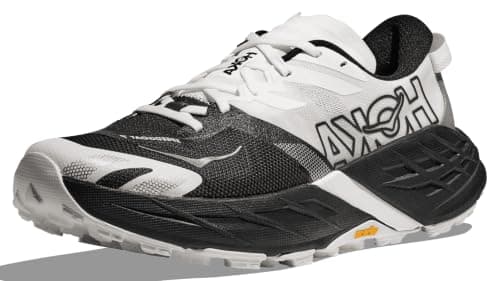
4.5 mm lugs on Vibram Megagrip, and the best outsole durability of the three in RunRepeat's Dremel test at 0.6 mm removed — a result RunRepeat calls exceptional. Narrow, Normal and Wide.
Best overall, and for technical trails10KHALFMARATHON
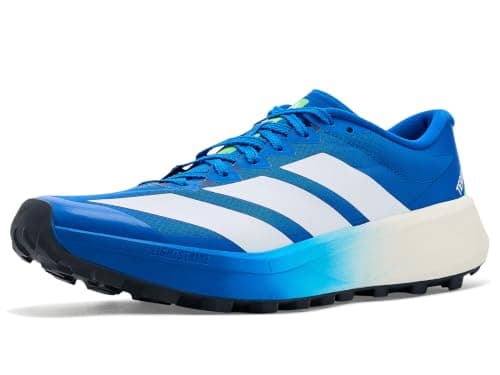
RunRepeat's Best Overall trail pick and the cheapest here at a $140 list price: a full-length Continental outsole, 3.1 mm lugs and a 9.1 mm measured drop that suits road runners stepping off the pavement.
Best first trail shoe, and best for gravelC25K10KHALF
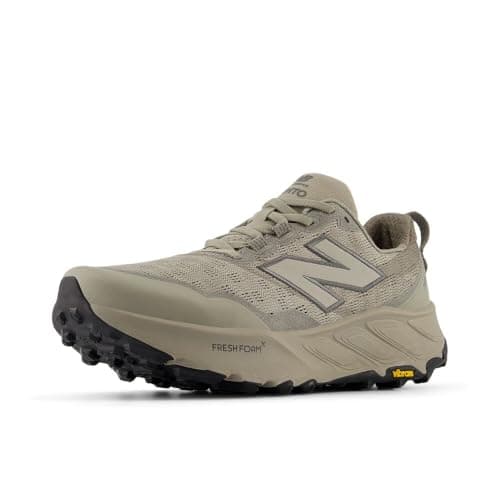
37.3 mm of measured heel foam, Vibram Megagrip and a 5/5 torsional rigidity score — the stiffest RunRepeat gives — in Narrow, Normal, Wide and X-Wide. Built for distance, not for nimbleness.
#ad · Prices come live from Amazon, last checked October 11, 2026. Scores are ours, compiled from published specs and the maker's intended use. Product photos come from Amazon. Tap a row for the full write-up.
Why this list is short
Three shoes, not ten. Trail running is not the core of this site — our business is picking road shoes by pace and weekly mileage — so we rank only the trail shoes we can compare on full lab data rather than padding the list. All three figures below come from RunRepeat's lab: lug depth measured with a gauge, outsole durability measured by running a Dremel against the rubber, and torsional rigidity scored 1–5.
Lug depth is the spec that decides it
A trail shoe's lugs are the rubber teeth on the outsole. Deeper lugs bite into soft or loose ground; shallower lugs roll better on hard-packed surfaces and last longer on tarmac. RunRepeat's trail shoe guide treats anything above about 4 mm as deep-lug, technical-terrain territory. On that scale:
Speedgoat 7 — 4.5 mm. Deep. Mud, loose rock, wet roots, steep descents.
Hierro v9 — 3.3 mm. Average. Mixed terrain, with a lot of cushioning on top.
Terrex Agravic 4 — 3.1 mm. Average. Gravel, fire road, dry singletrack, and comfortable on the road section that gets you there.
That is the whole decision, and it is why "which is the best trail shoe" has no answer without knowing what you are running on. If a third of your run is pavement, deep lugs are a liability, not an upgrade.
Every figure is RunRepeat's lab measurement or the maker's listing, linked to its source.
Note the measured drops. RunRepeat measured 7.4 mm on the Speedgoat 7 against the 4 mm HOKA advertises, 9.1 mm on the Agravic 4 and 4.2 mm on the Hierro v9. If you have a drop preference, the Hierro is the genuinely low-drop shoe of the three despite the Speedgoat's marketing. Our heel drop and stack height guide explains the discrepancy.
Outsole durability, measured
RunRepeat's Dremel test grinds the outsole for a fixed time and measures how much rubber is removed — less is better. It is the most useful durability number published anywhere, because trail outsoles are what actually wear out:
Shoe
Rubber removed in the Dremel test
Outsole
Source
HOKA Speedgoat 7
0.6 mm — which RunRepeat calls an exceptional result
The Agravic 4 and Speedgoat 7 are close enough that either will outlast its midsole. The AAOS puts a running shoe's useful life at roughly 500 miles, and on trail shoes the foam usually gives up before the rubber does — see when to replace running shoes.
Do you actually need trail shoes?
Often not. A cushioned road shoe handles gravel paths, canal towpaths and dry fire roads perfectly well. You need a trail shoe when one of three things is true:
The ground is loose, wet or steep enough that you are slipping. Grip is the only thing a road shoe genuinely cannot do.
You are bruising your feet on rock. Trail shoes add underfoot protection and stiffer platforms; the Hierro v9's 5/5 torsional rigidity is the extreme of that.
You are rolling your ankle on uneven ground. Stiffer heel counters help — the Agravic 4 scores 4/5 and the Speedgoat 7 scores 3/5 in RunRepeat's lab.
New to running, on paths. You do not need a trail shoe at all yet. The NHS Couch to 5K plan works fine in a road shoe on hard paths. If your route is genuinely muddy, the Agravic 4 is the one to start with.
Mixed road and gravel, 10–20 miles a week. Agravic 4, which rolls well enough on tarmac to run there.
Trail half marathon. Speedgoat 7 if the course is technical, Hierro v9 if it is long and runnable. The 10-mile long run in Higdon's Novice 1 Half is a long time on your feet off road.
Trail marathon or ultra-distance days. Hierro v9 for the foam, Speedgoat 7 for the grip. Pair either with carry — see best hydration vest for running and the Novice 1 Marathon long-run progression.
You need a Wide. Hierro v9 (to X-Wide) or Speedgoat 7 (to Wide). The Agravic 4 is Normal only.
In detail
The picks, in full
1
Best overall, and for technical trails
HOKA Speedgoat 7
C25K10KHALFMARATHON
7.6 /10
4.5 mm lugs on Vibram Megagrip, and the best outsole durability of the three in RunRepeat's Dremel test at 0.6 mm removed — a result RunRepeat calls exceptional. Narrow, Normal and Wide.
#ad · Price as of October 11, 2026 · Sold on Amazon through third-party sellers · Affiliate disclosure for the link to HOKA Speedgoat 7
2
Best first trail shoe, and best for gravel
adidas Terrex Agravic 4
C25K10KHALFMARATHON
7.1 /10
RunRepeat's Best Overall trail pick and the cheapest here at a $140 list price: a full-length Continental outsole, 3.1 mm lugs and a 9.1 mm measured drop that suits road runners stepping off the pavement.
#ad · Price as of October 11, 2026 · Affiliate disclosure for the link to adidas Terrex Agravic 4
3
Best for long days and wide feet
New Balance Fresh Foam X Hierro v9
C25K10KHALFMARATHON
7.6 /10
37.3 mm of measured heel foam, Vibram Megagrip and a 5/5 torsional rigidity score — the stiffest RunRepeat gives — in Narrow, Normal, Wide and X-Wide. Built for distance, not for nimbleness.
#ad · Price as of October 11, 2026 · Affiliate disclosure for the link to New Balance Fresh Foam X Hierro v9
Common mistakes
Buying deep lugs for gravel. 4.5 mm lugs feel knobbly on hard ground and wear fast on tarmac. Match the lug to the surface, not to the photos.
Running road miles in a Speedgoat. It is the fastest way to destroy a good trail outsole.
Expecting a trail shoe to prevent ankle rolls. A stiffer heel counter helps a little. Nothing in a low-cut shoe immobilises an ankle.
Taking the advertised drop at face value. HOKA advertises 4 mm on the Speedgoat 7; RunRepeat measured 7.4 mm.
Sizing a trail shoe like a road shoe. Feet swell on long off-road days and descents push your toes forward. The AAOS half-inch of toe room is a minimum here, not a target — see what size running shoes to get.
How we chose these
Researched, compared, scored for your level
We start from what a published training plan actually asks of a runner at your level, compare every model's published specs (stack height, drop, weight, plate, stability features, widths) against that job, and score each pick on a public rubric. Each spec links to where it came from, so you can shortlist in minutes and buy with the numbers in front of you.
The HOKA Speedgoat 7 for technical trails: 4.5 mm lugs on Vibram Megagrip and the best outsole durability of the three in RunRepeat's Dremel test at 0.6 mm removed. The adidas Terrex Agravic 4 is the best first trail shoe and the best for gravel, and the New Balance Hierro v9 is the one for long, slow days and wide feet.
How deep should trail running shoe lugs be?+
About 3 mm for gravel, fire road and dry singletrack; above roughly 4 mm for mud, loose rock and steep wet ground, which is RunRepeat's deep-lug threshold. The Speedgoat 7 measures 4.5 mm, the Hierro v9 3.3 mm and the Agravic 4 3.1 mm.
Can I use road running shoes on trails?+
On gravel paths, towpaths and dry fire roads, yes. You need a trail shoe once you are slipping on loose or wet ground, bruising your feet on rock, or rolling your ankle on uneven terrain. Grip is the one thing a road shoe genuinely cannot provide.
Which trail running shoes come in wide widths?+
The New Balance Fresh Foam X Hierro v9 in Narrow, Normal, Wide and X-Wide, and the HOKA Speedgoat 7 in Narrow, Normal and Wide. The adidas Terrex Agravic 4 is Normal width only.
How long do trail running shoes last?+
The AAOS puts a running shoe's useful life at roughly 500 miles, and on these three the outsole is unlikely to be the limit: RunRepeat's Dremel test removed just 0.5–0.9 mm of rubber. Watch the midsole and the lug profile, and replace when either flattens.
Every figure above is traceable. Specs come from the maker's own pages or the named reviewer's published measurements (linked above); level definitions come from published training plans; prices come from Amazon's own API and carry the date they were checked, so you buy on a current number. Read the full method.