Shoes · Guide
Best Running Shoe Brands: Which One Actually Fits Your Foot?
Brand loyalty in running shoes is mostly about last shape and width, not foam. Here is what each of the eleven brands on this site does better than the others, and which one to try first for your feet and your mileage.
We earn a commission if you buy through our links, at no extra cost to you. It never decides the ranking — the method is published · Affiliate disclosure
If you want one answer: Brooks fits the widest range of feet and runners, with four widths on its core shoes and the most consistently reviewed support line in running. ASICS is the strongest on cushioning value, New Balance on width (men's B to 4E), Saucony on a clear range you can actually navigate, adidas and PUMA on fast shoes for the money, and HOKA on soft, rockered rides. The brand that fits your foot beats the brand with the best foam, every time.
The short answer
Fit beats brand, and the research agrees
There is no good evidence that any brand prevents injuries. A 2022 Cochrane review of footwear interventions found the evidence on running shoes and injury prevention uncertain, and the AAOS fitting advice — a shoe that adequately grips your heel to ensure stability, with room to wiggle your toes — is brand-agnostic. Running Warehouse's fit guide asks for a thumbnail of space at the front and no more.
So treat the brand question as a shortlisting exercise. The practical reason to care is that trying on shoes is expensive in time, and knowing that New Balance sells a 4E and adidas does not saves you a wasted trip.
What each brand does best
- Brooks — the broadest coverage: four widths on the core shoes, the most-fitted support line (GuideRails), and a clear ladder from firm to plush. See best Brooks running shoes and the women's range.
- ASICS — cushioning and value, with up to four widths. Strong from a first 5K to a marathon. See best ASICS running shoes.
- New Balance — the width champion: men's B to 4E, women's 2A to 2E, even on the budget shoes. See best New Balance running shoes.
- Saucony — the clearest naming system in running and a genuinely good fast line. See best Saucony running shoes.
- HOKA — soft, tall, rockered rides, and the easiest shoes to walk in. See best HOKA running shoes.
- Nike — the fast end, especially race day. Narrow lasts and few widths. See best Nike running shoes.
- adidas — the best-value fast shoes in running, and no credible max-cushion trainer. See best adidas running shoes.
- PUMA — nitrogen-injected foam, light weights, excellent outsole rubber, no stability shoe. See best PUMA running shoes.
- Mizuno — plate-based stability and steadier rides than the stack heights suggest. See best Mizuno running shoes.
- Altra — a foot-shaped toe box and zero drop, which is a real advantage and a real transition. See best Altra running shoes.
- On — firm, stable CloudTec trainers, sold mostly to people who do not run. See best On Cloud running shoes.
One shoe from each of the big four
Picks for this job
The default trainer from each of the four most-fitted brands
If you are starting from scratch, try these four on in a shop and buy the one that fits. All four cover C25K through marathon training.
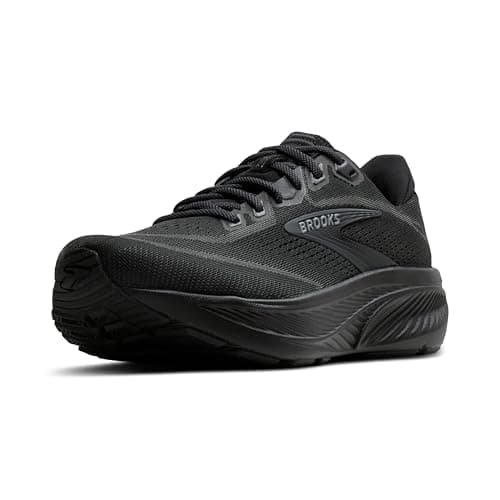
C25K to marathon: the steady default
Brooks Ghost 18
Brooks: firm, steady and versatile, in four widths per gender. RunRepeat recommends it both for heel strikers and as a one-shoe-does-everything pick.
$125.20Amazon#ad · Price as of October 17, 2026 · Affiliate disclosure for the link to Brooks Ghost 18
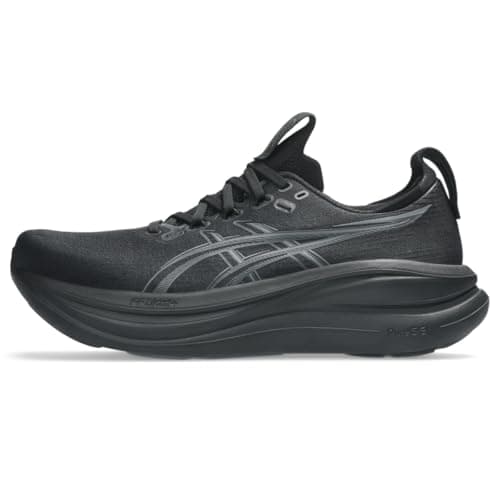
C25K to marathon: the cushioned all-rounder
ASICS Gel-Nimbus 28
ASICS: FF Blast+ over a PureGEL heel insert at a 39.5 mm lab-measured heel, with men's sizing to extra wide and women's from narrow to wide.
$169.95Amazon#ad · Price as of October 17, 2026 · Affiliate disclosure for the link to ASICS Gel-Nimbus 28
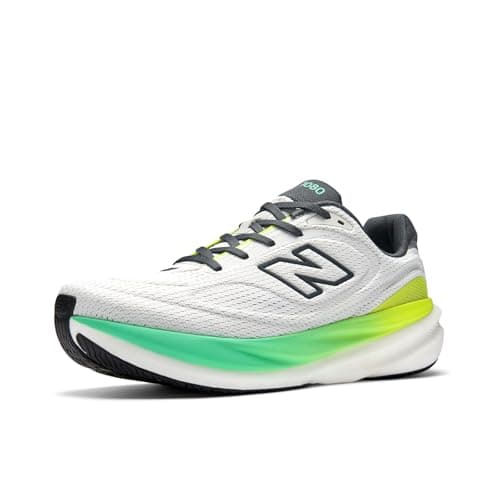
10K to marathon: plush easy and long miles
New Balance 1080 v15
New Balance: new Infinion foam, 9.1 oz and the widest size run in running - men's B to 4E, women's 2A to 2E.
$169.95Amazon#ad · Price as of October 17, 2026 · Affiliate disclosure for the link to New Balance 1080 v15
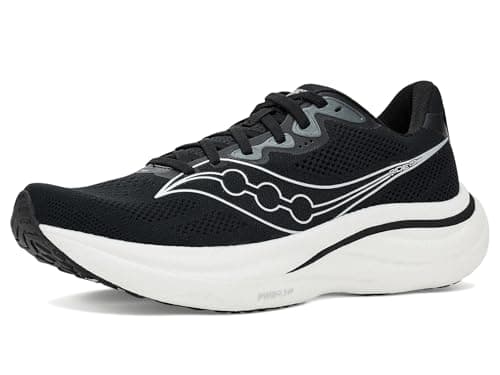
C25K to marathon: the balanced all-rounder
Saucony Ride 19
Saucony: reformulated PWRRUN+ on a 37.6 mm lab-measured heel at 9.09 oz, in Regular and Wide for both genders.
$134.95Amazon#ad · Price as of October 17, 2026 · Affiliate disclosure for the link to Saucony Ride 19
Pick a brand by your foot
- Wide feet. New Balance first, then Brooks, ASICS and Saucony. Altra if you want a foot-shaped toe box rather than a wider shoe. Details in best running shoes for wide feet.
- Narrow feet. New Balance (2A and B) and ASICS women's narrow. See best running shoes for narrow feet.
- Flat feet or overpronation. Brooks GuideRails, ASICS Kayano, Saucony Guide or Mizuno Inspire. See best stability running shoes.
- Heavier runners. ASICS, Brooks and New Balance all field tall, structured shoes in wide sizes. See best running shoes for heavy runners.
- Brand new to running. Any of the big four, in the right width, at the right price. The NHS Couch to 5K plan is three short sessions a week and does not demand a premium shoe — start at best running shoes for beginners.
Common mistakes
- Buying a brand because a faster runner wears it. Elite shoe choice is a sponsorship outcome, not a fit recommendation.
- Staying loyal through a bad version. Brands redesign shoes every year or two. The Wave Rider 30 and the 1080 v15 both changed materially from the previous version.
- Sizing up to get width. If the brand does not make your width, change brands.
- Assuming an expensive brand prevents injury. The Cochrane review found the evidence uncertain. Fit, mileage progression and rest do more.
- Buying a lifestyle model by mistake. This is most common with On and PUMA, where the running line is a small part of the catalogue.
How we chose these
Researched, compared, scored for your level
We start from what a published training plan actually asks of a runner at your level, compare every model's published specs (stack height, drop, weight, plate, stability features, widths) against that job, and score each pick on a public rubric. Each spec links to where it came from, so you can shortlist in minutes and buy with the numbers in front of you.
Scores are our editorial judgments from that documented research, and rankings are earned on the rubric alone — placement is never for sale. The rubric and weights are on the How We Pick page.
Questions
Frequently asked
What is the best running shoe brand?
Which running shoe brand is best for wide feet?
Does the brand of running shoe matter for injuries?
Which brand should a beginner buy?
Which brands should I avoid?
Keep going
Related reading
- Running shoes by pace and mileageOur level finder: start here if you are unsure
- How to choose running shoesThe fit process, step by step
- Best Brooks running shoesThe broadest range, decoded
- Best New Balance running shoesThe width champion
- Best ASICS running shoesCushioning value, in four widths
- Best Saucony running shoesThe clearest range in running
Receipts
Sources
- Cleveland Clinic — Your Guide To Picking the Best Running Shoes (checked 2026-09-28)
- OrthoInfo (AAOS) — Athletic Shoes: fitting and heel counter guidance (checked 2026-09-28)
- Cochrane Database of Systematic Reviews (2022) — footwear for preventing lower limb running injuries (PubMed)
- Running Warehouse — Shoe fit tips: length and width guidance (checked 2026-09-19)
- RunRepeat — independent running shoe lab reviews (checked 2026-09-19)
- RTINGS — running shoe lab reviews (checked 2026-09-19)
- NHS — Get running with Couch to 5K (checked 2026-09-28)
Every figure above is traceable. Specs come from the maker's own pages or the named reviewer's published measurements (linked above); level definitions come from published training plans; prices come from Amazon's own API and carry the date they were checked, so you buy on a current number. Read the full method.