Best Mizuno Running Shoes: Wave Rider, Wave Sky or Wave Inspire?
Mizuno is the one big brand that still builds shoes around a plate rather than a foam gimmick, and the Wave Plate is the reason its shoes feel steadier than their stack heights suggest. Three shoes, three jobs, every number sourced.
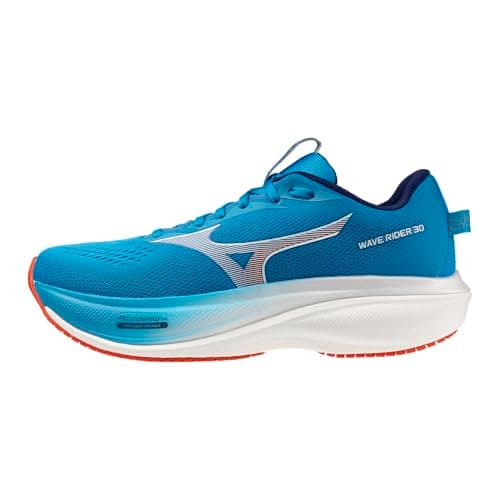
The 30th Wave Rider: a full-length Wave Plate under nitrogen-infused ENERZY NXT foam, 9.29 oz on a 43.5 mm lab-measured heel, in Regular and Wide. Mizuno names beginners and daily joggers as the intended runner, and the stack carries it through marathon training.
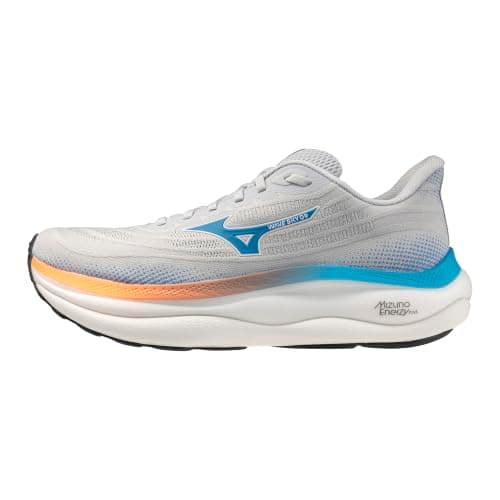
Mizuno's most cushioned trainer: 44 mm of Enerzy NXT at the heel with a Foam Wave for structure, at 10.2 oz men's. Mizuno lists it for long running, recovery running and walking.
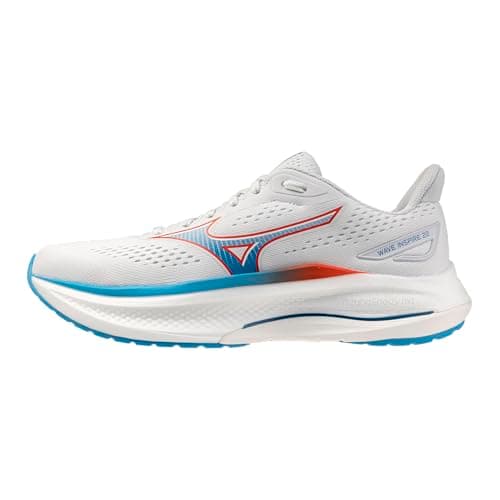
A Wave plate in the arch rather than a medial post, 9.9 oz on a 37 / 27 mm stack and a 10 mm drop, in Normal and Wide. Mizuno designs it for runners who overpronate.
#ad · Prices come live from Amazon, last checked October 17, 2026. Scores are ours, compiled from published specs and the maker's intended use. Product photos come from Amazon. Tap a row for the full write-up.
The best Mizuno running shoe for most runners is the Wave Rider 30: a full-length Wave Plate under nitrogen-infused ENERZY NXT foam, 9.29 oz on a 43.5 mm lab-measured heel, sold in Regular and Wide. Mizuno itself names beginners and daily joggers as the runner it is built for, and the tall stack means it keeps working through marathon training. For long and recovery runs, the Wave Sky 9. If you overpronate, the Wave Inspire 22.
The short answer
What the Wave Plate actually does
Almost every other brand controls a shoe with foam density: a firmer wedge on the inside edge, or sidewalls that rise around the heel. Mizuno uses a shaped plastic plate instead. Mizuno's own description is that the full-length plate in the Wave Rider 30 spreads impact and gives a stable platform. In the Wave Inspire 22 the plate sits under the arch and is designed for runners with overpronation. In the Wave Sky 9 it appears as a "Foam Wave", which Mizuno covers in its own launch write-up.
What that feels like underfoot: steadier than the stack height suggests, and firmer than a comparably tall shoe from HOKA or New Balance. Two honest caveats. The Wave Plate is not a medial post, so a runner who needs genuine pronation control should treat the Wave Rider as a neutral shoe and look at the Inspire. And RunRepeat's Inspire 22 lab review places it at the gentle end of the support category rather than the structured end.
Every value links to Mizuno's own page or to the named lab's measurement.
Note the drops. The Wave Rider 30 measured 8.9 mm against a listed 8 mm in RTINGS' lab, the Wave Sky 9 sits at 6 mm, and the Wave Inspire 22 at 10 mm. That is a wide spread for a three-shoe range, and it is the thing most likely to catch you out if you switch between them. If drop is new to you, read heel drop and stack height explained first.
All three come in a wide, which is better than most brands manage — men's D and 2E, women's B and D on the Wave Sky 9 per Mizuno's own listing. There is no 4E, so a genuinely wide foot is better served by New Balance.
Which Mizuno for your weekly mileage
Couch to 5K. The NHS Couch to 5K plan is nine weeks of three run/walk sessions. The Wave Rider 30 is a rare case of a brand naming beginners as the target runner for its flagship, and the AAOS fitting advice — a heel the shoe adequately grips to ensure stability — is exactly what the plate-stiffened rearfoot delivers.
10K training.Wave Rider 30. Its 43.5 mm heel is more foam than most daily trainers at this level need, which is a good problem.
Half marathon. Higdon's Novice 1 Half peaks at a 10-mile long run. The Wave Rider handles it alone; add the Wave Sky 9 if you want a dedicated long-run shoe.
Marathon.Novice 1 Marathon is four runs a week for 18 weeks. Wave Sky 9 for long runs and the day after, Wave Rider 30 for everything else, and a tempo shoe from another brand if you want one — see best tempo running shoes.
What Mizuno does not make
There is no Mizuno carbon racer and no Mizuno tempo shoe on this site, because nothing in the current range earns a place next to the shoes in best carbon-plated running shoes. If you are training for a race and want a fast shoe, Mizuno will cover your easy and long miles and another brand will cover race day. That is a perfectly good way to build a rotation — see the rotation guide.
In detail
The picks, in full
1
Best Mizuno overall
Mizuno Wave Rider 30
C25K10KHALFMARATHON
8.1 /10
The 30th Wave Rider: a full-length Wave Plate under nitrogen-infused ENERZY NXT foam, 9.29 oz on a 43.5 mm lab-measured heel, in Regular and Wide. Mizuno names beginners and daily joggers as the intended runner, and the stack carries it through marathon training.
#ad · Price as of October 17, 2026 · Affiliate disclosure for the link to Mizuno Wave Rider 30
2
Best for long and recovery runs
Mizuno Wave Sky 9
C25K10KHALFMARATHON
7.4 /10
Mizuno's most cushioned trainer: 44 mm of Enerzy NXT at the heel with a Foam Wave for structure, at 10.2 oz men's. Mizuno lists it for long running, recovery running and walking.
#ad · Price as of October 17, 2026 · Affiliate disclosure for the link to Mizuno Wave Sky 9
3
Best Mizuno support shoe
Mizuno Wave Inspire 22
C25K10KHALFMARATHON
7.9 /10
A Wave plate in the arch rather than a medial post, 9.9 oz on a 37 / 27 mm stack and a 10 mm drop, in Normal and Wide. Mizuno designs it for runners who overpronate.
#ad · Price as of October 17, 2026 · Affiliate disclosure for the link to Mizuno Wave Inspire 22
How to choose
Default to the Wave Rider 30. It is the most versatile shoe Mizuno makes and the only one of the three that genuinely spans C25K to marathon.
Go Wave Sky 9 for long and recovery days. Mizuno lists it for long running, recovery running and walking, which is an accurate description of its range.
Only buy the Inspire if you overpronate. Running Warehouse's product page lists the full spec; it is a support shoe and there is no reason to carry that weight otherwise.
Mind the drop change. 6 mm, 8 mm and 10 mm across three shoes. Give your calves a couple of weeks when you switch.
Buy the wide if you are between widths. All three offer one; none offers a 4E.
Common mistakes
Expecting the Wave Plate to control pronation in the Wave Rider. It is a neutral shoe. The plate stiffens the platform; it does not post the arch.
Buying the Wave Sky as a do-everything shoe. At 10.2 oz with 44 mm at the heel, it is a long-and-easy tool.
Assuming the Inspire is a heavy-duty support shoe. It sits at the gentle end. For maximum structure, see best stability running shoes.
Waiting for a Mizuno super shoe. Buy another brand for race day and keep the Mizuno for training.
Ignoring the version change. Mizuno altered the Wave Rider's geometry at version 30, so long-time Wave Rider owners should expect a different shoe.
How we chose these
Researched, compared, scored for your level
We start from what a published training plan actually asks of a runner at your level, compare every model's published specs (stack height, drop, weight, plate, stability features, widths) against that job, and score each pick on a public rubric. Each spec links to where it came from, so you can shortlist in minutes and buy with the numbers in front of you.
The Wave Rider 30: a full-length Wave Plate under ENERZY NXT foam, 9.29 oz on a 43.5 mm lab-measured heel, in Regular and Wide. It is the most versatile shoe in the range and Mizuno names beginners and daily joggers as its intended runner.
What does the Mizuno Wave Plate do?+
It is a shaped plate in the midsole that Mizuno says spreads impact and provides a stable platform. In the Wave Inspire 22 it sits under the arch and is designed for overpronation; in the Wave Rider 30 it runs full length and stiffens the whole platform. It is not a medial post.
Wave Rider vs Wave Sky: which should I buy?+
Wave Rider 30 as your main shoe — lighter at 9.29 oz and versatile across every level. Wave Sky 9 if you want Mizuno's most cushioned ride for long runs and recovery days, at 10.2 oz with 44 mm of heel foam.
Is Mizuno good for flat feet or overpronation?+
The Wave Inspire 22 is the shoe to look at, with its arch-mounted Wave plate and a 10 mm drop in Normal and Wide. It is gentle support rather than maximum structure — see best running shoes for flat feet for the alternatives.
Does Mizuno make a carbon-plated race shoe we would recommend?+
Every figure above is traceable. Specs come from the maker's own pages or the named reviewer's published measurements (linked above); level definitions come from published training plans; prices come from Amazon's own API and carry the date they were checked, so you buy on a current number. Read the full method.