Best adidas Running Shoes: Which Adizero Do You Need?
adidas is the strongest brand in running at the fast end and the thinnest in the middle: there is no adidas equivalent of a Brooks Ghost. Eight shoes, sorted by job, with the honest note about where the range has a hole.
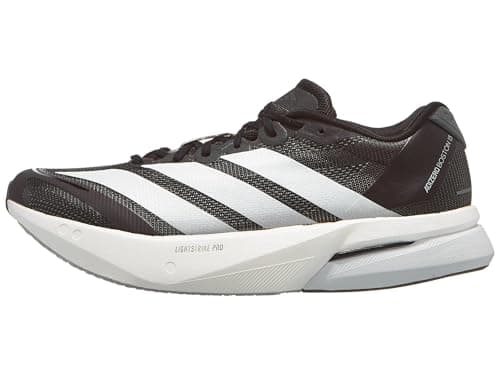
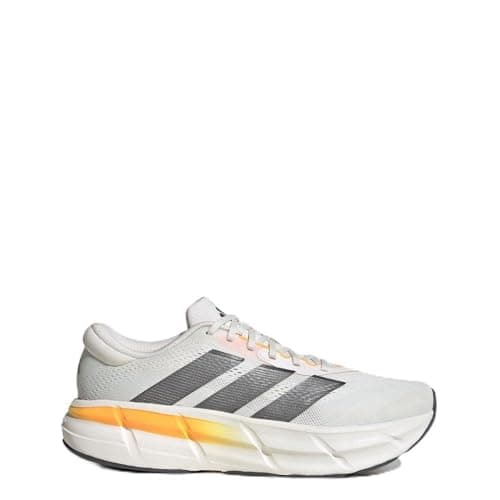
A plateless, full-Lightstrike Pro shoe at 7.9 oz that adidas builds for daily miles, long runs and uptempo work. The one adidas most 10K-to-marathon runners should buy, and the closest thing the brand has to a do-everything trainer.
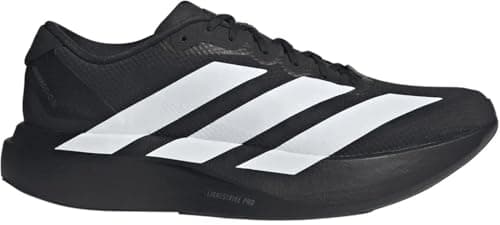
Energy Rods 2.0 in a 39 mm Lightstrike Pro heel at a claimed 7.1 oz men's: one racer for 10K through the marathon, and best suited to midfoot and forefoot landings.
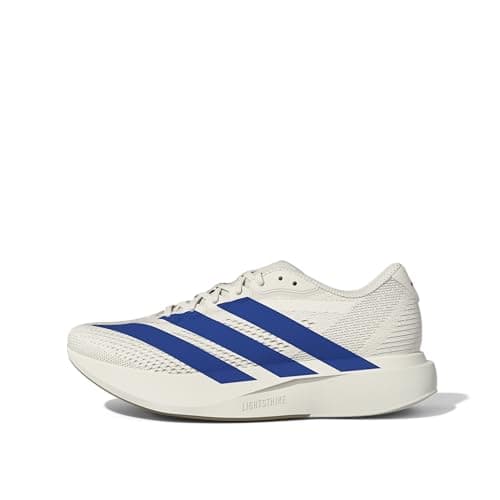
A 32 mm claimed heel with glass-fibre EnergyRods rather than carbon. A short-distance and track-work shoe for lighter forefoot runners, and nothing else.
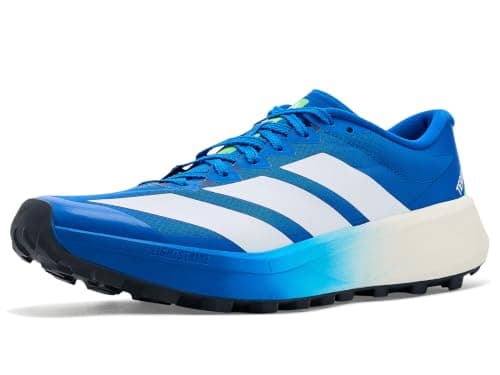
RunRepeat's Best Overall trail shoe and the cheapest way into the category: a full-length Continental outsole with 3.1 mm lugs and a 9.1 mm drop that suits road runners moving onto easier trails.
#ad · Prices come live from Amazon, last checked October 17, 2026. Scores are ours, compiled from published specs and the maker's intended use. Product photos come from Amazon. Tap a row for the full write-up.
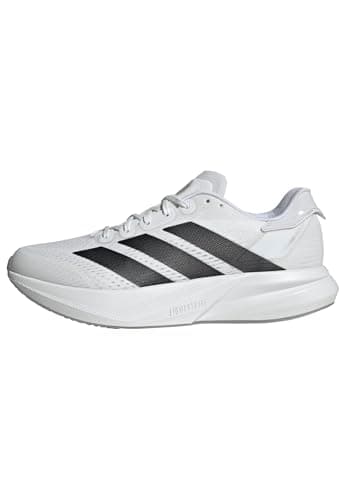
The best adidas running shoe for most runners is the Adizero Evo SL: a plateless shoe on a full-length Lightstrike Pro midsole at 7.9 oz on a men's 9, which adidas pitches at daily miles, long runs and uptempo work alike. For harder workouts, the Adizero Boston 13. For race day, the Adios Pro 4. Under $100 and fast, the Duramo Speed 2. For a first pair on a Couch-to-5K plan, the Questar 4.
The short answer
Decoding Adizero, Duramo and Terrex
Adizero Evo SL — super foam, no plate, trainable every day.
Adizero Boston — the workout shoe, with EnergyRods.
Adizero Adios Pro — the marathon racer, with Energy Rods 2.0.
Adizero Takumi Sen — the 5K/10K racer, low and firm.
Adizero Pacer — the cheap, plateless member of the family.
Duramo / Galaxy / Questar — the value lines. Heavier, simpler foam, real shoes at low prices.
Terrex — adidas' outdoor brand, which is where the trail shoes live.
The hole in the adidas range
There is no adidas shoe on this page that we would recommend as a max-cushion long-run trainer. The brand simply does not field a credible rival to a Brooks Glycerin, an ASICS Gel-Nimbus or a New Balance 1080 — the Supernova line exists but has never measured up in the labs we cite. If max cushion is what you are shopping for, read best max cushion running shoes and buy another brand without guilt; if you want width options, read best New Balance running shoes instead, because adidas' Adizero line is standard width only.
What adidas does better than almost anyone is the shoe you do your faster running in. Believe in the Run's Evo SL review and its Boston 13 review both land in the same place: these are the two best-value fast shoes in running right now.
Couch to 5K. The NHS Couch to 5K plan is nine weeks of three run/walk sessions. The Questar 4 is the honest budget answer; RTINGS recommends it for beginners in its lab review. If you can stretch, a cushioned trainer from another brand will serve you better.
10K training. Higdon's Novice 10K is eight weeks with one faster session a week. The Duramo Speed 2 handles that session for under $100, or the Adizero Pacer if you want the Adizero shape.
Half marathon. The Evo SL as your main shoe. It is cushioned enough for a 10-mile long run and quick enough for the tempo day, which is unusual.
Marathon.Novice 1 Marathon is four runs a week for 18 weeks. Evo SL for most of them, Boston 13 for the workout, Adios Pro 4 on race day — and a soft trainer from another brand for recovery runs.
EnergyRods are not a carbon plate
adidas uses rods rather than a single stiff plate, and the material differs by model: the Adios Pro 4 uses carbon-infused Energy Rods 2.0, the Boston 13 uses carbon-based rods, and the Takumi Sen 11 uses glass-fibre rods. That last one matters: the Takumi Sen is often described as a carbon racer and it is not one. RunRepeat's Takumi Sen 11 lab review records the build in detail.
Practically, rods flex independently under each metatarsal rather than locking the whole forefoot, which is why adidas racers feel less jarring than some plated shoes at slower paces. Every shoe here sits inside the World Athletics 40 mm road limit. Whether any of it is worth paying for at your pace is answered in are carbon-plated shoes worth it.
In detail
The picks, in full
1
Best adidas overall
adidas Adizero Evo SL
C25K10KHALFMARATHON
8.4 /10
A plateless, full-Lightstrike Pro shoe at 7.9 oz that adidas builds for daily miles, long runs and uptempo work. The one adidas most 10K-to-marathon runners should buy, and the closest thing the brand has to a do-everything trainer.
#ad · Price as of October 17, 2026 · Affiliate disclosure for the link to adidas Adizero Boston 13
3
Best adidas race-day shoe
adidas Adizero Adios Pro 4
C25K10KHALFMARATHON
7.4 /10
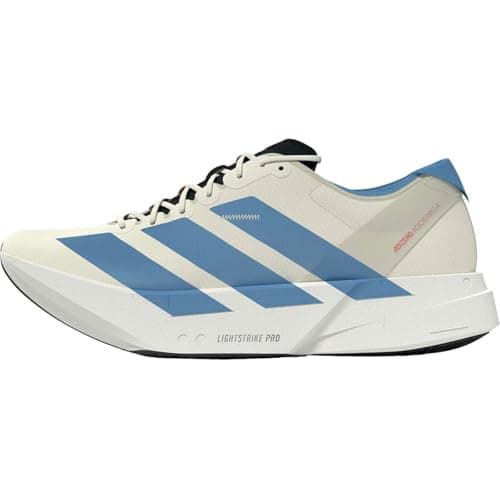
Energy Rods 2.0 in a 39 mm Lightstrike Pro heel at a claimed 7.1 oz men's: one racer for 10K through the marathon, and best suited to midfoot and forefoot landings.
#ad · Price as of October 17, 2026 · Affiliate disclosure for the link to adidas Duramo Speed 2
5
Best for 5K and 10K racing
adidas Adizero Takumi Sen 11
C25K10KHALFMARATHON
6.5 /10
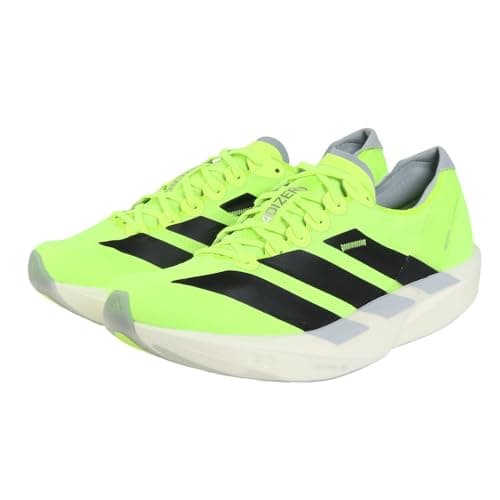
A 32 mm claimed heel with glass-fibre EnergyRods rather than carbon. A short-distance and track-work shoe for lighter forefoot runners, and nothing else.
#ad · Price as of October 17, 2026 · Affiliate disclosure for the link to adidas Adizero Pacer
8
Best adidas for trails
adidas Terrex Agravic 4
C25K10KHALFMARATHON
7.1 /10
RunRepeat's Best Overall trail shoe and the cheapest way into the category: a full-length Continental outsole with 3.1 mm lugs and a 9.1 mm drop that suits road runners moving onto easier trails.
#ad · Price as of October 17, 2026 · Affiliate disclosure for the link to adidas Terrex Agravic 4
How to choose
Decide whether you want a fast shoe at all. If the answer is no, adidas is probably the wrong brand for your main trainer. That is a legitimate conclusion to reach on this page.
If yes, start with the Evo SL. Plateless super foam is the most useful thing in running right now and the Evo SL is the best-value version of it.
Add rods only when you have a workout to do. The Boston 13 is firmer and more demanding than the Evo SL; it rewards intervals and punishes easy jogging.
Match the racer to the distance. Adios Pro 4 for 10K and up, Takumi Sen 11 for 5K and 10K and track work.
Accept the width. Adizero is standard width only. If you need a 2E, buy the brand that makes one rather than sizing up in length.
Common mistakes
Buying an Adizero as a first ever running shoe. Light and firm is exactly wrong for a run/walk beginner.
Assuming Takumi Sen means carbon. It uses glass-fibre rods, and it is a short-distance shoe.
Expecting the Evo SL to be a recovery shoe. It is plateless, not plush. Pair it with something softer.
Buying Galaxy or Questar for marathon training. They are honest low-cost shoes with modest stacks; a 20-mile long run is not their job.
We start from what a published training plan actually asks of a runner at your level, compare every model's published specs (stack height, drop, weight, plate, stability features, widths) against that job, and score each pick on a public rubric. Each spec links to where it came from, so you can shortlist in minutes and buy with the numbers in front of you.
The Adizero Evo SL for most runners: a plateless, full-Lightstrike Pro shoe at 7.9 oz on a men's 9 that adidas builds for daily miles, long runs and uptempo work. For race day, the Adios Pro 4; for workouts, the Boston 13.
Is the Adizero Evo SL good for everyday running?+
Yes, for 10K-to-marathon runners. It is plateless, so it flexes normally, and it has enough Lightstrike Pro foam for long runs. It is not a soft shoe, so most runners pair it with a cushioned trainer for recovery days.
Does adidas make a max-cushion running shoe worth buying?+
Not one we would put on this page. If you want maximum cushioning, look at best max cushion running shoes — the brands that lead that category are ASICS, Brooks, New Balance and HOKA.
Adizero Boston 13 vs Evo SL: which should I buy?+
Evo SL if you want one shoe for most of your running: lighter at 7.9 oz, plateless, friendlier at easy pace. Boston 13 if you already have a daily trainer and want a firmer shoe with carbon-based EnergyRods for workouts and shorter races.
Are there wide adidas running shoes?+
Not in the Adizero line, which is standard width only. The value lines offer some wide sizing, but if width is your constraint the brand to shop is New Balance, Brooks or Saucony.
Every figure above is traceable. Specs come from the maker's own pages or the named reviewer's published measurements (linked above); level definitions come from published training plans; prices come from Amazon's own API and carry the date they were checked, so you buy on a current number. Read the full method.