5K & 10K · Guide
What to Wear for a 5K or 10K: A Temperature-by-Temperature Guide
The clothing decision for a short race is simple once you know the one rule that governs it: dress for mile two, not for the start line. Here's a layer-by-layer chart from freezing to 80F, what changes on race day, and the few things worth owning.
We earn a commission if you buy through our links, at no extra cost to you. It never decides the ranking — the method is published · Affiliate disclosure
A 5K takes most people 20 to 40 minutes and a 10K 45 to 70. That is short enough that you will not change clothes mid-race and long enough that a bad choice is uncomfortable for the whole thing. The good news is that the decision comes down to one rule, one chart and about four items of kit.
The one rule: dress for mile two
Running makes heat. In the first five minutes you are the temperature you walked out in; by mile two you are running considerably warmer than that. The standard runners' shorthand is to dress as if it were roughly 10 to 20F warmer than the thermometer says — and the reason that rule has stuck around is that it is the only way to avoid overdressing, which is the single most common clothing mistake at short races.
So the question is never “what is comfortable standing here?” It is “what will be comfortable once I am working?” You should feel slightly underdressed at the start. If you feel perfect at the start, you are overdressed.
The exception is the twenty minutes before a race, when you are standing around in a corral not generating heat. The answer there is not more clothing but removable clothing — see what changes on race day below.
The temperature chart
Treat this as a starting point, not a prescription. Wind, sun, humidity and how fast you run all shift it, and so does your own thermostat — some people genuinely run cold. Adjust from here after one or two runs and then stop thinking about it.
| Temperature | Top | Bottom | Extras |
|---|---|---|---|
| 80F and up | Singlet or light tee, light colored | Shorts | Hat or visor, sunglasses, sunscreen; consider carrying water |
| 70-79F | Short-sleeve technical tee or singlet | Shorts | Hat, sunglasses, sunscreen |
| 60-69F | Short-sleeve technical tee | Shorts | Sunglasses if it is bright |
| 50-59F | Short sleeves, or long sleeves if you run cold | Shorts | Nothing, usually |
| 40-49F | Long-sleeve technical top | Shorts or capris | Light gloves if your hands get cold |
| 30-39F | Long-sleeve base layer plus a light long-sleeve top | Tights or running pants | Gloves, headband or ear cover |
| 20-29F | Base layer, mid layer, wind shell | Tights, or tights plus a wind-resistant layer | Gloves, hat, buff or neck cover |
| Below 20F | As above, plus full wind protection | Insulated or doubled tights | Covered head, neck and hands; shorten the run |
Two notes on reading this. First, the gap between 50F and 60F looks small on paper and is the biggest practical step in the chart: 50F in wind feels like 40F, and 59F in full sun feels like 70F. Second, below 40F the chart stops being about warmth and starts being about wind, which is why a thin shell beats a thick fleece.
Fabric matters more than layers
One technical long-sleeve top beats two cotton ones in almost every condition. The reason is simple: cotton absorbs sweat and holds it against your skin, which makes you cold in winter and heavy in summer.
- Synthetics (polyester, nylon): cheap, light, dry fast, the default for everything in this chart.
- Merino wool: more expensive, warmer for its weight, and keeps working when damp. Best as a cold-weather base layer and as socks.
- Cotton: fine for the walk to the start, bad for running in. The free race tee you are handed at packet pickup is very often cotton; do not race in it.
The one place this is non-negotiable is socks. Cotton socks plus sweat plus friction is how blisters happen, and our how to prevent blisters when running guide covers the mechanism. Best running socks ranks the ones worth owning.
What's worth owning
You do not need much. For a 5K or 10K the honest list is: one pair of shoes, two pairs of technical socks, one pair of shorts or tights that do not chafe, and two technical tops. Everything else is weather-specific and can wait until you meet that weather.
Picks for this job
The short-race clothing kit
Technical socks, shorts in both a men's and a women's cut, an anti-chafe stick and sunglasses — the five things that cover almost every 5K and 10K. Shoes are the separate, bigger decision.
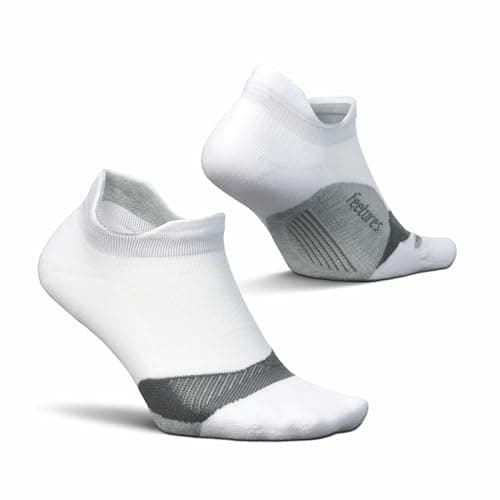
All levels: the all-round no-show
Feetures Elite Light Cushion No Show Tab
The sock layer is where blisters start or don't. A thin, synthetic, tab-heel running sock is the single highest-value clothing purchase for a short race.
$19.00Amazon#ad · Price as of October 5, 2026 · Affiliate disclosure for the link to Feetures Elite Light Cushion No Show Tab
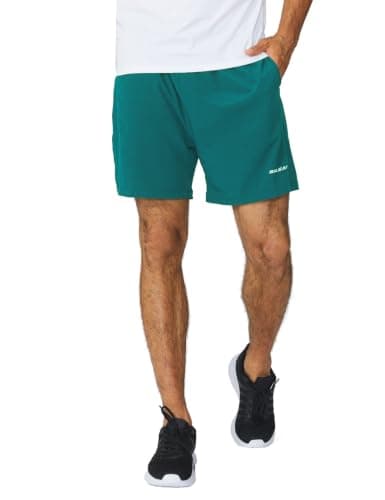
All levels: the budget phone-pocket short
Baleaf Men's 5" Running Shorts
A 5-inch inseam with a zip pocket: short enough not to chafe, with somewhere for a key. Shorts you have already run in are the only shorts to race in.
$26.99Amazon#ad · Price as of October 5, 2026 · Affiliate disclosure for the link to Baleaf Men's 5" Running Shorts
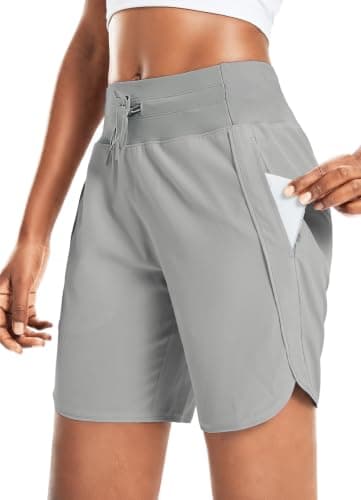
Women's pick: a published 6.7-inch phone fit
Baleaf Women's 7" Long Running Shorts
A 7-inch high-rise cut for anyone who wants more coverage than a split short without moving to tights.
$34.99Amazon#ad · Price as of October 5, 2026 · Affiliate disclosure for the link to Baleaf Women's 7" Long Running Shorts
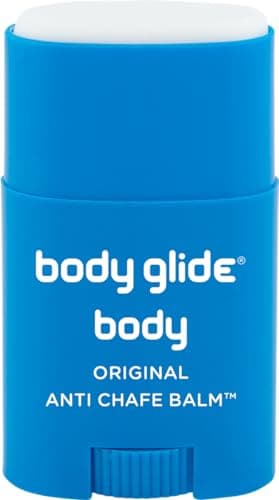
Every runner's kit; stocking stuffer
Body Glide Original Anti-Chafe Balm
A dry stick for thighs, underarms and waistband lines. A few seconds before a hot race prevents the one problem clothing alone cannot.
$8.99Amazon#ad · Price as of October 5, 2026 · Affiliate disclosure for the link to Body Glide Original Anti-Chafe Balm
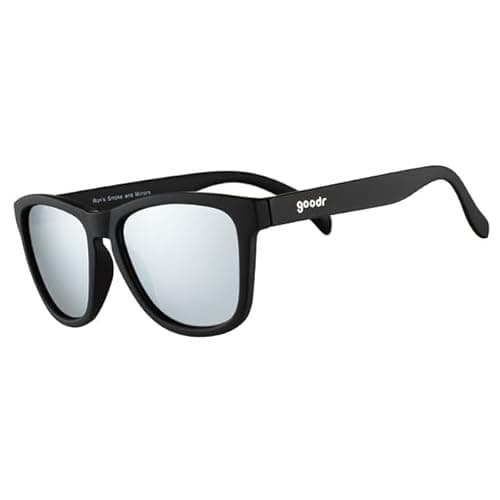
Fun, low-risk gift for any runner
goodr OG Sunglasses
Polarized UV400 in a frame built not to bounce. More useful than it sounds on a bright morning when squinting for 40 minutes is the alternative.
$30.00Amazon#ad · Price as of October 5, 2026 · Affiliate disclosure for the link to goodr OG Sunglasses
Shoes are the one decision worth spending real time on, and it is a separate one. Best running shoes for 5K and 10K is the roundup for this distance, and how to choose running shoes covers the process if this is your first pair.
What changes on race day
Three things, and none of them is what you wear while running.
- You will stand still for 20-40 minutes. Dress for the run, then add something you are happy to lose: an old sweatshirt, a cheap pair of gloves, a bin bag over your shoulders in the rain. Many races collect discarded clothing for charity — check the race's own page before you throw anything at the fence.
- Your bib goes on the front, outside everything. If you are wearing a layer you intend to remove, pin the bib to the layer that stays on, or use a race number belt so it moves with you.
- Nothing new. Race day is not the day to debut shorts, socks, a top or a hat. Everything you wear should have done at least one full-length run already. This is the most-ignored rule in racing and the easiest one to follow.
Our first 10K race-day checklist covers the rest of race morning — the night-before layout, the timing, the pacing and the etiquette the Road Runners Club of America publishes for first-timers.
Hot weather: 70F and up
Heat is the condition where clothing choices stop being about comfort and start being about safety. The RRCA's hot weather running tips are specific: “Wear light colored, breathable fabrics. Avoid long sleeves and long pants,” and use “15spf or more” sunscreen. It also advises avoiding running outside “if the heat is above 98.6 degrees and the humidity is above 70-80%.”
The RRCA's warning signs are worth memorizing rather than paraphrasing: “If you become dizzy, nauseated, have the chills, or cease to sweat…. STOP RUNNING! Find shade, drink water, and if you do not feel better, get home or call for help.”
Practically, for a hot 5K or 10K: a singlet or the lightest tee you own, light colored rather than black, a hat or visor, sunglasses, and sunscreen applied before you leave rather than at the start line. The American Academy of Dermatology recommends broad-spectrum SPF 30 or higher, applied 15 minutes before going outside. Water is usually unnecessary for a 5K and sometimes worth carrying for a hot 10K — our best handheld water bottles page covers the smallest options, and how to carry water while running explains when you actually need to.
Cold weather: below 40F
The RRCA's cold weather running tips put the layering principle plainly: use “layers of clothing that will help you maintain your core body temperature during the run,” and “it is better to wear a little more, and shed your layers as you warm-up, than not wear enough and develop hypothermia dangers.”
Note that this does not contradict the dress-for-mile-two rule — it refines it. Below 40F you want the ability to shed, which means two or three thin layers rather than one thick one. A three-layer cold-weather setup is:
- Base layer — thin, snug, synthetic or merino. Its job is moving sweat off your skin.
- Mid layer — a long-sleeve technical top. Its job is holding warm air.
- Shell — thin and wind-resistant, not insulated. Its job is stopping wind. Below about 30F this is the layer that matters most, and it is the one people skip.
Cover the extremities before you add bulk to your torso: hands, ears and neck lose heat fastest and cost the least to cover. Lightweight gloves and a headband are usually the difference between a miserable 30F run and a fine one. The RRCA also flags slip-on traction devices for ice and snow, and the real risk of a winter storm dropping the temperature mid-run.
Rain and wind
For a 5K or 10K in rain, the honest advice is to get wet. A 30-minute race is not long enough for a waterproof jacket to be worth the heat it traps, and most “waterproof” running jackets stop being waterproof once you are sweating inside them. What actually helps:
- A brimmed cap. Keeps rain out of your eyes, which is the thing that genuinely affects a race.
- A thin wind shell if it is also cold. Wet plus windy plus 40F is the one combination where a shell earns its place in a short race.
- Anti-chafe balm. Wet fabric chafes far more than dry fabric. This is the condition where a few seconds with a stick pays for itself.
- Dry clothes in a bag for afterwards. You will be cold within five minutes of finishing.
Early mornings and evenings
If you are training for a 10K through autumn or winter, a good share of your runs will be in the dark, and what you wear becomes a visibility question rather than a warmth one. Reflective detailing on a jacket is the minimum; a clip-on rear light and reflective ankle bands do more, because moving reflectors read as human to drivers in a way that a static strip does not. If you run on unlit roads, add a lamp — our best running headlamps page explains why a rear red light matters more than maximum brightness.
Chafing and blisters
These are the two clothing failures that actually ruin short races, and both are preventable.
Chafing happens at seams and where skin meets skin: inner thighs, underarms, the waistband line, and under a heart-rate strap. The fixes are fewer seams, a longer inseam if your thighs touch, and an anti-chafe balm on the usual spots before a hot or wet race.
Blisters are friction plus moisture. Technical socks, shoes that fit with a thumb's width at the front, and lacing that holds your heel in place solve most of them. Both how to prevent blisters when running and what size running shoes should I get go into the detail.
How we chose these
Researched, compared, scored for your level
We start from what a published training plan actually asks of a runner at your level, compare every model's published specs (stack height, drop, weight, plate, stability features, widths) against that job, and score each pick on a public rubric. Each spec links to where it came from, so you can shortlist in minutes and buy with the numbers in front of you.
Scores are our editorial judgments from that documented research, and rankings are earned on the rubric alone — placement is never for sale. The rubric and weights are on the How We Pick page.
Questions
Frequently asked
What should I wear for a 5K race?
Should I wear shorts or tights for a 10K?
Can I run a race in the free cotton race shirt?
What should I wear running in hot weather?
How many layers should I wear running in the cold?
What do I wear for a race in the rain?
Do I need special clothes to start running?
Keep going
Related reading
- First 10K race day checklistThe rest of race morning, hour by hour
- Best running shoes for 5K and 10KThe one clothing decision worth real research
- Best running socksThe highest-value small purchase on this page
- How to prevent blisters when runningWhy socks and fit matter more than toughness
- Best running shorts with a phone pocketIf the phone has to come with you
- Couch-to-5K gear checklistWhat a beginner actually needs to buy
Receipts
Sources
- Road Runners Club of America — Hot Weather Running Tips (checked 2026-10-05)
- Road Runners Club of America — Cold Weather Running Tips (checked 2026-10-05)
- Road Runners Club of America — Runner etiquette (checked 2026-10-05)
- American Academy of Dermatology — Sunscreen FAQs, broad-spectrum SPF 30 guidance (checked 2026-10-05)
- NHS — Get running with Couch to 5K
- Hal Higdon — Novice 10K training program
Every figure above is traceable. Specs come from the maker's own pages or the named reviewer's published measurements (linked above); level definitions come from published training plans; prices come from Amazon's own API and carry the date they were checked, so you buy on a current number. Read the full method.