Best Running Sunglasses: Six Pairs, Ranked by Weight, Lens and Fit
Running sunglasses fail in three ways: they slide down when you sweat, they are heavy enough to notice at mile 8, or they are so expensive you leave them at home. Six pairs that solve those problems, ranked on published weights and lens specs rather than on how they look in a product shot.
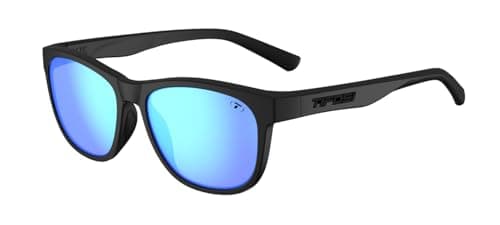
23 g, a genuinely polarized polycarbonate lens and a hydrophilic nose pad that grips harder as you sweat. Treeline Review's Best Overall. Honest cons: no wraparound coverage, one fixed lens, and polarization can make some watch screens awkward to read.
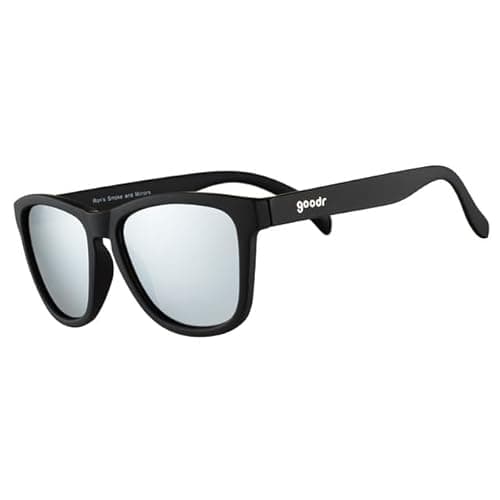
22 g and the lightest pair here, polarized, UV400, in three frame sizes with 30-day returns. Named in both guides we used. Cons: a casual square shape with no wrap, no interchangeable lenses, and a small fit risk across the three sizes.
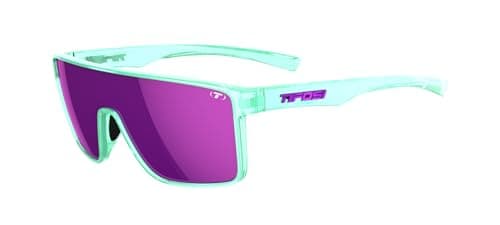
A 26 g single-lens shield on a plant-based frame, with 100% UVA/UVB polycarbonate and hydrophilic nose pads. iRunFar's budget runner-up. Cons: not polarized, medium-large sizing only, and nothing on it is replaceable.
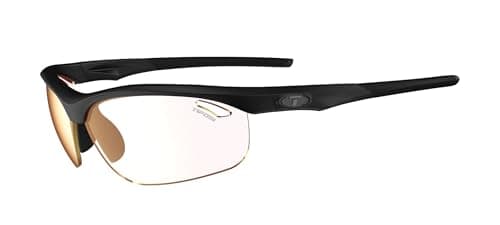
A 29 g vented wraparound with a photochromic lens that darkens and clears as the light does. Cons: the heaviest non-shield frame here, photochromic lenses never go fully dark, and it looks like race kit off the run.
Best for dawn starts and changing light10KHALFMARATHON
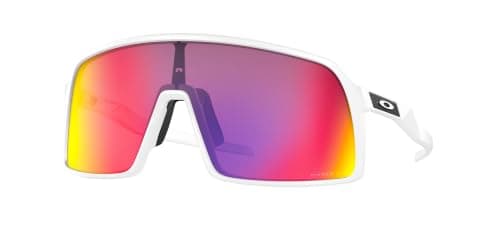
32 g of full-shield coverage with Oakley's Iridium-coated polycarbonate optics and a saddle-bridge nose piece. Cons: the heaviest pair on the page, sized XL but measured medium-large, and several times the price of the budget picks.
25 g, polarized, with rubber nose pads, at a price where losing them is annoying rather than expensive. Cons: softer triacetate cellulose lenses that scratch, no wrap at all, and Amazon mostly carries the non-sport version, so our button runs a search rather than pointing at one listing.
#ad · Prices come live from Amazon, last checked October 19, 2026. Scores are ours, compiled from published specs and the maker's intended use. Some photos are stock. Tap a row for the full write-up.
Who this page is for
The best running sunglasses for most road runners are the Tifosi Swank Polarized: 23 grams, a real polarized polycarbonate lens, a hydrophilic nose pad that grips harder the more you sweat into it, and a shape casual enough that you keep wearing them after the run. That last point matters more than it sounds. The pair you actually own is the pair you will actually wear, and a wraparound that looks like race equipment tends to live in a drawer.
If you are nine weeks into a run/walk plan and want one cheap pair that does the job, buy the goodr OG — 22 grams, polarized, and the lightest thing on this page. If you run into low winter sun across open ground, or start long runs before dawn, skip to the Tifosi Sanctum and the Tifosi Veloce Fototec respectively.
We rank for runners at every level, so the pairs that cover the most situations sit highest. The label on each pick tells you which job it is best at.
What we ranked on
This site does not test gear, so the ranking is built from figures other people published and from what each maker states. Two running-specific guides publish a weight and a lens/frame material for every model they rank — Treeline Review and iRunFar — which is why their awards and measurements run through this page. Four criteria, in this order:
Weight. The only spec you feel every single mile. Everything here is between 22 g and 32 g; the spread is small in absolute terms and surprisingly obvious on your face.
Grip when wet. Running sunglasses do not fall off because they are loose. They fall off because sweat lubricates the nose pads. Hydrophilic rubber — rubber that gets tackier when wet — is the feature that fixes it, and it is the one thing the cheap fashion frames never have.
Lens type. Polarized, photochromic or a plain tint. These are genuinely different tools and the right answer depends on when and where you run, not on which costs more.
Coverage and fit range. How much of your eye socket the frame protects, and whether the maker publishes a size range that your face is actually inside.
Price is deliberately not a criterion — it is a filter. Three of these six cost a small fraction of the other three, and the cheap ones are not bad. Check the current price on the card before you decide; we do not print numbers in the text that go stale the week after publication.
Weight: 22 g to 32 g
Here is the whole field, as published by the guides linked above:
Pair
Published weight
Lens
Shape
goodr OG
22 g
Polarized triacetate cellulose
Wayfarer, no wrap
Tifosi Swank Polarized
23 g
Polarized polycarbonate
Wayfarer, no wrap
Knockaround Premiums Sport
25 g
Polarized triacetate cellulose
Round/wayfarer, no wrap
Tifosi Sanctum
26 g
Polycarbonate, not polarized
Single-lens shield
Tifosi Veloce Fototec
29 g
Photochromic polycarbonate
Vented sport wraparound
Oakley Sutro
32 g
Polycarbonate, Iridium coating
Full shield
Ten grams separates the lightest from the heaviest, which is about the weight of two sheets of paper and sounds like nothing. It is not nothing on your nose for two hours. The useful way to read this table is that the three lightest pairs are also the three without wraparound coverage — weight and coverage trade directly against each other, and every pick on this page is a different point on that line.
Polarized, photochromic or plain tint?
These three words get used as if they were quality tiers. They are not; they are different jobs.
Polarized filters glare bouncing off flat surfaces — wet roads, car windshields, painted crosswalks. For a road runner that is the single most useful lens property there is, and it is why four of the six picks here are polarized. The cost is that polarization can make some phone and watch screens hard to read at certain angles, which is irritating mid-interval.
Photochromic lenses darken and clear with the light. If your long run starts at 5:30 a.m. in the dark and finishes at 9 a.m. in full sun, this is the only lens type that handles both without a swap. The cost is that they never go as dark as a dedicated dark tint, and the transition takes time.
Plain tint is a dark lens with no tricks. Cheaper, often lighter, and perfectly good if you run in reliable midday sun. The Tifosi Sanctum is the one on this page, and iRunFar is explicit that the lack of polarization is the trade for its coverage and price.
One thing that is not a trade-off: UV protection. The American Academy of Ophthalmology advises choosing sunglasses that block 99 to 100% of UVA and UVB, and notes that darkness and price are not indicators of UV protection — a lens is either blocking UV or it is not. Every pick here states 100% UV protection or UV400 on the maker's page. A $30 pair that blocks UV protects your eyes exactly as well as a $200 pair that blocks UV.
Shield or regular frame?
A shield is one continuous lens across both eyes, usually wrapping towards your temples. It buys three things: coverage from low sun that comes in at an angle, protection from wind (which matters more than runners expect — wind is what makes your eyes stream on a cold morning), and a barrier against grit and bugs.
It costs you weight, a certain amount of airflow, and the option of wearing the same pair to the grocery store. A shield lens also fogs more readily than a vented frame if you stop at traffic lights on a humid day, because there is less space for air to move.
The practical rule: if most of your running is on sidewalks and neighborhood streets in moderate light, a regular frame is enough and you will wear it more often. If you run into low sun across open ground — early morning point-to-points, exposed trails, winter afternoons — the Sanctum or the Sutro will make a visible difference. iRunFar also notes that the Sanctum works under hats and helmets, which is the detail that decides it for anyone who races in a cap.
How to stop sunglasses slipping
This is the actual complaint behind most running-sunglasses shopping, and it is mostly solvable without spending more.
Buy hydrophilic nose pads. Rubber that gets grippier when wet, rather than slicker. Both Tifosi picks and the Knockaround have rubber nose pads designed for this; Treeline Review specifically credits the Swank's pad for gripping better once you sweat into it.
Push them up before you start, not during. Sunglasses that begin the run high on your nose have further to travel before they bother you.
Wear them over a cap brim, not under it. The brim shades the top of the lens and stops sweat running straight down into the frame.
Check the size name against your face. goodr sells the OG in Small, Original and Large; Tifosi sizes the Sanctum medium-large and points smaller faces at a different model entirely. Guessing here is the main reason a pair feels wrong.
Rinse them after salty runs. Dried salt on a nose pad is a lubricant, not a grip. Cold water and a soft cloth is the whole maintenance routine.
What to buy at each level
This site picks gear by pace and weekly mileage rather than by category, so here is the short version for each tier.
Couch to 5K. The NHS Couch to 5K plan is nine weeks of run/walk intervals three times a week — short, local, mostly in daylight. Buy the goodr OG and spend the rest on shoes. Our Couch to 5K gear checklist covers what else is worth having at this stage.
First 10K. The Swank. You are now running often enough that glare on wet roads is a real annoyance, and polarization fixes it for about the price of a decent pair of socks.
Half marathon. The Swank or the Sanctum, depending on whether your long runs are urban and shaded or exposed. By this level your long run is over an hour, which is where the weight numbers start to register.
Marathon.Hal Higdon's Novice 1 Marathon builds to a 20-mile long run across 18 weeks, and a lot of those miles start before sunrise. The Veloce Fototec is the pick that genuinely earns its price here, because it is the only one that handles a dark start and a bright finish. Pair it with a running headlamp for the first half hour.
Whatever you buy, remember that sunglasses are the cheapest item in a runner's kit by a long way. Our winter running gear page covers the layer that actually costs money, and what to wear for a 5K or 10K puts eyewear in the context of the whole race-day outfit.
In detail
The picks, in full
1
Best overall for road running
Tifosi Swank Polarized
C25K10KHALFMARATHON
8.7 /10
23 g, a genuinely polarized polycarbonate lens and a hydrophilic nose pad that grips harder as you sweat. Treeline Review's Best Overall. Honest cons: no wraparound coverage, one fixed lens, and polarization can make some watch screens awkward to read.
#ad · Price as of October 19, 2026 · Affiliate disclosure for the link to Tifosi Swank Polarized
2
Best first pair
goodr OG Sunglasses
C25K10KHALFMARATHON
8.0 /10
22 g and the lightest pair here, polarized, UV400, in three frame sizes with 30-day returns. Named in both guides we used. Cons: a casual square shape with no wrap, no interchangeable lenses, and a small fit risk across the three sizes.
#ad · Price as of October 19, 2026 · Affiliate disclosure for the link to goodr OG Sunglasses
3
Best coverage for the money
Tifosi Sanctum
C25K10KHALFMARATHON
8.1 /10
A 26 g single-lens shield on a plant-based frame, with 100% UVA/UVB polycarbonate and hydrophilic nose pads. iRunFar's budget runner-up. Cons: not polarized, medium-large sizing only, and nothing on it is replaceable.
#ad · Price as of October 19, 2026 · Affiliate disclosure for the link to Tifosi Sanctum
4
Best for dawn starts and changing light
Tifosi Veloce Fototec
C25K10KHALFMARATHON
7.9 /10
A 29 g vented wraparound with a photochromic lens that darkens and clears as the light does. Cons: the heaviest non-shield frame here, photochromic lenses never go fully dark, and it looks like race kit off the run.
#ad · Price as of October 19, 2026 · Affiliate disclosure for the link to Tifosi Veloce Fototec
5
Best full shield
Oakley Sutro
C25K10KHALFMARATHON
8.0 /10
32 g of full-shield coverage with Oakley's Iridium-coated polycarbonate optics and a saddle-bridge nose piece. Cons: the heaviest pair on the page, sized XL but measured medium-large, and several times the price of the budget picks.
#ad · Price as of October 19, 2026 · Affiliate disclosure for the link to Oakley Sutro
6
Stock photo
Best pair to lose
Knockaround Premiums Sport
C25K10KHALFMARATHON
8.0 /10
25 g, polarized, with rubber nose pads, at a price where losing them is annoying rather than expensive. Cons: softer triacetate cellulose lenses that scratch, no wrap at all, and Amazon mostly carries the non-sport version, so our button runs a search rather than pointing at one listing.
+25 grams, within 2 grams of pairs costing several times as much
+Rubber nose pads designed for sport rather than borrowed from a fashion frame
+Cheap enough that losing a pair mid-training-block is annoying rather than expensive
What it doesn't
−Triacetate cellulose lenses are softer than polycarbonate and scratch more easily
−A flat, round shape with no wrap, so it offers the least side coverage here
−Knockaround doesn't publish lens, UV or frame specifications on the collection page, so Treeline Review's measurements are the only figures we have
−Amazon's Knockaround listings are mostly the non-sport Premiums square, so our button runs a search rather than pointing at one listing; buy direct from Knockaround if you want the Sport version specifically
Skip this if…
…you run in constant bright glare and want optical quality; this is the value pick, not the clearest lens on the page
#ad · Price as of October 19, 2026 · Affiliate disclosure for the link to Knockaround Premiums Sport
Common mistakes
Buying dark instead of buying UV. The American Academy of Ophthalmology is clear that a darker lens is not a better-protecting lens. Check for 100% UVA/UVB or UV400 and ignore the tint depth.
Using fashion sunglasses for running. They have no hydrophilic grip, so they slide the moment you sweat, and the arms are shaped to sit on a still head rather than a moving one.
Buying a shield for sidewalk running. You pay in weight and airflow for coverage you do not need, and then you stop wearing them.
Ignoring the published size. Several of these are sold in one size band only. Tifosi sizes the Sanctum medium-large and names a different model for smaller faces; goodr offers three sizes of the OG. Read the size guidance before the color options.
Expecting photochromic lenses to go fully dark. They are a compromise lens for changing light. If you only run in bright midday sun, a plain dark tint is cheaper, lighter and darker.
Spending premium money on a pair you leave in a gym locker. Sunglasses get sat on, lost in race bags and left on car roofs more than any other piece of running kit. There is no shame in buying the cheap ones twice.
Looking after them
Rinse in cold water after salty or dusty runs, then dry with a soft cloth. Grit on a dry lens is how scratches happen.
Never use a shirt hem on a dry lens. Especially on triacetate cellulose lenses, which are softer than polycarbonate and scratch more easily.
Keep them out of a hot car. Heat warps frames and loosens the fit that was holding them on your face.
Store them in the pouch they came with. Loose in a kit bag is how most running sunglasses actually die.
How we chose these
Researched, compared, scored for your level
We start from what a published training plan actually asks of a runner at your level, compare every model's published specs (stack height, drop, weight, plate, stability features, widths) against that job, and score each pick on a public rubric. Each spec links to where it came from, so you can shortlist in minutes and buy with the numbers in front of you.
What are the best running sunglasses to buy first?+
The Tifosi Swank Polarized for most road runners: 23 grams, a polarized polycarbonate lens and a hydrophilic nose pad, in a shape you will wear off the run too. Treeline Review named it Best Overall. If you want to spend less, the goodr OG is a gram lighter and also polarized.
Do running sunglasses need to be polarized?+
Not strictly, but for road running it is the most useful single feature. Polarization cuts glare bouncing off wet asphalt, car windshields and painted road markings. The trade is that some phone and watch screens become hard to read at certain angles. If you mostly run on trails or in even light, a plain tint like the Tifosi Sanctum's is fine.
Are expensive running sunglasses worth it?+
For UV protection, no — a $30 pair that blocks 100% of UVA and UVB protects your eyes as well as a $200 pair that does. What the money buys is optical clarity, coverage, lighter and tougher frames, and replaceable parts. iRunFar is direct that the budget Tifosi lacks the optical crispness of premium brands; whether that gap matters to you is a genuine question, not a marketing one. The same logic as our are expensive running shoes worth it page.
How do I stop my sunglasses sliding down when I sweat?+
Buy a frame with hydrophilic rubber nose pads, which get grippier when wet rather than slicker. Then wear them over a cap brim instead of under it, push them up before you start, and rinse the salt off after sweaty runs. Salt residue on a nose pad acts as a lubricant.
Do I need a shield lens for running?+
Only if you run into low sun across open ground, in strong wind, or on dusty surfaces. A shield buys coverage and wind protection at the cost of weight and airflow — the Sanctum is 26 g and the Sutro 32 g, against 22 g and 23 g for the two lightest picks here. For sidewalk and park running, a regular frame is enough.
What sunglasses work for early morning runs?+
A photochromic lens, which darkens and clears as the light changes. The Tifosi Veloce Fototec is the pick here, and it is the one piece of eyewear that genuinely makes sense for marathon training, where long runs routinely start in the dark. Pair it with a running headlamp for the first half hour and winter running gear if it is cold.
Will running sunglasses fit under a cap or a visor?+
Most will, and it is the better way to wear them — the brim shades the top of the lens and keeps sweat out of the frame. iRunFar specifically notes that the Tifosi Sanctum works under hats and helmets, which is worth knowing if you race in a cap.
Every figure above is traceable. Specs come from the maker's own pages or the named reviewer's published measurements (linked above); level definitions come from published training plans; prices come from Amazon's own API and carry the date they were checked, so you buy on a current number. Read the full method.