Shoes · Guide
Are Expensive Running Shoes Worth It? What Each Price Band Buys
A running shoe can cost $70 or $280, and the gap is not four times the shoe. This guide sets out what each price band adds, where the curve flattens, what the published research actually found about expensive race shoes, and the three cases where paying more is genuinely worth it.
We earn a commission if you buy through our links, at no extra cost to you. It never decides the ranking — the method is published · Affiliate disclosure
Why the question is hard to answer honestly
Because the people answering it usually earn a commission on the more expensive option — this site included. So this page is built on two things we can point at: published list prices with their sources, and the peer-reviewed studies on whether expensive shoes do what they claim.
What each price band buys
| Band | What you get | What is missing | Example, with its price source |
|---|---|---|---|
| Around $70 | A real running shoe: cushioning, running geometry, and sometimes a wide width run | Stack height. Modern foams. Any pretence of versatility. | ASICS Gel-Contend 9, $70 list, 31.2 mm measured heel (RunRepeat) |
| Around $100 | Better uppers, broader width runs, a properly finished shoe | Light weight. Supercritical foams. Big stacks. | New Balance Fresh Foam X Evoz v4, $100 list, 31.4 mm measured heel, 10.1 oz (RunRepeat) |
| $120–$150 | Full stack heights, four widths, real stability options, genuinely light shoes. This is where the market lives. | Carbon plates. The very newest flagship foams. | Brooks Ghost 18, $150 list, 37.3 mm measured heel (RunRepeat) |
| $155–$200 | Supercritical foams, 40 mm+ stacks, super trainers you can race in | Widths, usually. Most super trainers are standard width only. | ASICS Novablast 6, $155 list (RunRepeat) |
| $220+ | A carbon plate, a race-day PEBA foam, minimum weight | Durability, width options, and any reason to use it on an easy run | See best carbon-plated running shoes |
Full price-sourced lists for the two most useful bands: best running shoes under $100 and best running shoes under $150.
Where the curve flattens
Around $150, and the numbers make the case. The Ghost 18 at a $150 list price measures 37.3 mm at the heel in RunRepeat's lab, comes in four widths from Narrow to Extra Wide per RTINGS, and is the shoe we recommend most often on this site at any price. The HOKA Clifton 11 at $155 is five dollars above the line. Between $150 and $220 you are buying lighter weight and livelier foam, which matters if you run fast. Above $220 you are buying race-day equipment.
Below $100 the trade-off is real and worth naming: the two sub-$100 shoes above measure 31.2 mm and 31.4 mm at the heel, against 37–42 mm in the $150 band. That is 6–11 mm less foam between you and the road, and RunRepeat recommends the Gel-Contend 9 only up to 15K for that reason.
What the research actually found
Three findings, because this is the part most pages skip:
- Expensive race shoes do measurably improve running economy — at speed. Hoogkamer et al. (2018) compared the energetic cost of running in marathon racing shoes and found a meaningful advantage for the prototype super shoe. That is the finding the whole super-shoe category rests on.
- The advantage shrinks at slower paces. Joubert, Dominy and Burns (2023) looked specifically at highly cushioned, resilient racing shoes at slower running speeds. If you are running a five-hour marathon, the economics of a $250 shoe are very different from the ones in the headlines. Our carbon plate guide goes through this properly.
- No price buys injury protection. The 2022 Cochrane review on running shoes for preventing lower-limb injuries found the evidence weak and uncertain. A $250 shoe is not a safer shoe, and nobody should sell it to you that way.
Three cases where paying more is worth it
- You are racing and chasing a time. A carbon racer is equipment, and the economy advantage is real at speed. Buy it for races and key workouts, not for easy runs.
- You are running 30+ miles a week. More foam genuinely protects long runs, and the 20-mile long run in Higdon's Novice 1 Marathon is not the place to find out your 31 mm budget shoe has run out of midsole.
- You need a width the cheap shoe does not offer. Fit beats every other consideration, and the AAOS guidance on toe room and heel hold does not come with a budget exemption. Although note the exception: the $70 Gel-Contend 9 offers men's X-Wide, which plenty of $180 shoes do not.
One good shoe from each band
Three shoes with their list prices sourced, so you can see what each band actually buys rather than taking our word for it.
Picks for this job
A $70, a $100 and a $150 shoe
Every list price and lab measurement on these cards comes from the source linked on it.
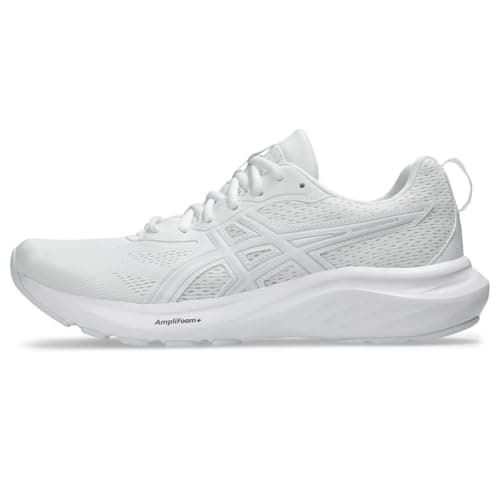
Budget pick with wide and extra-wide widths
ASICS Gel-Contend 9
The $70 shoe that is still a real running shoe: men's Normal, Wide and X-Wide, and RunRepeat's recommendation for beginners up to 15K. A 31.2 mm measured heel is the honest limit.
$54.95Amazon#ad · Price as of October 11, 2026 · Affiliate disclosure for the link to ASICS Gel-Contend 9
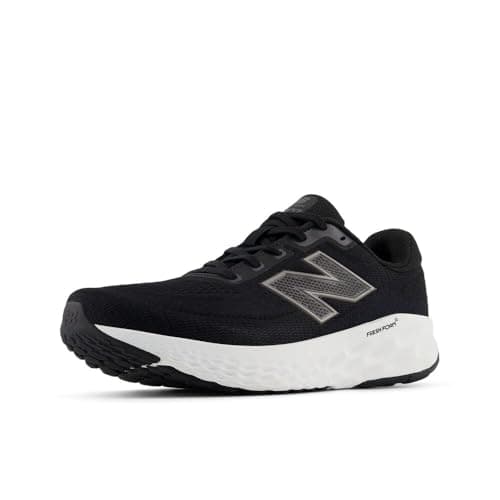
Best-finished shoe at the $100 line
New Balance Fresh Foam X Evoz v4
RunRepeat's Best Overall in its 2026 cheap running shoes guide at a $100 list price, with six widths across men's and women's. Heavy at 10.1 oz, and the measured drop is 5.5 mm against a listed 8 mm.
$99.95Amazon#ad · Price as of October 11, 2026 · Affiliate disclosure for the link to New Balance Fresh Foam X Evoz v4
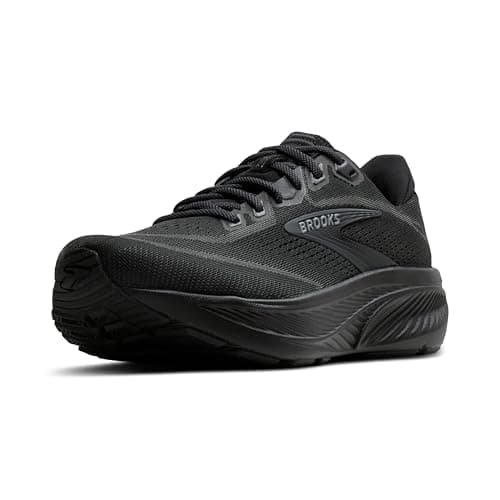
C25K to marathon: the steady default
Brooks Ghost 18
The $150 shoe and the one most runners should buy: a 37.3 mm measured heel, DNA LOFT v3 foam and four widths. This is where the price curve flattens.
$125.18Amazon#ad · Price as of October 11, 2026 · Affiliate disclosure for the link to Brooks Ghost 18
Four cases where it is not worth it
- You are starting Couch to 5K. The NHS plan asks for three short sessions a week with walk breaks. A $100 shoe that fits beats a $220 shoe that does not, and you do not yet know what you like.
- You want one shoe for everything. Race shoes are bad at easy runs: less durable, less stable, and wasted on recovery pace.
- You are buying it to avoid injury. See the Cochrane finding above. Build mileage gradually instead.
- The expensive shoe does not come in your width. Cleveland Clinic puts comfort and fit first for a reason.
The better use of $300
If you have $300 to spend on running shoes and you are training for something longer than a 10K, two $150 pairs beat one $300 pair almost every time. Three reasons:
- You get more total mileage. The AAOS puts a shoe's useful life at roughly 500 miles, so two pairs is 1,000 miles rather than 500.
- You get a shoe for easy days and a shoe for faster days, which is the point of a rotation — see our running shoe rotation guide.
- You always have a fallback when one pair is wet, or when you are breaking in a replacement — see how to break in new running shoes.
The one exception: if you have a goal race and a time target, one $150 trainer plus one $220 racer is a defensible split. That is equipment, not indulgence.
How we chose these
Researched, compared, scored for your level
We start from what a published training plan actually asks of a runner at your level, compare every model's published specs (stack height, drop, weight, plate, stability features, widths) against that job, and score each pick on a public rubric. Each spec links to where it came from, so you can shortlist in minutes and buy with the numbers in front of you.
Scores are our editorial judgments from that documented research, and rankings are earned on the rubric alone — placement is never for sale. The rubric and weights are on the How We Pick page.
Questions
Frequently asked
Are expensive running shoes worth it?
Do more expensive running shoes prevent injuries?
Is a $70 running shoe good enough to start running?
Do carbon-plated shoes actually make you faster?
Should I buy one expensive pair or two cheaper pairs?
Keep going
Related reading
Receipts
Sources
- RunRepeat — Best cheap running shoes guide, 2026 (checked 2026-10-11)
- RunRepeat — ASICS Gel-Contend 9 lab review: $70 MSRP, 31.2 mm measured heel, widths (checked 2026-10-11)
- RunRepeat — New Balance Fresh Foam X Evoz v4 lab review: $100 MSRP, 31.4 mm heel, 10.1 oz, Best Overall cheap pick (checked 2026-10-11)
- RunRepeat — Brooks Ghost 18 lab review: $150 MSRP and 37.3 mm measured heel (checked 2026-10-11)
- RTINGS — Brooks Ghost 18 review: four widths (checked 2026-10-11)
- RunRepeat — ASICS Novablast 6 lab review: $155 MSRP (checked 2026-10-11)
- RunRepeat — HOKA Clifton 11 lab review: $155 MSRP (checked 2026-10-11)
- Hoogkamer et al. (2018), A Comparison of the Energetic Cost of Running in Marathon Racing Shoes, Sports Medicine (PubMed)
- Joubert, Dominy & Burns (2023), Effects of Highly Cushioned and Resilient Racing Shoes on Running Economy at Slower Running Speeds, IJSPP (PubMed)
- Relph N, et al. Running shoes for preventing lower limb running injuries in adults. Cochrane Database Syst Rev, 2022
- OrthoInfo (AAOS) — Athletic Shoes: fit guidance and the 500-mile figure (checked 2026-10-11)
- Cleveland Clinic — How To Pick the Running Shoe That Is Best for You (checked 2026-10-11)
- NHS — Get running with Couch to 5K (checked 2026-10-11)
- Hal Higdon — Novice 1 Marathon training program (checked 2026-10-11)
Every figure above is traceable. Specs come from the maker's own pages or the named reviewer's published measurements (linked above); level definitions come from published training plans; prices come from Amazon's own API and carry the date they were checked, so you buy on a current number. Read the full method.