A handheld is the least gear that solves the water problem: no vest to fit, no belt to cinch, nothing bouncing on your back. The trade is that you are holding something for the whole run, and that one bottle only holds so much. These five are ranked on capacity, strap design and what the pocket actually fits.
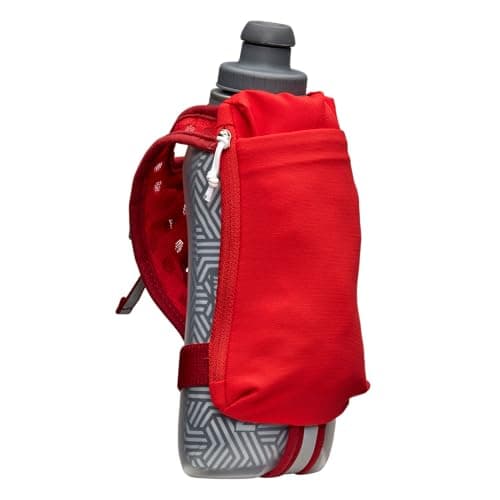
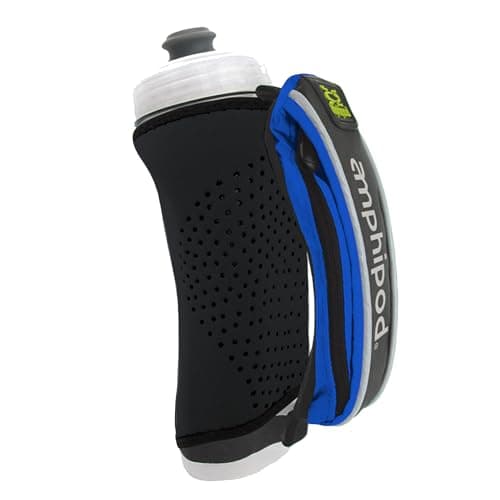
The most water a handheld carries here at 20 oz, in a removable neoprene thermal sleeve, and iRunFar's Best Handheld Water Bottle for 2026. The honest cons: iRunFar calls it a relatively large bottle that may not suit smaller hands, and the zip pocket takes keys and a gel but not a phone.
18 oz, double-wall insulated, and the only bottle here with a mesh pocket Nathan says fits most smartphones. The cons: 5.5 oz empty makes it the heaviest on the page, and a hard bottle does not shrink as it empties.
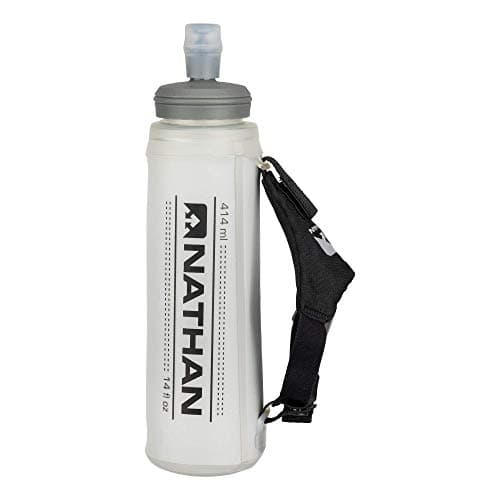
2 oz with the flask in it, because the water sits in a soft flask held by a rigid ExoSpine rather than a hard bottle. The cons: 14 oz is a short supply in heat, and there is no phone pocket.
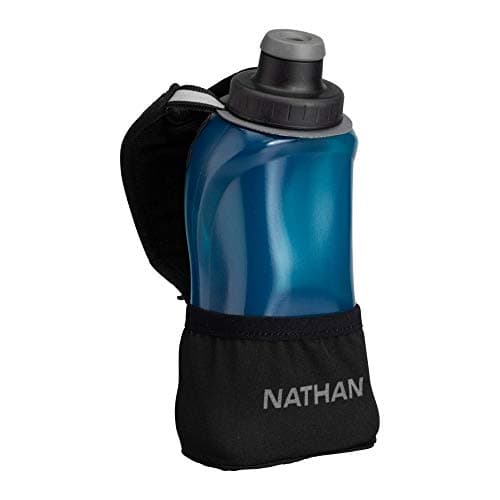
A 12 oz insulated flask with a no-slip strap insert and 360-degree reflectivity, sized for 10K runs and midweek miles. The cons: 12 oz empties fast past an hour, there is no phone pocket, and Nathan does not publish a weight.
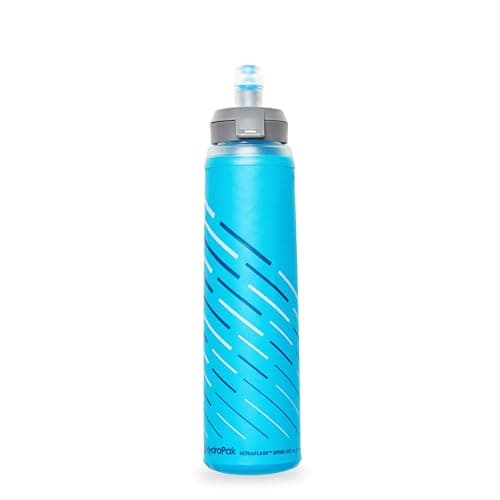
iRunFar's Best Soft Flask for 2026: 500 ml at 1.4 oz with a flip-open SpeedFill cap and a 42 mm mouth that takes ice. The cons: no strap and no pocket at all, and iRunFar found the 500 ml size narrow for many vest pockets.
Best soft flask, and the vest spare10KHALFMARATHON
#ad · Prices come live from Amazon, last checked October 5, 2026. Scores are ours, compiled from published specs and the maker's intended use. Product photos come from Amazon. Tap a row for the full write-up.
The short version
Buy the Amphipod Hydraform Jett-Lite Thermal 20 oz. It carries the most water of any handheld on this page, the thermal sleeve comes off when you do not want it, and iRunFar named it Best Handheld Water Bottle in its 2026 bottle test, where its reviewers found the strap's cushioning “comfortable around the hand and easily adjustable for any hand size.”
If your phone comes with you, buy the Nathan SpeedDraw 2 Insulated 18 oz instead: it is the only bottle here with a pocket Nathan says fits most smartphones. If you want the lightest thing that still straps to your hand, the Nathan ExoShot 2.0 is 2 oz with its flask fitted. And if you already own a vest, the HydraPak UltraFlask Speed 500 ml is a 1.4 oz soft flask that works both as a hand carry and as a front-pocket refill.
How we ranked these
A handheld is a simple object, which means a small number of things decide whether you keep using it. We scored every bottle on the site's carry rubric — capacity for the distance (35), fit and adjustability (25), storage (20) and bounce control (20) — and the reasoning behind each score is published on how we pick. In plain terms, here is what we were looking for and in what order:
Capacity against the run you actually do. One bottle is one bottle. A 12 oz flask and a 20 oz bottle are different products for different runs, and nothing else about the design can fix a capacity that is too small.
A strap you do not have to grip. The difference between a bottle you forget about and a bottle you resent is whether your hand can stay relaxed and open. Thumb holes, adjustable hand straps and no-slip inserts all exist to do that job.
Storage that matches what you carry. Keys and a gel are one problem. A phone is a completely different one, and only one bottle on this page solves it.
Insulation, weight and the shape of the bottle. Double walls keep water cold and add grams. Soft flasks collapse as they empty; hard bottles do not.
Published figures only. We do not lab-test bottles. Every capacity, weight and pocket claim on this page is linked to the maker's own page or to iRunFar's test, and where a maker does not publish a figure we say so rather than estimate one.
Price brackets here are modest across the board: handhelds are the cheapest way into carrying water, well below a vest and in the same range as a decent running belt. Live prices sit on the buy buttons, so what you see is the current Amazon number rather than something we typed in months ago.
Start with capacity, not the brand
iRunFar's guidance for shorter runs is that “a bottle or flask that holds 12 to 20 ounces (350 to 600 milliliters) will likely be sufficient.” Every bottle on this page sits inside that window, which is both the point and the limit of the category.
The practical read: if your long runs are past 90 minutes, a single handheld is not the answer and you should read the vest and belt pages instead. Inside 90 minutes, a handheld is the simplest thing that works — and iRunFar agrees, calling a handheld “by far the simplest and easiest way to carry running hydration.”
The strap is the whole product
Nobody abandons a handheld because of the bottle. They abandon it because their hand got tired of holding it. Every design here tries to solve that, and the approaches genuinely differ:
Adjustable strap with a thumb hole (Nathan SpeedDraw 2). Nathan describes it as a fully adjustable hand strap with a thumb hole for grip-free running. Your hand hangs in the strap rather than closing around the bottle.
Cushioned neoprene jacket (Amphipod Jett-Lite Thermal). The thermal sleeve doubles as the strap. iRunFar found the cushioning “comfortable around the hand and easily adjustable for any hand size,” which is the single most useful line in the whole test if you have never bought a handheld before.
Ergonomic strap over a soft flask (Nathan ExoShot 2.0). A rigid ExoSpine supports the flask so the strap has something to pull against, with wicking mesh where your palm sits.
Strap with a no-slip insert (Nathan QuickSqueeze Lite). A smaller strap for a smaller bottle, plus a TPU grip surface on the flask itself.
No strap at all (HydraPak UltraFlask Speed). You grip it, or it lives in a vest. That is a real limitation, not a quibble, and it is why this flask is ranked fifth here despite being the best soft flask in iRunFar's test.
Whichever you buy, set the strap length while standing still with the bottle full. A strap sized to an empty bottle is loose for the whole run.
What the pocket actually fits
This is where handheld listings get vague, so here is the honest version from each maker's own page.
Bottle
Published storage
Phone?
Nathan SpeedDraw 2
Expandable mesh pocket plus a zip pocket
Yes — Nathan says it fits most smartphones
Amphipod Jett-Lite Thermal
Small zippered pocket
No — keys and a gel, per iRunFar
Nathan ExoShot 2.0
Stash pockets, 8.5 cu in / 0.1 L
No
Nathan QuickSqueeze Lite
Stash pockets for keys or cards
No
HydraPak UltraFlask Speed
None
No
If the phone has to come, that table has one row in it. If the phone can live somewhere else, you have five bottles to choose from and more freedom on capacity — our how to carry a phone while running page covers belts, armbands and shorts pockets, any of which pairs happily with a strap-and-flask handheld.
The two biggest bottles: the most water, and the only phone pocket. A dash means that figure is not published for that bottle — Amphipod does not list a weight, and the Jett-Lite's strap is its thermal sleeve rather than a separate part.
The three light options. A dash means the maker does not publish that figure — we do not fill those gaps in with estimates.
The weight spread is the headline and it is larger than it looks: 1.4 oz for the UltraFlask Speed against 5.5 oz for the SpeedDraw 2. That is a four-ounce difference in one hand, which is noticeable over an hour even though both numbers sound trivial written down.
Hard bottle or soft flask?
Two genuinely different products share this page, and the choice between them is not about quality.
Hard bottles (Amphipod Jett-Lite, Nathan QuickSqueeze Lite, Nathan SpeedDraw 2) hold their shape. They are easier to fill at a tap, easier to clean, and the ones here are double-walled or sleeved for insulation. The catch is that a hard bottle weighs the same empty as it does full in terms of bulk: at mile eight you are still carrying a bottle-shaped object even though the water is gone.
Soft flasks (HydraPak UltraFlask Speed, and the flask inside the Nathan ExoShot 2.0) collapse as you drink. They are dramatically lighter — the UltraFlask Speed is 1.4 oz against 5.5 oz for the SpeedDraw 2 — and they pack into a pocket afterwards. The catch is that they are harder to fill from a low tap, they need to be dried properly, and a soft flask with no strap has to be gripped.
One underrated advantage of the soft-flask approach: both soft flasks here are useful twice. Nathan says the ExoShot's flask pulls out of its sleeve to ride in Nathan vest pockets, and the UltraFlask Speed is sold as a front-pocket flask in the first place. If you expect to buy a hydration vest within the year, that matters.
Insulation, and whether it matters to you
Three of these bottles are insulated, and iRunFar's framing is the useful one: double-walled vacuum insulation “keeps liquids hot or cold” for longer. In running terms that means your water is still cold at the end of a hot 10K rather than at body temperature.
Nathan SpeedDraw 2: double-wall insulated, and Nathan claims the construction keeps fluids cooler 20% longer than other insulated bottles. That is the maker's figure, not a measurement of ours.
Nathan QuickSqueeze Lite: double-wall insulated in the smallest body here, which is the combination that makes it a hot-weather 10K bottle specifically.
Amphipod Jett-Lite Thermal: insulation by removable neoprene sleeve. You get to choose, which is genuinely better than a fixed design if you run through four seasons.
ExoShot 2.0 and UltraFlask Speed: not insulated. The UltraFlask can be frozen, which is the cheap workaround — fill it halfway, freeze it overnight, top it up in the morning.
If you mostly run in cool weather, insulation is weight you do not need. If your hard months are July and August, it is the feature you will notice most.
Which one, by level
Couch to 5K: none of them, most weeks. A 5K is 20-40 minutes and you can drink before and after. If a hot afternoon makes you want something, the QuickSqueeze Lite is the smallest, cheapest option — see the Couch-to-5K gear checklist for what actually earns a place at that stage.
10K: the QuickSqueeze Lite or the ExoShot 2.0. Both are small and light enough that you will not resent them on a 50-minute run, and 12-14 oz is proportionate to the distance.
Half marathon: the Amphipod Jett-Lite Thermal if the phone stays home, the SpeedDraw 2 if it does not. Half-marathon long runs are where a handheld earns its keep — long enough to need water, short enough that one bottle covers it.
Marathon: a handheld is a midweek and shorter-long-run tool, not a 20-miler tool. Use the Jett-Lite for the 8-10 mile days and read hydration vest vs belt for the long ones. Several marathon runners end up with both.
When a handheld is the wrong answer
We would rather you skip the purchase than buy the wrong category, so here are the cases where a handheld loses:
Your long runs are past 90 minutes in heat. One bottle will not cover it and refilling mid-run from a handheld is fiddly. A belt with two flasks or a vest is the right tool.
You want both hands free. Some people hate carrying anything. That is not a flaw; it is a preference that rules out the whole category.
You are doing a workout with arm swing that matters. For track intervals or a tempo session, put the bottle down at the side and run past it.
Your route passes water. A loop past home, your car or a working fountain is free, weighs nothing and never needs washing.
In detail
The picks, in full
1
Best handheld water bottle
Amphipod Hydraform Jett-Lite Thermal 20 oz
C25K10KHALFMARATHON
7.4 /10
The most water a handheld carries here at 20 oz, in a removable neoprene thermal sleeve, and iRunFar's Best Handheld Water Bottle for 2026. The honest cons: iRunFar calls it a relatively large bottle that may not suit smaller hands, and the zip pocket takes keys and a gel but not a phone.
#ad · Price as of October 5, 2026 · Affiliate disclosure for the link to Amphipod Hydraform Jett-Lite Thermal 20 oz
2
Best if you carry a phone
Nathan SpeedDraw 2 Insulated 18 oz
C25K10KHALFMARATHON
7.7 /10
18 oz, double-wall insulated, and the only bottle here with a mesh pocket Nathan says fits most smartphones. The cons: 5.5 oz empty makes it the heaviest on the page, and a hard bottle does not shrink as it empties.
#ad · Price as of October 5, 2026 · Affiliate disclosure for the link to Nathan SpeedDraw 2 Insulated 18 oz
3
Lightest with a strap
Nathan ExoShot 2.0 14 oz
C25K10KHALFMARATHON
7.0 /10
2 oz with the flask in it, because the water sits in a soft flask held by a rigid ExoSpine rather than a hard bottle. The cons: 14 oz is a short supply in heat, and there is no phone pocket.
#ad · Price as of October 5, 2026 · Affiliate disclosure for the link to Nathan ExoShot 2.0 14 oz
4
Smallest, for short hot runs
Nathan QuickSqueeze Lite Insulated 12 oz
C25K10KHALFMARATHON
7.0 /10
A 12 oz insulated flask with a no-slip strap insert and 360-degree reflectivity, sized for 10K runs and midweek miles. The cons: 12 oz empties fast past an hour, there is no phone pocket, and Nathan does not publish a weight.
#ad · Price as of October 5, 2026 · Affiliate disclosure for the link to Nathan QuickSqueeze Lite Insulated 12 oz
5
Best soft flask, and the vest spare
HydraPak UltraFlask Speed 500 ml
C25K10KHALFMARATHON
6.9 /10
iRunFar's Best Soft Flask for 2026: 500 ml at 1.4 oz with a flip-open SpeedFill cap and a 42 mm mouth that takes ice. The cons: no strap and no pocket at all, and iRunFar found the 500 ml size narrow for many vest pockets.
#ad · Price as of October 5, 2026 · Affiliate disclosure for the link to HydraPak UltraFlask Speed 500 ml
How to choose a handheld water bottle
Decide the longest run it has to cover. Under an hour, 12-14 oz is fine. Up to 90 minutes, go 18-20 oz. Past that, a handheld is the wrong category and no amount of design fixes it.
Answer the phone question before anything else. If your phone has to ride on the bottle, the SpeedDraw 2's mesh pocket is the only published fit here, and that decision makes the rest of the choice for you.
Choose hard bottle or soft flask. Hard for easy filling, cleaning and insulation. Soft for weight and for packing down as it empties.
Check the strap can be adjusted, not just that one exists. “Adjustable for any hand size” is the phrase that matters, and a thumb hole or no-slip insert is what lets your hand stay open.
Decide whether you need insulation. Summer runner: yes. Winter runner: it is weight you are carrying for nothing.
Check the mouth size if you use drink mix or ice. The UltraFlask Speed's 42 mm opening takes both; narrow sports caps do not.
Check it is dishwasher-safe if you use drink mix. iRunFar flags this as “an important feature if you like to carry drink mixes,” and the Amphipod bottle is.
Cleaning and care
Rinse the day you use it, not the day you need it. Anything with sugar in it needs water through the valve within a few hours, or you are scrubbing later.
Dry soft flasks inside out and open. A sealed damp flask in a drawer is how flasks start to smell. The UltraFlask Speed's 42 mm opening makes this easy, which is one of the quiet reasons it is the best soft flask in iRunFar's test.
Use the dishwasher where the maker allows it. iRunFar notes the Amphipod bottles are dishwasher-safe. Soft TPU flasks generally are not — HydraPak publishes a 140 degrees F maximum for the UltraFlask Speed, which rules out a hot cycle.
Wash the strap too. Neoprene sleeves and mesh straps live against a sweaty hand for hours a week. On the Jett-Lite the sleeve comes off, which makes this trivial.
Replace a valve that drips rather than living with it. Bite valves and push-pull caps are the part that wears out, and they are the cheapest part to replace.
Common mistakes
Buying 12 oz for a 90-minute run. The most common error in this category, and the one that sends people back to buy a second bottle. Size for your longest regular run, not your average one.
Assuming a “pocket” means a phone pocket. Four of five bottles here have storage; one of five fits a phone. Those are different claims and listings blur them constantly.
Gripping the bottle. If your fist is closed around it, the strap is too loose or it is the wrong bottle. A handheld should hang on your hand.
Carrying it on one side for the whole run. Swap hands every mile or two on a long run. It costs nothing.
Buying a handheld to solve a marathon problem. If you are doing 18-mile long runs, the honest recommendation is a vest or a belt with refills, and we would rather say so than sell you a bottle that runs dry at mile nine.
How we chose these
Researched, compared, scored for your level
We start from what a published training plan actually asks of a runner at your level, compare every model's published specs (stack height, drop, weight, plate, stability features, widths) against that job, and score each pick on a public rubric. Each spec links to where it came from, so you can shortlist in minutes and buy with the numbers in front of you.
What is the best handheld water bottle for running?+
The Amphipod Hydraform Jett-Lite Thermal 20 oz for most runners: it holds the most water of any handheld here, the neoprene thermal sleeve is removable, and iRunFar named it Best Handheld Water Bottle in its 2026 bottle test. If you carry a phone, the Nathan SpeedDraw 2 Insulated 18 oz is the pick instead, because its mesh pocket is the only one here that Nathan says fits most smartphones.
How many ounces should a running handheld hold?+
iRunFar's guidance for shorter runs is 12 to 20 oz (350 to 600 ml), which is the whole range covered on this page. As a planning rule: 12-14 oz for a 10K or an hour in mild weather, 18-20 oz for runs up to about 90 minutes. Past 90 minutes, especially in heat, one handheld is not enough and a belt or vest with refills is the better answer.
Is a handheld bottle better than a hydration belt or vest?+
For simplicity, yes — iRunFar calls a handheld “by far the simplest and easiest way to carry running hydration,” with nothing to fit around your waist or chest. For capacity and for leaving both hands free, no. The practical split is handheld up to about 90 minutes, belt or vest beyond it. Our hydration vest vs belt comparison covers the step up.
Which running handheld fits a phone?+
On this page, the Nathan SpeedDraw 2 Insulated 18 oz: Nathan lists an expandable mesh pocket that fits most smartphones, plus a separate zip pocket. The Amphipod Jett-Lite's zip pocket takes keys and a gel but not a phone, and the ExoShot 2.0, QuickSqueeze Lite and UltraFlask Speed have no phone pocket at all.
Do I need an insulated running bottle?+
Only if you run in heat. Double-wall insulation keeps water cold for longer, which is the difference between cold water and warm water at the end of a summer 10K — Nathan claims its SpeedDraw 2 construction holds temperature 20% longer than other insulated bottles. In cool weather it is extra weight for no benefit, and the Amphipod Jett-Lite's removable sleeve is the compromise.
Does carrying a bottle in one hand mess up your running form?+
A few ounces in one hand is an asymmetry, which is why the designs here all try to let your hand stay relaxed rather than clenched, and why swapping hands every mile or two on a long run is worth doing. For a hard workout or a track session, put the bottle down at the side of the track instead. For easy and long miles, a strapped handheld is a well-established way to carry water.
Can you use a handheld bottle in a race?+
Usually yes, and it is common at hot races where runners want more than the cups at aid stations. Rules are set per race, though, so check the event's own page. Our how to carry water while running guide covers race-day water in more detail.
Every figure above is traceable. Specs come from the maker's own pages or the named reviewer's published measurements (linked above); level definitions come from published training plans; prices come from Amazon's own API and carry the date they were checked, so you buy on a current number. Read the full method.