Best Running Hats: Ranked on Weight, Brim and a Real UPF Number
A running hat does three jobs - keeps sun off your face, keeps sweat out of your eyes, and lets heat escape the top of your head. Only a handful of hats publish the figures that tell you whether they can. These six do, and the numbers range from an 18-gram ripstop cap to a UPF 50+ bucket with a brim that goes all the way round.
Treeline Review's Best Overall, and the only hat in their test rated Excellent for breathability. 56 g on their scale, a 2.5-inch brim, recycled polyester, and a UPF 40+ rating on the front, sides and rear. The rear strap is what makes 'one size' true.
A 3-inch brim - the deepest here - with recycled nylon up front and recycled polyester mesh at the back, plus a published 22.83-inch circumference so you can check the fit. No UPF rating, so the shade is structural.
Best trucker, and the deepest brimC25K10KHALFMARATHON
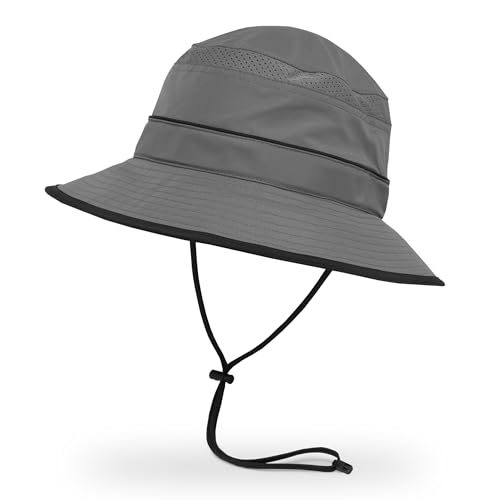
The only hat here that shades your ears and the back of your neck, at UPF 50+, with a one-hand barrel adjuster you can work mid-run. Sized M, L and XL rather than one-size.
Treeline Review's road-running pick and the cheapest of their awarded hats at a $34 list price: 97% polyester with 3% elastane, so the crown stretches onto your head. No UPF rating published.
18 g on Treeline's scale - about a third of the Ciele - in UPF 50+ recycled ripstop that packs into a shorts pocket. Two warnings: Treeline says it runs small, and there is no adjustment at all.
The $25 option, and the lowest list price in Treeline Review's whole comparison table. It appears in their table but not their reviews, so buy it on price and availability - there is no published weight or UPF figure for it.
#ad · Prices come live from Amazon, last checked November 13, 2026. Scores are ours, compiled from published specs and the maker's intended use. Some photos are stock. Tap a row for the full write-up.
Buy the Ciele Athletics GOCap. It is Treeline Review's Best Overall, the only hat in their 2026 test rated Excellent for breathability, and the one that gets the basics right in combination: 56 g on the scale, a 2.5-inch brim, UPF 40+ across the front, sides and rear, and a rear strap so one size really does fit.
If you want a deeper brim and a hat you will also wear to the shops, the Patagonia Duckbill Trucker goes to 3 inches. If the sun is the actual problem - summer long runs, exposed roads, a midday half marathon - the Sunday Afternoons Solar Bucket is UPF 50+ with a brim that runs all the way round. If you want the lightest possible thing on your head on race day, the Brooks Lightweight Packable Hat is 18 g. And if you want to spend as little as possible, the Headsweats Performance Race Hat is $25.
The three numbers that matter
Running hats are sold on colorways and bought on habit, which is why so many runners own four and like none of them. Three published figures decide almost everything:
Brim depth. How much of your face is in shade, and whether rain runs off in front of your eyes or into them. The range here is 2 3/8 inches (Brooks) to 3 inches (Patagonia). That five-eighths of an inch is the difference between squinting and not.
UPF rating. A rated fabric blocks a stated fraction of UV. An unrated one may well block plenty - it just has not been tested and labelled. The Skin Cancer Foundation explains the rating; three of the six hats here carry one and three do not.
Weight. 18 g against 56 g is the difference between a hat you forget and a hat you register on a hot mile 10. Light is not automatically better, though: the 18 g hat is also the one with no adjustment.
Notice what is not on that list: moisture wicking. Every hat in this category is a synthetic that wicks. It is table stakes, not a differentiator, and treating it as a selling point is how you end up with four hats.
The six compared
The three hats whose makers publish a sun-protection rating, side by side first:
The unrated three. The Headsweats appears only in Treeline Review's comparison table, which is why most of its row is empty.
Those two tables are the honest shape of this category: the hats with the most published data are not automatically the best hats, but they are the only ones you can compare before buying. The Headsweats row is nearly empty and it is still the one we would hand a new runner on a $25 budget.
What a UPF rating actually means
UPF is to fabric what SPF is to sunscreen: a measured factor for how much ultraviolet gets through. A UPF 50+ fabric blocks the large majority of UV; a UPF 25 fabric blocks noticeably less. The Skin Cancer Foundation's guidance on sun-protective clothing is the plain-language version.
Three things worth knowing before you pay extra for a rating:
A rating can be partial. Treeline Review notes that the Ciele GOCap is UPF 40+ on the front, sides and rear, and that the top panel is unrated. That is the panel directly above your scalp. It is still a good hat; it is just not a rated one everywhere.
Unrated is not the same as unprotective. Patagonia's recycled nylon trucker front publishes no UPF number, and a 3-inch brim still shades more of your face than a rated 2 3/8-inch one. Geometry does a lot of the work.
A hat is not sunscreen. The American Academy of Dermatology recommends broad-spectrum SPF 30 or higher on exposed skin, reapplied roughly every two hours. A cap shades your forehead and does nothing for your ears, neck or the backs of your arms - which is a point in the Solar Bucket's favor. Sunglasses are a separate job again: the American Academy of Ophthalmology notes that lens darkness and price do not indicate UV protection, and our running sunglasses roundup covers that.
Brim depth: 2 3/8 in vs 3 in
Published brim depths across these six run from 2 3/8 inches on the Brooks packable, through 2.5 inches on the Ciele GOCap and the HOKA Run Hat, to 3 inches on the Patagonia Duckbill Trucker and the Solar Bucket.
Deeper is better for shade and for rain, and worse for wind and for seeing the ground on technical footing. A 3-inch brim in a headwind becomes a small sail; a 2 3/8-inch brim does not. If you mostly run roads early or late, brim depth barely matters. If you run exposed roads in summer, it is the single most useful figure on this page. Our hot-weather shoe roundup makes the same argument about uppers.
One more structural point: a bucket brim goes all the way round. That is why the Solar Bucket is the pick for genuinely exposed routes and why nobody wears one for a 5K. RRCA's hot-weather guidance is about timing, pace and fluid long before it is about kit, and that order is right.
Weight: 18 g to 61 g
Treeline Review weighed every hat it reviewed. The spread is wide: 18 g for the Brooks packable, 28 g for the Janji AFO Hyperlight, 56 g for the Ciele GOCap, 61 g for the rnnr Distance Hat. For reference, a modern phone is roughly 200 g - so even the heaviest hat here is a small fraction of what most runners already carry.
Which is the point: weight is the least important of the three numbers. What light buys you is packability - the Brooks disappears into a shorts pocket when the sun goes behind cloud - and what it costs you here is adjustment. The 18 g Brooks has no strap and, per Treeline, runs small. The 56 g Ciele has a strap and a breathability rating. For most runners that trade is worth 38 grams.
Which hat for your routes
You run roads, year round, and want one hat. Ciele GOCap. Rated fabric, a strap, the best breathability score in the test.
Summer long runs on exposed roads. Sunday Afternoons Solar Bucket, for the ears and the neck, plus sunscreen per the AAD guidance above.
You want one hat for running and for the rest of your life. Patagonia Duckbill Trucker. Deepest brim here and it does not look like race kit.
Race day, and you hate feeling anything on your head. Brooks Lightweight Packable Hat, if your head is at the smaller end. Read the fit warning first.
You just want a hat and $25 is the budget. Headsweats Performance Race Hat. It is the cheapest in the test's whole table.
Two of Treeline Review's award winners are direct-to-consumer, and one of our picks is cheaper away from Amazon. We earn nothing saying so, which is exactly why it is worth saying.
Janji AFO Hyperlight Cap. Treeline's Best Lightweight at 28 g, 88% recycled polyester with 12% elastane, a 2 3/8-inch brim and a rear bungee - but only UPF 25, the lowest rated figure in their test. Sold by Janji.
rnnr Distance Hat. Treeline's Best Affordable at $40: 61 g, a 2.5-inch brim, UPF 40, and the only hat in their test sold in two actual head sizes (56 cm and 58 cm). Sold by rnnr.
Brooks Lightweight Packable Hat. Ranked above, and we have deliberately not pointed its buy button at a single listing: the only title-verified Amazon listing we found on 2026-11-09 was the 2.0 version at $68.87 against a $35 list price. Buy it from Brooks or a running shop and keep the difference.
In detail
The picks, in full
1
Best running hat overall
Ciele Athletics GOCap
C25K10KHALFMARATHON
9.8 /10
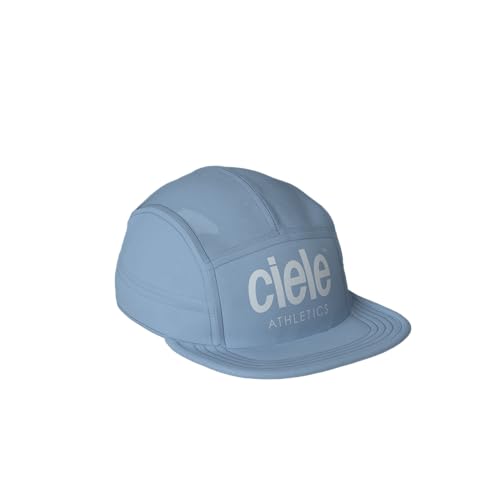
Treeline Review's Best Overall, and the only hat in their test rated Excellent for breathability. 56 g on their scale, a 2.5-inch brim, recycled polyester, and a UPF 40+ rating on the front, sides and rear. The rear strap is what makes 'one size' true.
+Treeline Review's Best Overall pick, and the one hat in their test rated Excellent for breathability
+UPF 40+ across the front, sides and rear rather than on one panel
+A rear strap and buckle, so one size adjusts to your head instead of hoping
+56 g on Treeline's scale: light enough that it disappears, substantial enough to hold its shape
Good to know
Choose something else if you want the lightest possible cap for racing and will trade the strap and the breathability rating for it; the Brooks Lightweight Packable Hat weighs 18 g.
#ad · Price as of November 13, 2026 · Affiliate disclosure for the link to Ciele Athletics GOCap
2
Stock photo
Best trucker, and the deepest brim
Patagonia Duckbill Trucker Hat
C25K10KHALFMARATHON
9.7 /10
A 3-inch brim - the deepest here - with recycled nylon up front and recycled polyester mesh at the back, plus a published 22.83-inch circumference so you can check the fit. No UPF rating, so the shade is structural.
#ad · Price as of November 13, 2026 · Affiliate disclosure for the link to Patagonia Duckbill Trucker Hat
3
Best for sun: 360-degree shade
Sunday Afternoons Solar Bucket
C25K10KHALFMARATHON
9.5 /10
The only hat here that shades your ears and the back of your neck, at UPF 50+, with a one-hand barrel adjuster you can work mid-run. Sized M, L and XL rather than one-size.
#ad · Price as of November 13, 2026 · Affiliate disclosure for the link to Sunday Afternoons Solar Bucket
4
Stock photo
Best soft cap for road running
HOKA Run Hat
C25K10KHALFMARATHON
9.5 /10
Treeline Review's road-running pick and the cheapest of their awarded hats at a $34 list price: 97% polyester with 3% elastane, so the crown stretches onto your head. No UPF rating published.
#ad · Price as of November 13, 2026 · Sold on Amazon through third-party sellers · Affiliate disclosure for the link to HOKA Run Hat
5
Stock photo
Lightest: 18 grams
Brooks Lightweight Packable Hat
C25K10KHALFMARATHON
9.3 /10
18 g on Treeline's scale - about a third of the Ciele - in UPF 50+ recycled ripstop that packs into a shorts pocket. Two warnings: Treeline says it runs small, and there is no adjustment at all.
+18 g on Treeline's scale, the lightest hat in their 2026 test and roughly a third the weight of the Ciele GOCap
+UPF 50+, the highest rating in this group, on a ripstop shell that packs into a pocket
+Recycled polyester ripstop resists the snags that finish off a soft-shell cap
+A $35 list price in Treeline Review's test, which undercuts every other awarded cap in it
Good to know
Choose something else if your head is at the larger end or you have ever found a one-size cap tight; buy the Ciele GOCap or a trucker with a rear strap instead.
#ad · Price as of November 13, 2026 · Affiliate disclosure for the link to Brooks Lightweight Packable Hat
6
Budget pick
Headsweats Performance Race Hat
C25K10KHALFMARATHON
9.3 /10
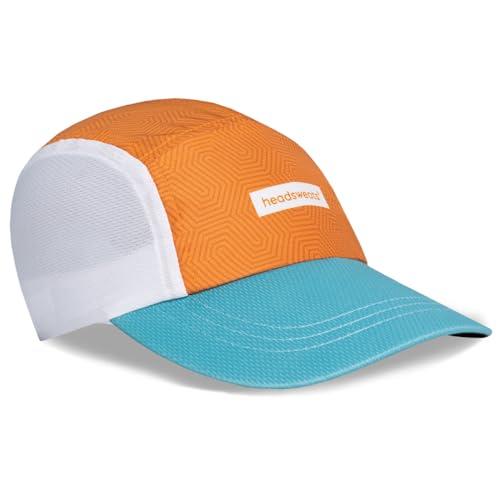
The $25 option, and the lowest list price in Treeline Review's whole comparison table. It appears in their table but not their reviews, so buy it on price and availability - there is no published weight or UPF figure for it.
#ad · Price as of November 13, 2026 · Affiliate disclosure for the link to Headsweats Performance Race Hat
How to choose a running hat
Start with when you run. Midday summer miles need a brim and a rating. Dark winter mornings need neither, and a sun hat is the wrong purchase entirely.
Check the closure before the fabric. A rear strap or bungee turns "one size" into something that fits. The one hat here with no adjustment is also the one the test says runs small.
Treat brim depth as the real spec. 2 3/8 inches, 2.5 inches and 3 inches feel genuinely different in sun and in rain. It is the figure you will notice every run.
Buy the rating if you run exposed routes. UPF 50+ on the Brooks and the Solar Bucket, UPF 40+ on the Ciele. If none of your running is in open sun, do not pay for it.
Buy two cheap ones over one expensive one if you sweat heavily. A hat you wash after every run is a hat you need two of. This is the whole case for the $25 Headsweats.
Check the price away from Amazon. Running hats are a category where marketplace markups are common - we found one at nearly twice list. The buy buttons here show the current price, so compare it against the maker's own store.
Common mistakes
Buying a hat for sun protection and skipping sunscreen. A cap shades a forehead. The AAD recommends broad-spectrum SPF 30 or higher on exposed skin, reapplied about every two hours, and your ears and neck are exposed skin.
Assuming "UPF 50+" covers the whole hat. It may not. Treeline reports the Ciele GOCap's top panel as unrated even though the front, sides and rear are UPF 40+.
Buying a one-size cap with no adjustment, unseen. This is the single most common running-hat regret, and it is why the Brooks packable sits fifth here rather than first.
Paying for wicking. Every hat in this category wicks. It is not a reason to choose one.
Wearing a summer cap for winter running. A UPF ripstop cap does nothing for cold ears. See winter running gear for the headband and merino-layer answer instead.
The short answer, again
Our recommendation
If you only take one thing from this page, take the first of these two.
Buy this one
Ciele Athletics GOCap
Best running hat overall
9.8 /10
Treeline Review's Best Overall, and the only hat in their test rated Excellent for breathability.
#ad · Price as of November 13, 2026 · Affiliate disclosure for the link to Ciele Athletics GOCap
The runner-up
Patagonia Duckbill Trucker Hat
Best trucker, and the deepest brim
9.7 /10
A 3-inch brim - the deepest here - with recycled nylon up front and recycled polyester mesh at the back, plus a published 22.83-inch circumference so you can check the fit.
#ad · Price as of November 13, 2026 · Affiliate disclosure for the link to Patagonia Duckbill Trucker Hat
How we chose these
Researched, compared, scored for your level
We start from what a published training plan actually asks of a runner at your level, compare every model's published specs (stack height, drop, weight, plate, stability features, widths) against that job, and score each pick on a public rubric. Each spec links to where it came from, so you can shortlist in minutes and buy with the numbers in front of you.
The Ciele Athletics GOCap. It is Treeline Review's Best Overall in their 2026 running hat test and the only hat there rated Excellent for breathability: 56 g on their scale, a 2.5-inch brim, 100% recycled polyester, UPF 40+ on the front, sides and rear, and a rear strap so one size adjusts to your head.
Do running hats need a UPF rating?+
Only if you run in open sun. UPF is a measured factor for how much ultraviolet a fabric lets through, and three of our six picks publish one: UPF 50+ on the Brooks packable and the Sunday Afternoons Solar Bucket, UPF 40+ on the Ciele GOCap. The Patagonia trucker and the HOKA Run Hat publish no figure, which does not mean they offer none - a deeper brim shades more of your face either way.
What is the lightest running hat?+
Of the hats with a published weight, the Brooks Lightweight Packable Hat at 18 g on Treeline Review's scale, followed by the Janji AFO Hyperlight Cap at 28 g. For comparison, the Ciele GOCap is 56 g. The trade-off on the Brooks is real: no adjustment at all, and Treeline reports it runs small.
Is a cap or a bucket hat better for running?+
A cap for almost all running: lighter, cooler, and it does not catch wind. A bucket hat for long runs on exposed routes in summer, because its brim goes all the way round and shades your ears and the back of your neck - which is the part a cap leaves out. The Sunday Afternoons Solar Bucket is UPF 50+ and has a one-hand barrel adjuster for that job.
How deep should a running hat brim be?+
Between about 2.5 and 3 inches for road running. The six hats here run from 2 3/8 inches (Brooks packable) through 2.5 inches (Ciele GOCap, HOKA Run Hat) to 3 inches (Patagonia Duckbill Trucker, Solar Bucket). Deeper shades more and sheds rain better; it also catches more wind and hides the ground sooner.
Every figure above is traceable. Specs come from the maker's own pages or the named reviewer's published measurements (linked above); level definitions come from published training plans; prices come from Amazon's own API and carry the date they were checked, so you buy on a current number. Read the full method.