Couch-to-5K · Guide
Couch to 5K Plan: The Full 9-Week Run/Walk Schedule
Nine weeks, three runs a week, 27 sessions, from 1-minute runs to a straight 30 minutes. Here is the whole NHS schedule in one table, a tracker that remembers where you are, and the gear each stage actually asks for.
We earn a commission if you buy through our links, at no extra cost to you. It never decides the ranking — the method is published · Affiliate disclosure
The Couch to 5K plan is three run/walk sessions a week for nine weeks, with a rest day between each one. It starts with eight 1-minute runs separated by 90-second walks and ends with a straight 30-minute run. Every session opens with a 5-minute brisk walk and closes with a 5-minute walk, so you are out for between 25 and 40 minutes. That is 27 sessions in total, and the whole schedule is published free by the NHS, which is where every figure on this page comes from.
Below is the full schedule in one table, then a tracker you can tick off as you go. The ticks are saved in your own browser, so this page remembers where you are the next time you open it. There is no sign-up and no email form, and if you would rather have it on paper there is a printable version and a free PDF.
The 9-week Couch to 5K plan, at a glance
Nine weeks, three identical-length sessions in most weeks, and a clear jump in weeks 5 and 6 where the three runs differ from each other. Session totals are the NHS figures and exclude the stretches it asks for before and after.
| Week | The runs this week | Longest run | Session total |
|---|---|---|---|
| Week 1 | Eight 1-minute runs, separated by 90-second walks | 1 min | 28 min 30 s |
| Week 2 | Six 90-second runs, separated by 2-minute walks | 1 min 30 s | 29 min |
| Week 3 | Two 90-second runs and two 3-minute runs | 3 min | 25 min |
| Week 4 | Two 3-minute runs and two 5-minute runs | 5 min | 31 min 30 s |
| Week 5 | 5- and 8-minute runs, then a 20-minute run with no walk breaks | 20 min | 30 to 31 min |
| Week 6 | 5-, 8- and 10-minute runs, then a 25-minute run with no walk breaks | 25 min | 33 to 35 min |
| Week 7 | A 25-minute run, all three sessions | 25 min | 35 min |
| Week 8 | A 28-minute run, all three sessions | 28 min | 38 min |
| Week 9 | A 30-minute run, all three sessions | 30 min | 40 min |
Source: NHS Better Health, Couch to 5K running plan. The exact interval for every one of the 27 sessions is in the tracker below.
Week-by-week tracker
Tick off all 27 sessions
Tick each run as you finish it. Your progress is saved in this browser, so the page remembers where you are next time. No sign-up, and nothing is sent anywhere.
0 of 27 sessions done
Nothing ticked yet. Week 1, run 1 is a 5-minute walk, eight 1-minute runs and a walk home.
Week 1 · 1-minute runs
0/3 done
NHS tip for week 1: Keep your head up, your back straight and your shoulders relaxed, and take small sips of water if it is warm.
Ours: This is a walking week with running in it, so judge a shoe on how it feels at walking pace too. If your only pair is a gym or court shoe, week 1 is the week to find that out.
Week 2 · 90-second runs
0/3 done
NHS tip for week 2: Focus on time rather than speed, and keep a steady, comfortable breathing pattern.
Ours: Rubbing shows up around here. Check your socks and the seams on whatever you are wearing before you buy anything else.
Week 3 · First 3-minute runs
0/3 done
NHS tip for week 3: If you are not using the app, bring a watch, stopwatch or phone timer so you can track the intervals.
Ours: The shortest week on the plan at 25 minutes. A good week to work out how you want to carry your phone, because the intervals now need timing.
Week 4 · First 5-minute runs
0/3 done
NHS tip for week 4: Take the rest days between runs, and try matching your breath to your steps: inhale for 3 steps, then exhale for 2.
Ours: Sixteen minutes of running in a session is where a shoe that is half a size too small starts to tell you about it. Fit now rather than later.
Week 5 · Ends with a 20-minute run
0/3 done
NHS tip for week 5: Warm up properly to help prevent injury, music or a podcast may help on the 20-minute run, and it is fine to repeat a run or a week.
Ours: The three runs this week are genuinely different, so read the row before you head out. If headphones are joining you for the 20-minute run, pick a pair you can still hear traffic through.
Week 6 · Ends with a 25-minute run
0/3 done
NHS tip for week 6: Focus on your breathing and your rhythm as you go back to run-walk intervals.
Ours: Going back to intervals after a 20-minute run is not a step backwards. Sessions are now over half an hour, so a warm day is worth a few sips of water.
Week 7 · 25 minutes, every run
0/3 done
NHS tip for week 7: If it is hot, run in the morning when it is cooler, running with a friend can help your motivation, stay hydrated, and repeat the week if you do not feel ready.
Ours: Three continuous runs in one week is the biggest jump in the plan. If anything aches, repeating week 7 costs you seven days and nothing else.
Week 8 · 28 minutes, every run
0/3 done
NHS tip for week 8: Try a new route or some motivating audio to keep boredom away, and take your rest days.
Ours: A new route is also a new surface. If yours is unlit, this is the week a reflective layer or a small light earns its place.
Week 9 · 30 minutes, every run
0/3 done
NHS tip for week 9: Stay hydrated before, during and after each run.
Ours: Forty minutes on your feet, three times a week. Whatever you started in has now done about nine hours of work, which is a fair basis for judging whether it suits you.
How the plan works, and the three rules worth knowing
The shape of the nine weeks is simple once you see it. Weeks 1 to 4 are intervals that get longer. Week 5 breaks the pattern: its three runs are different from each other and the third is your first 20 minutes without stopping. Week 6 does the same thing again and ends on 25 minutes. Weeks 7, 8 and 9 are three identical continuous runs of 25, 28 and 30 minutes.
- Rest days are part of the plan, not a reward. The NHS schedule is three runs a week with a day off between each, and its week 4 and week 8 notes both say so explicitly.
- Repeating a week is allowed. The NHS says it in weeks 5 and 7. A repeated week 7 costs you seven days; a strained calf costs a great deal more.
- Pace is not the point. The week 2 note is to focus on time rather than speed. The plan is built on minutes, not miles, which is why none of the sessions above mention a distance.
The plan is also a sensible way to meet the general activity advice. The NHS physical activity guidelines for adults ask for at least 150 minutes of moderate activity or 75 minutes of vigorous activity a week, the same figures the World Health Organization publishes. Three Couch to 5K sessions land inside that range from week 1.
If you would rather be told what to do in your ear than read a table, the NHS also publishes the plan as a free Couch to 5K app with a coach who times the intervals for you. The schedule is identical to the one above.
Gear you actually need for Couch to 5K
Short answer: shoes, clothes you can move in, a supportive bra if you need one, and a way to carry your phone. That is the NHS kit list in full. Everything else on the table below is optional, and the column on the right is the week it usually starts to matter rather than something to buy on day one.
| What | When it matters | Why, and where to read more |
|---|---|---|
| Running shoes that support your feet | Week 1 | The NHS kit list names them, and they are the one item worth spending on. One comfortable, plate-free road trainer covers all 27 sessions. Read: best running shoes for beginners. |
| Comfortable clothes you can move in | Week 1 | The NHS wording is "wear whatever feels comfortable to move in". You do not need a running wardrobe to start. Read: what to wear for a 5K or 10K. |
| A supportive bra, if you need one | Week 1 | On the NHS list. Fit is personal, so it is worth trying on rather than ordering blind. Read: beginner shoes for women. |
| A way to carry your phone | Weeks 1 to 3 | The NHS suggests a running armband if you have no pocket. Your phone is the coach if you follow the plan in the app. Read: how to carry your phone while running. |
| Something to time the intervals | Week 3 | The NHS says a watch, stopwatch or phone timer is enough. The app times everything for you, so a GPS watch is a want, not a need. Read: best running watch for beginners. |
| Running socks | Weeks 2 to 4 | Not on the NHS list, and you can start in what you own. Seamless-toe running socks are the cheapest fix for anything that rubs. Read: best running socks. |
| Water for warm days | Weeks 6 to 9 | The NHS plan suggests small sips when it is warm and staying hydrated around the week 9 runs. A small bottle in your hand or a belt does it. Read: how to carry water while running. |
| A light or reflective layer | Week 8 | Only if your runs start before sunrise or end after dark. The NHS advises reflective clothing and well-lit routes in low light. Read: best running headlamp. |
The one item worth spending on is the shoes. The NHS asks for "running shoes that support your feet" and its running-injuries page adds that you do not have to spend a lot of money: expensive shoes may simply be more durable and lightweight, which suits long-distance runners, and every brand makes a cheaper model suitable for beginners. What this plan asks of a shoe is modest — easy pace, a lot of walking, nothing faster than comfortable — so one plate-free road trainer covers all 27 sessions.
Picks for this job
What we'd start the plan in
Two first shoes, a phone carrier for the NHS armband advice, and the cheapest upgrade on the list. Our full beginner rankings go deeper.
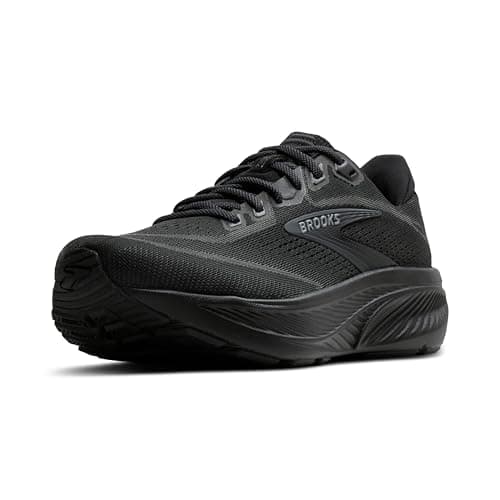
C25K to marathon: the steady default
Brooks Ghost 18
Our top Couch to 5K shoe: pitched by Brooks for runners and walkers, plate-free, and sold in Narrow to X-Wide, which matters in the walk-heavy early weeks.
$125.20Amazon#ad · Price as of November 13, 2026 · Affiliate disclosure for the link to Brooks Ghost 18
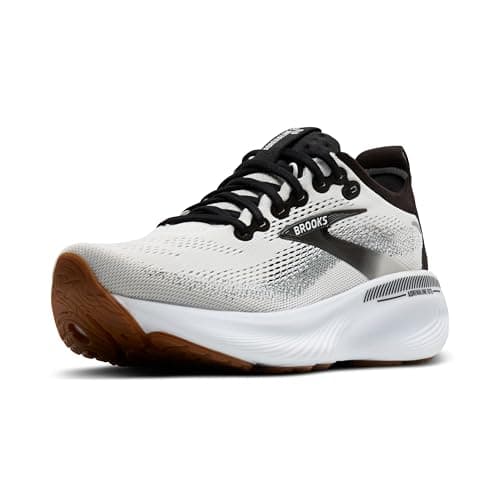
C25K to marathon: the benchmark support shoe
Brooks Adrenaline GTS 25
The same shoe with guidance features, if you'd rather start with support or a clinician has suggested it.
$124.95Amazon#ad · Price as of November 13, 2026 · Affiliate disclosure for the link to Brooks Adrenaline GTS 25
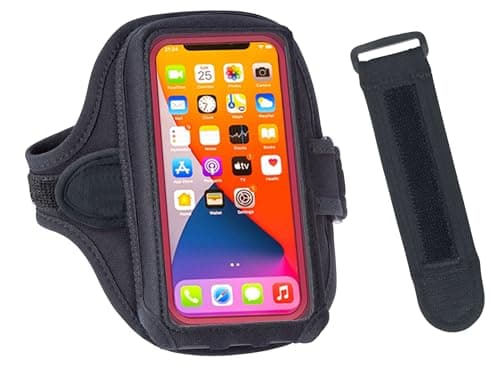
C25K and 10K: big phone, no pockets
Tune Belt AB92 Running Armband
The NHS suggests an armband if you have no pocket, and your phone is the coach if you use the app. Sized for large phones in cases.
$24.49Amazon#ad · Price as of November 13, 2026 · Affiliate disclosure for the link to Tune Belt AB92 Running Armband
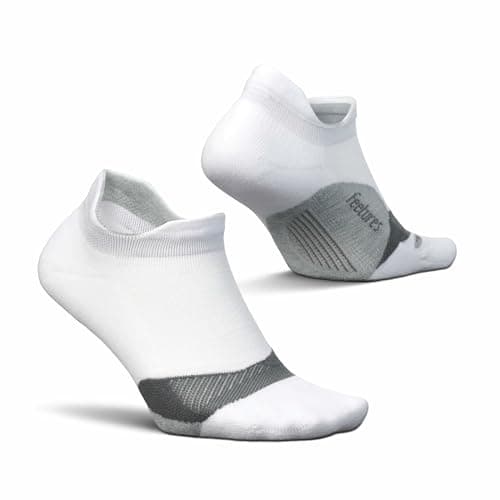
All levels: the all-round no-show
Feetures Elite Light Cushion No Show Tab
Seamless toe and a double-thick heel tab. The cheapest fix for the rubbing that shows up around week 2.
$19.00Amazon#ad · Price as of November 13, 2026 · Affiliate disclosure for the link to Feetures Elite Light Cushion No Show Tab
More options, every width and the budget end are in best running shoes for beginners, with separate lists for women and men. If you are not sure what to look for, start with how to choose running shoes and what size to get. The whole kit list, item by item, is in the Couch to 5K gear checklist.
What to skip until week 9 is done:
- Carbon-plated or racing shoes - there is not a single fast session in the plan
- A second pair of shoes - one pair covers all 27 sessions
- A hydration vest - your longest run is 30 minutes
- An expensive multisport watch - the app already times the intervals
Not ready to buy shoes at all yet? Week 1 is mostly walking, and which pairs in your cupboard are usable is answered in running shoe alternatives for beginners.
Print the plan, or download the PDF
A plan on the fridge gets followed more often than a plan in a browser tab. Both versions below are the same nine weeks, with the tip for each week, and both are free with no email required.
The printable page strips the navigation and fits the schedule onto paper; the PDF is the same thing as a file you can keep or send to someone. Neither carries an affiliate link.
What happens after week 9
Finishing week 9 means 30 minutes of continuous running, three times a week. For most new runners that is somewhere around 5K, though the plan deliberately never says so: it is built on minutes, not distance. If you want the race distance next, the natural step up is Hal Higdon's Novice 10K, eight weeks with the weekend run building from 3 to 5.5 miles — which is the level our 5K & 10K section is written for. How long that takes and what changes is in how long to train for a 10K, and the kit that is new on race day is in the first 10K race day checklist.
Your shoes do not need to change at week 10. One daily trainer still covers a first 10K; a second pair only starts to earn its place at half marathon distance, which our rotation guide explains.
How we chose these
Researched, compared, scored for your level
We start from what a published training plan actually asks of a runner at your level, compare every model's published specs (stack height, drop, weight, plate, stability features, widths) against that job, and score each pick on a public rubric. Each spec links to where it came from, so you can shortlist in minutes and buy with the numbers in front of you.
Scores are our editorial judgments from that documented research, and rankings are earned on the rubric alone — placement is never for sale. The rubric and weights are on the How We Pick page.
Questions
Frequently asked
What is the Couch to 5K plan?
How many weeks is Couch to 5K, and how many runs?
What is the hardest week of Couch to 5K?
Can I do Couch to 5K on a treadmill?
Do I need running shoes to start Couch to 5K?
Is there a printable Couch to 5K plan or PDF?
Does the tracker remember my progress?
What comes after Couch to 5K?
Keep going
Related reading
- Best running shoes for beginnersThe one item on the kit list worth spending on, ranked.
- Couch to 5K gear checklistThe whole kit list item by item, and what to skip.
- How to choose running shoesWhat to look for before you order a first pair.
- How long to train for a 10KWhere week 10 goes once the plan is finished.
Receipts
Sources
- NHS Better Health: Couch to 5K running plan (the full 9-week schedule and weekly tips)
- NHS: Get running with Couch to 5K (kit list and how the plan works)
- NHS Better Health: Get running with Couch to 5K (the free app)
- NHS: Knee pain and other running injuries (running shoe advice)
- NHS: Physical activity guidelines for adults aged 19 to 64
- WHO: Guidelines on physical activity and sedentary behaviour (2020)
- Hal Higdon: Novice 10K training program
Every figure above is traceable. Specs come from the maker's own pages or the named reviewer's published measurements (linked above); level definitions come from published training plans; prices come from Amazon's own API and carry the date they were checked, so you buy on a current number. Read the full method.