Couch-to-5K · Guide
Running Shoe Alternatives for Beginners: What Can You Actually Run In?
You want to start a Couch-to-5K plan this week and you do not want to spend money first. Here is an honest ranking of the shoes already in your hallway - which are fine for a few weeks, which will give you blisters, and which you should not run in at all.
We earn a commission if you buy through our links, at no extra cost to you. It never decides the ranking — the method is published · Affiliate disclosure
Yes, you can start a Couch-to-5K plan in shoes you already own — and the best alternative is a pair of cushioned walking shoes or gym trainers with a flexible forefoot and some foam under the heel. What you should not run in: basketball or other court shoes, flat canvas sneakers, minimal or thin-soled shoes, hiking boots, or any pair already worn out. You will be fine for a few weeks. By about week four of the NHS plan, buy real running shoes — good ones start around $100.
The short answer
Every shoe in your hallway, ranked
- Cushioned walking shoes — best alternative. Closest build to a running shoe: foam midsole, flexible forefoot, cushioned heel. The real differences are durability and weight. Detail in running shoes vs walking shoes.
- Gym trainers and cross-trainers — usable, with a mileage limit. The AAOS says a cross-training shoe is not appropriate for running more than 4 to 5 miles a day, which is more than any week-1 Couch-to-5K session asks. See running shoes vs training shoes.
- Older running shoes from the back of the cupboard — check the midsole. Foam compresses with age whether you run in it or not. If the sole is creased and hard, it is finished; when to replace running shoes has the test.
- Everyday lifestyle sneakers — short sessions only. Usually flat, often stiff, rarely cushioned at the heel. Fine for 20 minutes of run/walk, not for a continuous 30-minute run. See running shoes vs sneakers.
- Tennis and court shoes — not recommended. Built for lateral movement with stiff, flat-wearing outsoles. See running shoes vs tennis shoes.
- Basketball and other high-tops — no. Heavy, stiff and built for jumping and landing. The full argument is in running shoes vs basketball shoes.
- Flat canvas shoes, skate shoes and thin-soled fashion trainers — no. No heel foam, no torsional structure, and the fastest route to sore shins.
- Hiking boots and trail boots — no. Stiff soles, high weight and ankle collars designed to restrict exactly the movement running needs. See running shoes vs hiking shoes.
What a running shoe actually does differently
Three things, and none of them is magic. First, foam under the heel: you land several hundred times per mile and a running midsole is tuned for repeated straight-ahead impact rather than side-to-side movement. Second, forefoot flexibility with torsional stiffness: the shoe should bend where your toes bend and resist twisting through the middle. Third, an upper that holds without rubbing, which is the blister question — Cleveland Clinic's fitting guide asks for a firm heel hold and no pressure across the midfoot.
What a running shoe does not do is prevent injury on its own. Progressing your mileage sensibly matters more than the shoe, which is exactly why starting in borrowed footwear for a couple of weeks is a reasonable thing to do rather than a dangerous one.
How long you can get away with it
- Weeks 1 to 3 of Couch to 5K. Sessions are short run/walk intervals. Almost any cushioned, flexible shoe will cope.
- Weeks 4 to 6. Continuous running blocks get longer. This is when blisters, hot spots and shin soreness start showing up in the wrong shoes. Buy now.
- Weeks 7 to 9. You are running 25 to 30 minutes continuously. Running shoes, properly fitted.
- Any point you feel sharp or localised pain. Stop, regardless of week. Aching legs are normal; a specific point that hurts to press is not.
What to buy when you are ready
Picks for this job
Three real running shoes at the bottom of the market
You do not need a premium shoe to finish a Couch-to-5K plan. These three are proper running shoes from established brands at the cheapest end of the range.
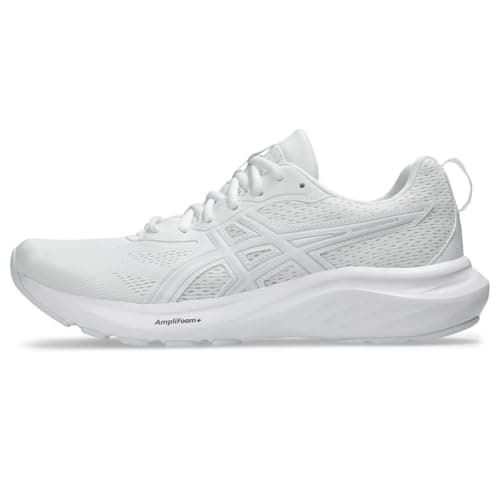
Budget pick with wide and extra-wide widths
ASICS Gel-Contend 9
The cheapest shoe here from a major brand, with widths in both size runs. A straightforward first running shoe for short sessions.
$54.95Amazon#ad · Price as of October 17, 2026 · Affiliate disclosure for the link to ASICS Gel-Contend 9
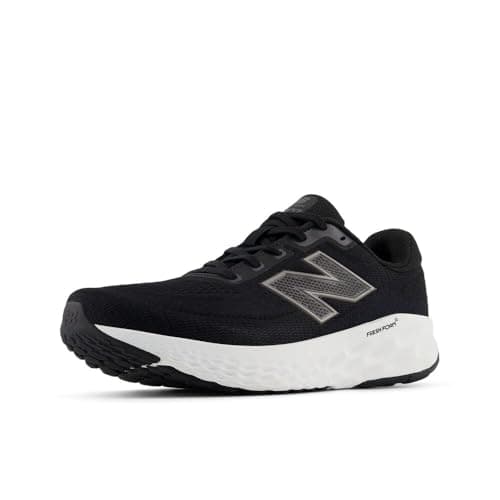
Best-finished shoe at the $100 line
New Balance Fresh Foam X Evoz v4
RunRepeat's Best Overall pick in its 2026 cheap running shoes guide at a $100 list price, with six widths across men's and women's.
$75.43Amazon#ad · Price as of October 17, 2026 · Affiliate disclosure for the link to New Balance Fresh Foam X Evoz v4
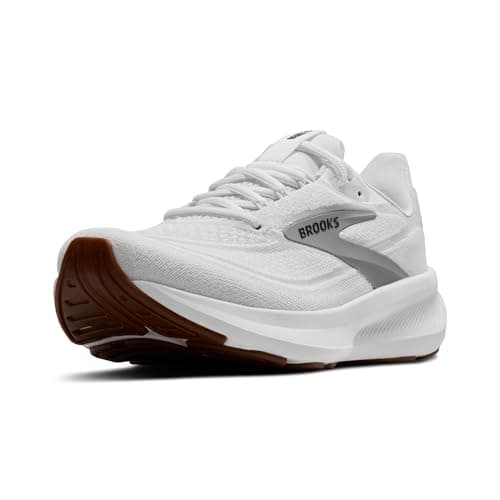
Budget pick for C25K and 10K
Brooks Revel 9
The entry price into Brooks, with a simpler midsole than the Ghost. Fine for C25K and short runs; not a long-run shoe.
$94.99Amazon#ad · Price as of October 17, 2026 · Affiliate disclosure for the link to Brooks Revel 9
All three are covered in detail, with the lab figures, in best running shoes under $100 — and RunRepeat's cheap running shoes guide is where the Evoz v4 award comes from. If you would rather start from a fit process than a price, read how to choose running shoes and what size running shoes should I get.
Common mistakes
- Starting in shoes that are already dead. An old pair with a creased, hard midsole is worse than a decent gym shoe.
- Running in shoes half a size too small. Your feet swell when you run. If your toes touch the end standing up, that shoe is not an option.
- Buying the cheapest thing on a marketplace with no brand name. A $30 unbranded shoe is a lifestyle sneaker with running graphics.
- Switching to barefoot or minimal shoes to save money. That is a bigger change than running itself — see are minimalist running shoes worth it.
- Waiting until something hurts to buy shoes. Week four is the sensible deadline, not week nine.
How we chose these
Researched, compared, scored for your level
We start from what a published training plan actually asks of a runner at your level, compare every model's published specs (stack height, drop, weight, plate, stability features, widths) against that job, and score each pick on a public rubric. Each spec links to where it came from, so you can shortlist in minutes and buy with the numbers in front of you.
Scores are our editorial judgments from that documented research, and rankings are earned on the rubric alone — placement is never for sale. The rubric and weights are on the How We Pick page.
Questions
Frequently asked
Can I start running without running shoes?
What is the best alternative to running shoes for a beginner?
Can I run in basketball shoes or tennis shoes?
How much do I need to spend on a first pair of running shoes?
Will running in the wrong shoes injure me?
Keep going
Related reading
- Running shoes vs sneakersThe most common substitution, examined
- Running shoes vs walking shoesThe best alternative, in detail
- Best running shoes for beginnersWhat to buy when you are ready
- Best running shoes under $100Real running shoes at the cheapest end
- Couch to 5K gear checklistWhat else you actually need, and what you do not
Receipts
Sources
- OrthoInfo (AAOS) — Athletic Shoes: heel counter guidance, court shoes and the cross-training mileage limit (checked 2026-09-28)
- Cleveland Clinic — Your Guide To Picking the Best Running Shoes (checked 2026-09-28)
- RunRepeat — 7 Best Cheap Running Shoes in 2026 (checked 2026-09-26)
- RunRepeat — ASICS Gel-Contend 9 lab review and MSRP (checked 2026-09-26)
- RunRepeat — New Balance Fresh Foam X Evoz v4 lab review and $100 list price (checked 2026-09-26)
- RunRepeat — Brooks Revel 9 lab review and MSRP (checked 2026-09-26)
- NHS — Get running with Couch to 5K (checked 2026-09-28)
Every figure above is traceable. Specs come from the maker's own pages or the named reviewer's published measurements (linked above); level definitions come from published training plans; prices come from Amazon's own API and carry the date they were checked, so you buy on a current number. Read the full method.