Couch-to-5K · Guide
Running Shoes vs Sneakers: Can You Start Running in What You Own?
For the first weeks of a run/walk plan, the sneakers in your cupboard are usually fine. This guide explains the three real differences between a running shoe and a general sneaker, how to check whether yours qualify, and the point in the plan where the answer changes.
We earn a commission if you buy through our links, at no extra cost to you. It never decides the ranking — the method is published · Affiliate disclosure
You can start a Couch to 5K plan in ordinary sneakers, as long as they are cushioned athletic shoes that fit properly and are not worn out. A running shoe differs from a general sneaker in three specific ways — more and softer midsole foam, a heel that sits higher than the forefoot, and a flexible forefoot built to bend as you roll off your toes. Those differences start to matter at around 20–30 minutes of continuous running, which is roughly where the NHS Couch to 5K plan arrives in its later weeks. Before then, what you own is usually fine. After then, it usually is not.
Why this question gets a straight answer here
Most pages on this subject conclude that you must buy running shoes immediately, which is convenient for anyone selling them. The more useful framing is: the first few weeks of a run/walk plan involve short bouts of running separated by walking, and a decent cushioned sneaker handles that. What they do not handle is sustained continuous running, repeated three times a week, for months.
What people mean by sneaker
"Sneaker" is a category of footwear, not a category of function, which is where the confusion starts. It covers at least four different things:
- A cushioned athletic sneaker — a running or running-styled shoe with real foam underfoot. This is the one that can work.
- A fashion or lifestyle sneaker — canvas, retro leather, flat-soled. Little cushioning, stiff forefoot, often no arch support at all.
- A cross-trainer or gym shoe — deliberately flatter and more stable for lifting and lateral movement. See running shoes vs training shoes.
- A court shoe — built for side-to-side movement, not forward. See running shoes vs tennis shoes and running shoes vs basketball shoes.
If your "sneakers" are in the first group, read on. If they are in any of the other three, the answer is simpler: those are the wrong tool, and each of those pages explains exactly why.
The three real differences
- Cushioning volume, and where it sits. Harvard Health describes running shoes as built to absorb the higher impact forces of running, with more cushioning concentrated under the heel and forefoot. A modern running shoe carries 33–42 mm of foam under the heel; a lifestyle sneaker often carries under 20 mm, and it is firmer foam.
- Heel-to-toe drop. Running shoes build the heel higher than the forefoot — typically 6–12 mm — which changes how load is shared between your calf, Achilles and knee. Most non-running sneakers are flat or near-flat. Our heel drop and stack height guide covers what that number actually does.
- Forefoot flexibility and weight. Nike describes running shoes as built around the forward roll of a running stride, and the AAOS guidance on athletic shoes makes the same point about matching the shoe to the motion of the activity. A stiff leather sneaker fights that roll on every step; it also typically weighs more.
How to check the pair you own
Five checks, and you only need the first three to disqualify a shoe:
- Press the midsole with your thumb. If it does not compress at all, there is no cushioning to speak of. That shoe is a walking shoe at best.
- Bend it. It should flex at the ball of the foot, not in the middle of the arch and not nowhere at all.
- Look at the outsole and the heel counter. Worn-smooth tread, a collapsed heel or a midsole with visible creases means the shoe is finished regardless of what it used to be.
- Check the fit properly. The AAOS asks for about half an inch beyond your longest toe and a heel that does not slip; Running Warehouse describes roughly a thumb's width. Fashion sneakers are usually sized tighter than running shoes, so a pair you wear comfortably all day may be half a size too small to run in.
- Run two minutes in them. If anything rubs or pinches in two minutes, it will blister in twenty.
When sneakers stop being enough
Buy running shoes at the first of these, not the last:
- You are running more than 20 minutes continuously. This is the usual crossover point.
- Something new aches after runs — shins, arches, knees — and your shoes are flat or old. See best running shoes for shin splints and best running shoes for knee pain.
- You are getting blisters. Usually a fit problem, sometimes a sock problem — see how to prevent blisters when running.
- You have signed up for a 5K or 10K. You are no longer trying running out; you are training.
- You cannot remember when you bought the pair you are using.
Three shoes to buy when you get there
These three are the plainest, most forgiving first running shoes we rank, chosen for cushioning depth and width range rather than for anything clever. All three come in widths, and all three suit the whole plan from week one to a first 10K.
Picks for this job
Three first running shoes that fix the problem
Chosen for measured cushioning depth and published width range, with every spec sourced on the card.
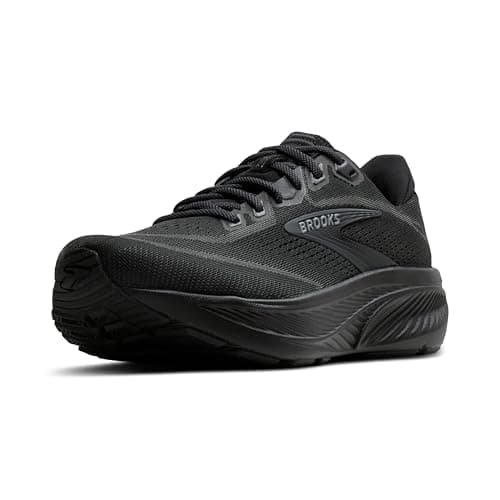
C25K to marathon: the steady default
Brooks Ghost 18
The least surprising good running shoe there is: a 36.6 mm heel, DNA LOFT v3 foam and four widths from Narrow to Extra Wide per RTINGS.
$125.18Amazon#ad · Price as of October 11, 2026 · Affiliate disclosure for the link to Brooks Ghost 18
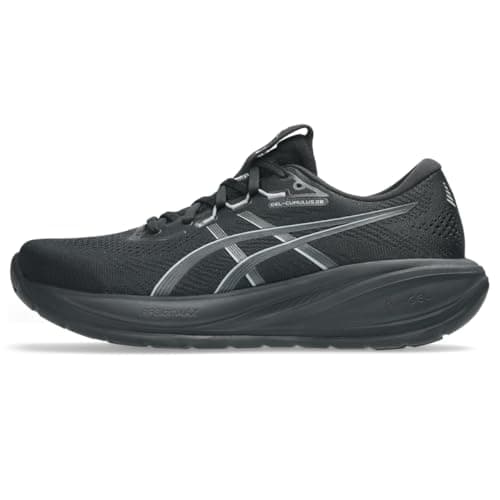
C25K to marathon: cushioned everyday miles
ASICS Gel-Cumulus 28
The most cushioning of the three at a 41.4 mm lab-measured heel, in Narrow, Standard, Wide and Extra Wide. RTINGS measured the drop at 11.7 mm against ASICS' listed 8 mm.
$144.95Amazon#ad · Price as of October 11, 2026 · Affiliate disclosure for the link to ASICS Gel-Cumulus 28
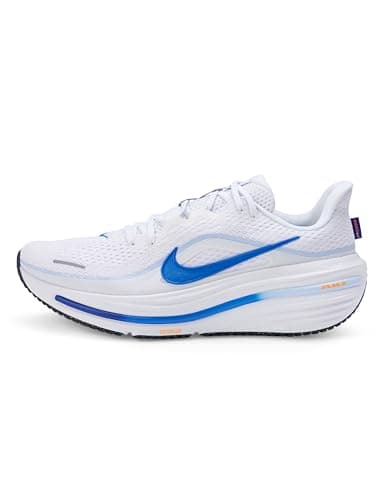
Budget pick: C25K to first half
Nike Winflo 12
The budget option: Cushlon 3.0 foam over a heel Air unit on a 44.3 mm heel, in Regular and Wide. RTINGS measured a 12.5 mm drop.
$110.00Amazon#ad · Price as of October 11, 2026 · Affiliate disclosure for the link to Nike Winflo 12
The full ranked list for new runners is best running shoes for beginners, and if budget is the constraint, best running shoes under $100 is the page to read.
What not to run in, ever
- Canvas or flat-soled fashion sneakers. No meaningful cushioning and a stiff, flat platform.
- Basketball or court shoes. High-cut, heavy, built for lateral movement.
- Skate shoes. Flat, firm, deliberately so.
- Hiking boots. Stiff soles and high ankle collars fight a running stride — see running shoes vs hiking shoes.
- Any shoe that already hurts when you walk in it. Running will not improve it.
The honest caveat about shoes and injuries
It would be convenient to claim that running shoes prevent injuries. The 2022 Cochrane review looked at exactly that and found the evidence weak and uncertain. What is better supported is choosing on comfort and fit, which is what Cleveland Clinic recommends, and building mileage gradually, which is what the NHS plan is designed around. So the case for buying running shoes is not that they protect you from injury. It is that they are the right tool for the motion, they are more comfortable over 30 continuous minutes, and they come in widths that let you fit your actual foot.
How we chose these
Researched, compared, scored for your level
We start from what a published training plan actually asks of a runner at your level, compare every model's published specs (stack height, drop, weight, plate, stability features, widths) against that job, and score each pick on a public rubric. Each spec links to where it came from, so you can shortlist in minutes and buy with the numbers in front of you.
Scores are our editorial judgments from that documented research, and rankings are earned on the rubric alone — placement is never for sale. The rubric and weights are on the How We Pick page.
Questions
Frequently asked
Can I use regular sneakers for running?
What is the difference between running shoes and sneakers?
How do I know if my sneakers are good enough to run in?
Will running in sneakers hurt my knees?
What is the cheapest decent first running shoe?
Keep going
Related reading
- Best running shoes for beginnersThe full ranked first-pair list
- Running shoes vs walking shoesThe closest comparison
- Running shoes vs training shoesIf your sneakers are gym shoes
- Best running shoes under $100If budget is the reason you asked
- What size running shoes should I get?Sneakers are usually sized tighter
Receipts
Sources
- Harvard Health — The right shoe for walking and running (checked 2026-10-11)
- OrthoInfo (AAOS) — Athletic Shoes: matching the shoe to the activity, fit guidance (checked 2026-10-11)
- Cleveland Clinic — How To Pick the Running Shoe That Is Best for You (checked 2026-10-11)
- Nike — The difference between running and walking shoes (checked 2026-10-11)
- Relph N, et al. Running shoes for preventing lower limb running injuries in adults. Cochrane Database Syst Rev, 2022
- Running Warehouse — Shoe Fit Tips (checked 2026-10-11)
- RTINGS — Brooks Ghost 18 review: measured stack and widths (checked 2026-10-11)
- RTINGS — ASICS Gel-Cumulus 28 review: measured stack, drop and widths (checked 2026-10-11)
- RTINGS — Nike Winflo 12 review: measured stack and 12.5 mm drop (checked 2026-10-11)
- NHS Better Health — Couch to 5K running plan, week by week (checked 2026-10-11)
- NHS — Get running with Couch to 5K (checked 2026-10-11)
Every figure above is traceable. Specs come from the maker's own pages or the named reviewer's published measurements (linked above); level definitions come from published training plans; prices come from Amazon's own API and carry the date they were checked, so you buy on a current number. Read the full method.