Shoes · Guide
Are Minimalist Running Shoes Worth It? What the Trials Actually Found
Minimalist and barefoot shoes promise a stronger foot and a better stride. The published trials are more cautious than that, and one found measurable bone stress in runners who switched. Here is the honest version, and the middle ground most runners should buy instead.
We earn a commission if you buy through our links, at no extra cost to you. It never decides the ranking — the method is published · Affiliate disclosure
For most runners, no. The published trials do not show that minimalist shoes reduce injuries, one randomized trial found more bone stress in runners who switched to them, and the 2022 Cochrane review concluded the evidence on footwear and running injury is uncertain overall. What is genuinely useful about the category is the roomy toe box and the lower heel, and you can have both in a normally cushioned shoe — which is what we would buy instead.
The short answer
Minimalist, barefoot and zero drop are three different things
- Barefoot shoes — almost no midsole, no heel lift, a flexible sole. A few millimetres of rubber between you and the road.
- Minimalist shoes — a thin but real midsole, usually under about 20 mm, flexible, with little or no drop.
- Zero drop — the heel and forefoot sit at the same height, regardless of stack. An Altra Torin 9 is zero drop with a 28 mm stack, which is a normal amount of cushioning.
Conflating the third with the first two is the single most common mistake in this category. You can have the flat geometry and the foot-shaped toe box without running on 5 mm of rubber — see heel drop and stack height explained.
What the trials found
Three studies are worth knowing about, and none of them says what the marketing says.
- Bone stress after a switch. Ridge and colleagues (2013) put experienced runners into minimalist shoes on a graded 10-week programme and imaged their feet with MRI. Ten of 19 runners in the minimalist group showed increased bone marrow oedema afterwards, against one of 17 in the control group, and two developed stress fractures. That is the most specific finding in the field and it cuts against the category.
- No injury advantage over a conventional shoe. Fuller and colleagues (2017) randomized recreational runners to minimalist or conventional shoes over 26 weeks and found no difference in injury rates overall, with heavier runners and higher-mileage runners faring worse in the minimalist shoes.
- Cushioning is not the lever people think it is. Malisoux and colleagues (2016) randomized 247 runners to soft or hard midsoles for five months and found no significant difference in overall injury risk, and the 2022 Cochrane review rates the whole footwear-and-injury literature as uncertain.
Read together: a thin shoe is not obviously protective, is clearly riskier during the transition, and asks more of you the heavier you are and the more you run.
Who they actually suit
- Runners with low weekly mileage who like the feel. Enjoyment is a legitimate reason to buy a shoe. Keep the mileage modest.
- Forefoot and midfoot strikers already in low-drop shoes. The change is smaller for you.
- Nobody who is injured now. A transition is a training load, not a treatment.
- Not heavier runners or high-mileage runners. Fuller's trial is specific on this. See best running shoes for heavy runners.
The middle ground worth buying
Picks for this job
Low drop and a roomy toe box, with the foam left in
These give you most of what draws runners to minimalist shoes - a flat geometry, room for your toes, a connected feel - without stripping the midsole to nothing.
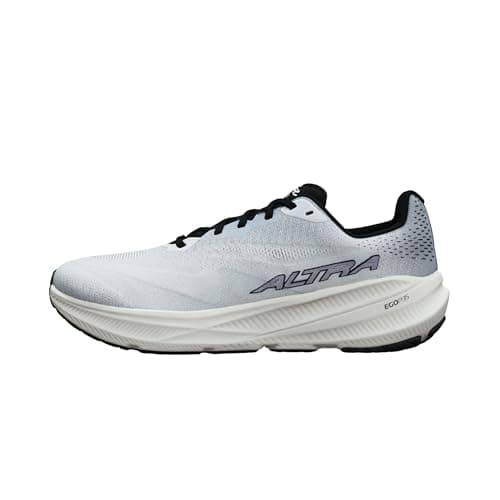
Roomy toe box at a 4 mm drop
Altra Experience Flow 3
A 4 mm drop, a 32 / 28 mm stack and Altra's Standard FootShape toe box at 9 oz. The sane first step away from a 10 mm trainer.
$144.00Amazon#ad · Price as of October 17, 2026 · Affiliate disclosure for the link to Altra Experience Flow 3
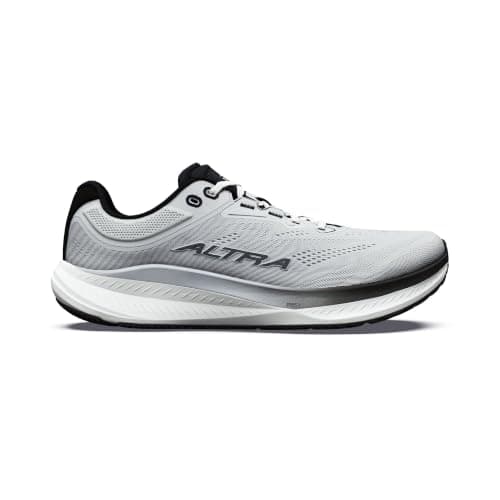
Wide feet: roomy toe box, zero drop
Altra Torin 9
Zero drop with a 28 mm stack and a roomy toe box, in Regular and Wide. Flat geometry, normal cushioning - which is the point.
$145.00Amazon#ad · Price as of October 17, 2026 · Affiliate disclosure for the link to Altra Torin 9
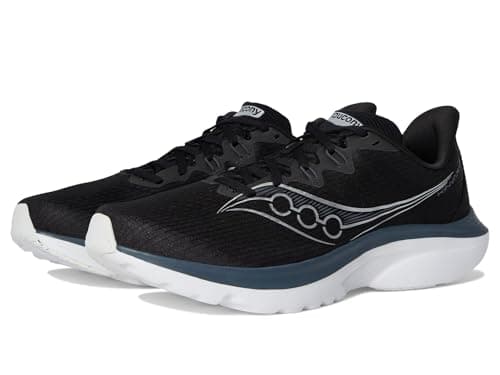
10K and half: low-stack speedwork, no plate
Saucony Kinvara 16
29 / 24 mm, a 4 mm drop and 7.3 oz: low and light without being minimal. Run to the Finish treats it as a lightweight shoe for faster, shorter running.
$109.99Amazon#ad · Price as of October 17, 2026 · Affiliate disclosure for the link to Saucony Kinvara 16
Note the Kinvara's limits: Run to the Finish's review is clear that it is a shoe for shorter, faster running rather than a daily trainer. If you want the toe box without the drop change at all, the whole Altra range is covered in best Altra running shoes, and the wider category in best running shoes with a wide toe box.
If you are going to do it anyway
- Go in stages. 10 to 12 mm, then 4 to 6 mm for a month, then lower. Ridge's runners were on a graded programme and still showed bone changes.
- Cap the first runs at 10 to 15 minutes and run every other day at most.
- Keep your old shoes in rotation. Do not retire them.
- Stop for bone pain. Diffuse calf soreness settles. A specific, point-tender ache along a metatarsal does not — that is the pattern Ridge imaged, and it needs a professional.
- Do not switch during a training block. Not while you are building to a race.
Common mistakes
- Treating zero drop as minimalist. A 28 mm zero-drop shoe is a cushioned shoe with a flat geometry.
- Switching to fix plantar fasciitis or shin splints. Neither has evidence behind it; see plantar fasciitis and shin splints.
- Starting a Couch-to-5K plan in barefoot shoes. The NHS plan already adds a new load three times a week. Do not stack two changes.
- Expecting a stronger foot to mean fewer injuries. That link is not established.
- Ignoring your weight and mileage. Both predicted worse outcomes in the minimalist arm of Fuller's trial.
How we chose these
Researched, compared, scored for your level
We start from what a published training plan actually asks of a runner at your level, compare every model's published specs (stack height, drop, weight, plate, stability features, widths) against that job, and score each pick on a public rubric. Each spec links to where it came from, so you can shortlist in minutes and buy with the numbers in front of you.
Scores are our editorial judgments from that documented research, and rankings are earned on the rubric alone — placement is never for sale. The rubric and weights are on the How We Pick page.
Questions
Frequently asked
Are minimalist running shoes worth it?
Are barefoot running shoes bad for you?
Is a zero-drop shoe a minimalist shoe?
Do minimalist shoes strengthen your feet?
What should I buy instead?
Keep going
Related reading
- Heel drop and stack height explainedThe two numbers this whole question turns on
- Best Altra running shoesZero drop with the foam left in
- Best running shoes with a wide toe boxThe genuinely useful part of the minimalist idea
- Running shoe types explainedWhere minimalist sits among the categories
- Are expensive running shoes worth it?The same question at the other end of the market
Receipts
Sources
- Ridge ST et al (2013), Med Sci Sports Exerc — foot bone marrow oedema after a transition to minimalist running shoes (PubMed)
- Fuller JT et al (2017), Am J Sports Med — randomized trial of minimalist versus conventional shoes in recreational runners (PubMed)
- Malisoux L et al (2016), Am J Sports Med — randomized trial of soft versus hard midsoles in 247 runners (PubMed)
- Cochrane Database of Systematic Reviews (2022) — footwear for preventing lower limb running injuries (PubMed)
- OrthoInfo (AAOS) — Athletic Shoes: fitting guidance (checked 2026-09-28)
- Altra — men's Torin 9 product page: 28 mm stack, zero drop (checked 2026-09-19)
- Run to the Finish — Saucony Kinvara 16 review (checked 2026-09-19)
- NHS — Get running with Couch to 5K (checked 2026-09-28)
Every figure above is traceable. Specs come from the maker's own pages or the named reviewer's published measurements (linked above); level definitions come from published training plans; prices come from Amazon's own API and carry the date they were checked, so you buy on a current number. Read the full method.