Best Running Shoes Under $200: What the Extra $50 Actually Buys
Above $150 you stop paying for a shoe that works and start paying for a specific advantage: more foam under the heel, a wider fit run, or a lighter platform that still protects your legs. These seven all list at $200 or less, all have lab-measured specs, and the cheapest one scores highest.
The cheapest shoe on this page and the highest-scoring one. RunRepeat lists it at $155 and measured a 39.2 mm heel, a 32.1 mm forefoot and 8.8 oz: a tall, bouncy, genuinely light daily trainer. If you only read one line on this page, this is it.
Best under $200 overall, and the budget pick - $155C25K10KHALFMARATHON
A 41.6 mm lab-measured heel and 33.6 mm forefoot at 9.1 oz, which is unusually light for that much foam. The pick if your weekly mileage is climbing and your legs are the thing that gives out first.
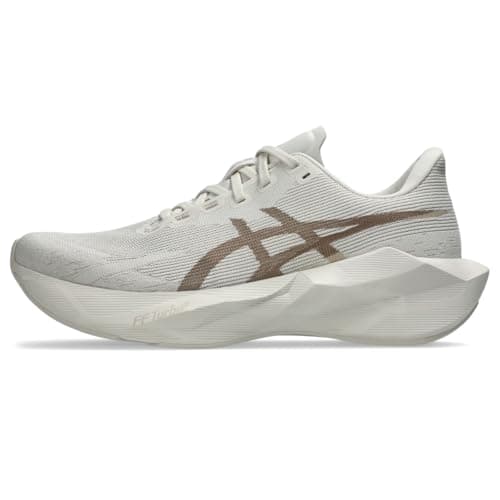
Exactly on the $200 line and the most shoe here: RunRepeat measured a 45.8 mm heel and 37.7 mm forefoot at 8.3 oz, with no plate. A non-plated super trainer that can take a marathon long run and a tempo session. Because it lists at the cap, it is also the one pick whose live Amazon price can land above $200 - check the button.
Best long-run shoe at the ceiling - $200HALFMARATHON
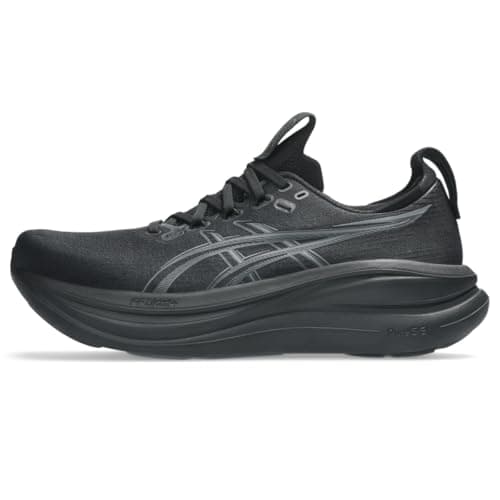
The support shoe to buy if you want one: four men's widths and three women's, a 36.8 mm lab-measured heel, and ASICS' 4D Guidance System rather than a hard medial post. The heaviest shoe here at 10.5 oz.
A nylon-plated 8.5 oz shoe at $175, with a 10.6 mm lab-measured drop. The one to add second, once you have a daily trainer and you want a shoe for intervals and tempo.
The widest fit run on this page: Normal, Wide and X-Wide for men and Narrow, Normal, Wide and X-Wide for women, on a 43.0 mm lab-measured heel. Buy this one if width, not foam, is your problem.
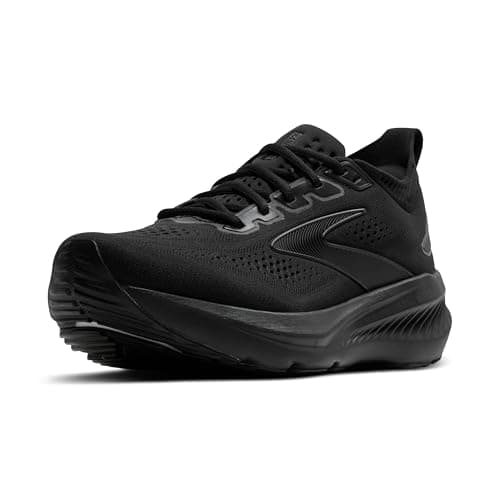
Brooks' plushest daily trainer, with four widths and the softest forefoot feel here. It is also the heaviest cushioned shoe on the page at 10.7 oz, and the stack is lower than the price suggests.
#ad · Prices come live from Amazon, last checked November 13, 2026. Scores are ours, compiled from published specs and the maker's intended use. Product photos come from Amazon. Tap a row for the full write-up.
Buy the ASICS Novablast 6. It is the cheapest shoe on this page at a $155 list price, it scores highest of the seven on our rubric, and the lab numbers explain why: a 39.2 mm heel, a 32.1 mm forefoot and 8.8 oz on the scale. That is a tall, bouncy platform at a weight most $200 shoes cannot match.
If you want more foam than that, the Saucony Triumph 24 at $170 is the max-cushion pick. If you want the most shoe money can buy under the cap, the ASICS Superblast 3 sits exactly on the $200 line. If your problem is width rather than cushioning, skip straight to the ASICS Gel-Nimbus 28 and its four women's widths.
What $200 buys that $150 doesn't
We have a separate page for running shoes under $150, and it is not a consolation prize. The Brooks Ghost 18 and Saucony Ride 19 live there, and either will carry a runner from a first Couch-to-5K week to a marathon finish. So the honest question for this page is not "what are the best shoes under $200" but "what does the extra $50 actually get you?"
Three things, and only three.
More foam, at the same weight or less. This is the real one. The Saucony Ride 19 at $145 is a 38.7 mm heel at 9.8 oz. The Triumph 24 at $170 is a 41.6 mm heel at 9.1 oz: nearly 3 mm more foam while weighing less. The Superblast 3 at $200 is a 45.8 mm heel at 8.3 oz. Foam that is both tall and light is the one thing the mid-range genuinely cannot do, because the foams that manage it cost more to make.
A wider fit run. The Gel-Nimbus 28 is sold in Normal, Wide and X-Wide for men and Narrow, Normal, Wide and X-Wide for women, and the Gel-Kayano 33 and Glycerin 23 are nearly as broad. Width options thin out fast below $150, and no amount of cushioning fixes a shoe that is the wrong shape.
A plate, or a shoe built to go fast without one. The Endorphin Speed 5 has a nylon plate at $175. The Superblast 3 deliberately does not have one and goes quickly anyway. Both are shoes you add to a rotation rather than shoes you buy first.
What the extra $50 does not buy: durability. Nothing in the published data says a $175 midsole lasts longer than a $145 one, and our when to replace running shoes page sticks to the same mileage window at every price. It also does not buy injury protection. The AAOS's own athletic shoe guidance is about fit and about replacing worn shoes, not about price.
Every list price, with its source
Seven shoes, cheapest first. Each price is the figure published on the linked lab review at the date checked, and it is what qualifies the shoe for this page.
Note what is not here: a carbon race shoe. Every current carbon-plated racer lists well above $200, which is why our carbon-plated roundup is a separate page. The World Athletics competition shoe rules cap road stack height at 40 mm and allow one plate, which is also why the 45.8 mm Superblast 3 is a training shoe and not a race shoe, whatever its stack suggests.
The cushioned picks, side by side
Four shoes bought for the same reason - protecting your legs over distance - and they are not interchangeable. The gap between the tallest and the shortest heel here is more than 6 mm, and the gap between the lightest and the heaviest is over 1.5 oz.
The four cushioned picks on their own sourced figures. Where a lab measurement and the brand's listed figure both exist, both are shown.
Read that table as a shape question rather than a quality one. The Novablast 6 and Triumph 24 are tall and light; the Glycerin 23 is lower and heavier but softer underfoot; the Gel-Nimbus 28 is the one with the fit range. All four are built for easy and long miles, which is where most of your week should be.
The faster picks, side by side
Two shoes for the days you are working. Both are under 8.6 oz, both list under $200, and they go fast in opposite ways: one with a plate, one on foam alone.
The plated option and the non-plated one. Both are training shoes, not race shoes.
The Endorphin Speed 5 is the more conventional choice: a nylon plate, a 10.6 mm lab-measured drop, and a shoe that feels purposeful at 10K pace and slightly nervous on an easy jog. The Superblast 3 is the odd one - a 45.8 mm stack with nothing stiff in it - and it is the rare shoe that will genuinely do a 20-mile long run and a tempo workout. If you are buying one second shoe, read tempo shoe vs race shoe before you spend.
Which one for your running
Starting out, or coming back from a break. Novablast 6. You get the highest-scoring shoe here for the lowest price, and nothing about it needs getting used to. Our beginner roundup has cheaper options if $155 is more than you want to spend on run one.
20 to 40 miles a week and your legs are the limit. Triumph 24, or the Superblast 3 if you want one shoe for everything.
Your feet are wide, narrow, or just a shape shoes do not come in. Gel-Nimbus 28 first, then the Gel-Kayano 33 and the Glycerin 23. See what the width letters mean before you order.
You want support. Gel-Kayano 33. Read neutral vs stability first - plenty of runners who were sold stability do not need it.
You already have a daily trainer and want a second pair. Endorphin Speed 5. Our rotation guide covers how two pairs should split the week.
When not to spend the $200
We would rather you kept the money. Four cases where $200 is the wrong amount to spend on shoes:
You run under 10 miles a week. A $120-$150 shoe will outlast your interest in it. Start at under $100 and upgrade when the weekly mileage actually arrives.
You have not had your foot shape checked. A correctly sized $100 shoe beats a badly sized $200 one every time. Start with what size running shoes to get.
You only own one pair. Two $120 shoes rotated beat one $200 shoe worn every day, for roughly the same money. That is the whole argument of our rotation guide.
You are buying a plate to get faster. Plates help at paces you can actually hold. On easy days the foam is doing the work and the plate is not.
In detail
The picks, in full
1
Best under $200 overall, and the budget pick - $155
ASICS Novablast 6
C25K10KHALFMARATHON
9.5 /10
The cheapest shoe on this page and the highest-scoring one. RunRepeat lists it at $155 and measured a 39.2 mm heel, a 32.1 mm forefoot and 8.8 oz: a tall, bouncy, genuinely light daily trainer. If you only read one line on this page, this is it.
#ad · Price as of November 13, 2026 · Affiliate disclosure for the link to ASICS Novablast 6
2
Best max-cushion ride - $170
Saucony Triumph 24
C25K10KHALFMARATHON
9.4 /10
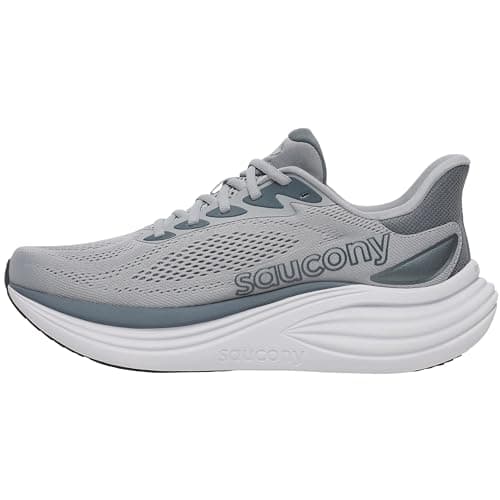
A 41.6 mm lab-measured heel and 33.6 mm forefoot at 9.1 oz, which is unusually light for that much foam. The pick if your weekly mileage is climbing and your legs are the thing that gives out first.
#ad · Price as of November 13, 2026 · Affiliate disclosure for the link to Saucony Triumph 24
3
Best long-run shoe at the ceiling - $200
ASICS Superblast 3
C25K10KHALFMARATHON
9.4 /10
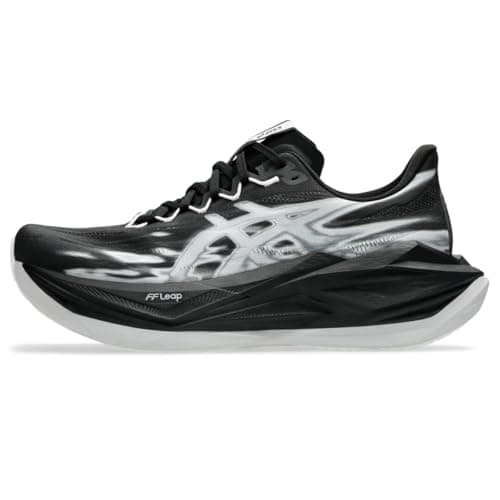
Exactly on the $200 line and the most shoe here: RunRepeat measured a 45.8 mm heel and 37.7 mm forefoot at 8.3 oz, with no plate. A non-plated super trainer that can take a marathon long run and a tempo session. Because it lists at the cap, it is also the one pick whose live Amazon price can land above $200 - check the button.
#ad · Price as of November 13, 2026 · Affiliate disclosure for the link to ASICS Superblast 3
4
Best stability pick - $170
ASICS Gel-Kayano 33
C25K10KHALFMARATHON
9.4 /10
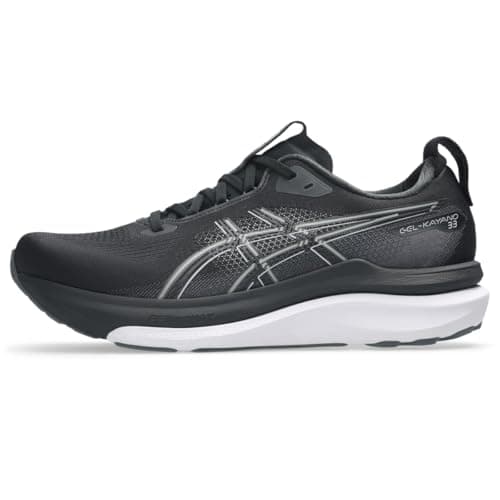
The support shoe to buy if you want one: four men's widths and three women's, a 36.8 mm lab-measured heel, and ASICS' 4D Guidance System rather than a hard medial post. The heaviest shoe here at 10.5 oz.
#ad · Price as of November 13, 2026 · Affiliate disclosure for the link to ASICS Gel-Kayano 33
5
Best for faster days - $175
Saucony Endorphin Speed 5
C25K10KHALFMARATHON
9.4 /10
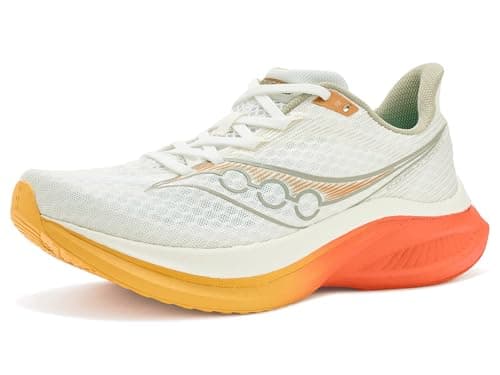
A nylon-plated 8.5 oz shoe at $175, with a 10.6 mm lab-measured drop. The one to add second, once you have a daily trainer and you want a shoe for intervals and tempo.
#ad · Price as of November 13, 2026 · Affiliate disclosure for the link to Saucony Endorphin Speed 5
6
Best fit range - $170
ASICS Gel-Nimbus 28
C25K10KHALFMARATHON
9.2 /10
The widest fit run on this page: Normal, Wide and X-Wide for men and Narrow, Normal, Wide and X-Wide for women, on a 43.0 mm lab-measured heel. Buy this one if width, not foam, is your problem.
#ad · Price as of November 13, 2026 · Affiliate disclosure for the link to ASICS Gel-Nimbus 28
7
Softest underfoot - $175
Brooks Glycerin 23
C25K10KHALFMARATHON
9.1 /10
Brooks' plushest daily trainer, with four widths and the softest forefoot feel here. It is also the heaviest cushioned shoe on the page at 10.7 oz, and the stack is lower than the price suggests.
#ad · Price as of November 13, 2026 · Affiliate disclosure for the link to Brooks Glycerin 23
How to choose a running shoe under $200
Decide what the extra $50 is for. Foam, width, or speed. If you cannot name which one, the under-$150 list is the better page and you keep the difference.
Check the width run before the stack height. Three of these seven come in X-Wide; the Superblast 3 comes in Normal only. A shoe that does not come in your width is not a candidate at any price.
Treat the lab drop, not the listed drop, as real. Several shoes here measured differently from the spec sheet - the Triumph 24 is listed at 10 mm and measured 8.0 mm. If drop matters to you, use the measured number.
Weigh the shoe against its stack. Tall and heavy is a worse deal than tall and light. That single ratio is most of what separates these seven.
Buy the shoe, not the plate. A plated trainer is a second pair, not a first one.
Check the price on the day. List prices are a ceiling, not a price. Everything here discounts through the year, and a $200 shoe at $140 changes the comparison completely.
Common mistakes
Assuming more expensive means more protective. The highest-scoring shoe on this page is the cheapest one, and across the whole site price and rubric score barely track each other.
Buying max stack when you need width. A 45 mm stack does nothing for a foot the shoe is too narrow for. Width first.
Expecting a $200 shoe to last longer. No published data supports it. Replace on mileage and on how the midsole feels, not on what you paid.
Buying a race shoe by accident. The Superblast 3 measures 45.8 mm at the heel, above the World Athletics 40 mm road limit. It is a brilliant training shoe and not a legal racer.
Skipping the stability question. If you were sold support shoes years ago and never revisited it, read our overpronation page - the evidence is less one-sided than the shop made it sound.
The short answer, again
Our recommendation
If you only take one thing from this page, take the first of these two.
Buy this one
ASICS Novablast 6
Best under $200 overall, and the budget pick - $155
9.5 /10
The cheapest shoe on this page and the highest-scoring one.
#ad · Price as of November 13, 2026 · Affiliate disclosure for the link to Saucony Triumph 24
How we chose these
Researched, compared, scored for your level
We start from what a published training plan actually asks of a runner at your level, compare every model's published specs (stack height, drop, weight, plate, stability features, widths) against that job, and score each pick on a public rubric. Each spec links to where it came from, so you can shortlist in minutes and buy with the numbers in front of you.
The ASICS Novablast 6, at a $155 list price. It is both the cheapest shoe on our under-$200 list and the highest-scoring: RunRepeat measured a 39.2 mm heel, a 32.1 mm forefoot and 8.8 oz, which is a tall, light platform most pricier shoes do not match. The Saucony Triumph 24 at $170 is the pick if you want more foam.
Is a $200 running shoe better than a $150 one?+
Only in three specific ways: more foam at the same or a lower weight, a wider range of widths, and plated or super-trainer options. It does not buy more durability or less injury risk - no published data supports either. If none of those three things is what you need, a $150 shoe like the Brooks Ghost 18 is the better buy.
Can you get a carbon plate shoe for under $200?+
Not a current carbon racer, no - they all list above $200. What you can get under $200 is a nylon-plated trainer like the Saucony Endorphin Speed 5 at $175, or a non-plated super trainer like the ASICS Superblast 3 at $200, which goes quickly on foam alone.
Which running shoe under $200 has the most cushioning?+
The ASICS Superblast 3, which RunRepeat measured at a 45.8 mm heel and a 37.7 mm forefoot while weighing 8.3 oz. Among the traditional daily trainers, the ASICS Gel-Nimbus 28 measured 43.0 mm at the heel and the Saucony Triumph 24 measured 41.6 mm.
Which under-$200 running shoes come in wide widths?+
The ASICS Gel-Nimbus 28 has the broadest run on our list - Normal, Wide and X-Wide for men and Narrow, Normal, Wide and X-Wide for women. The ASICS Gel-Kayano 33 offers D, 2E and 4E for men and 2A, B and D for women, and the Brooks Glycerin 23 is listed from Narrow through X-Wide. The ASICS Superblast 3 is Normal only.
Every figure above is traceable. Specs come from the maker's own pages or the named reviewer's published measurements (linked above); level definitions come from published training plans; prices come from Amazon's own API and carry the date they were checked, so you buy on a current number. Read the full method.