Best Barefoot Running Shoes: Ranked on Millimeters, Not Marketing
Every brand in this category says minimal. The lab numbers say otherwise: the five shoes here run from a 7.6 mm stack to 13.7 mm, from 4.6 oz to 8.6 oz, and from near-zero torsional rigidity to something closer to a normal shoe. Pick by the figures and by how far down you are ready to go, because the transition is where runners get hurt.
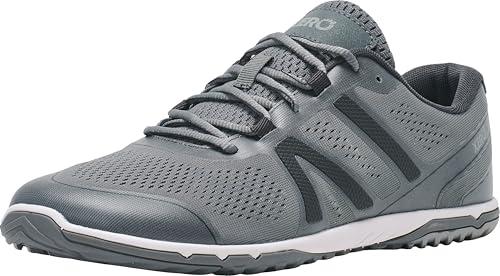
RunRepeat's Best Overall in the category. A lab-measured 13.1 mm heel, a 1.0 mm drop, 86.7 mm of toebox and the thickest outsole here at 4.5 mm. It is the most shoe you can have and still be running minimalist - which is exactly what a first pair should be.
Best barefoot running shoe overall, and the first pair to buy10KHALF
6.8 oz with 13.7 mm of stack, a measured -0.2 mm drop, and a forefoot RunRepeat measured at 79.0 mm across its widest point. The pick if your feet are wide and you still want something under your heel.
Best wide toebox, and the best weight-to-stack ratio10KHALF
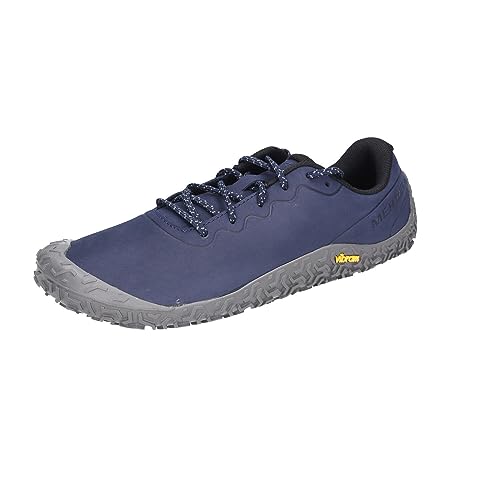
The cheapest shoe on this page at a $90 list price, with a lab-measured 7.6 mm stack front and back and 2.2 N to bend to 90 degrees against a 26.8 N average. Be aware the live Amazon listing is the leather version, which will weigh more than the 5.6 oz tested figure.
Budget pick, and the thinnest real shoe here - $9010K
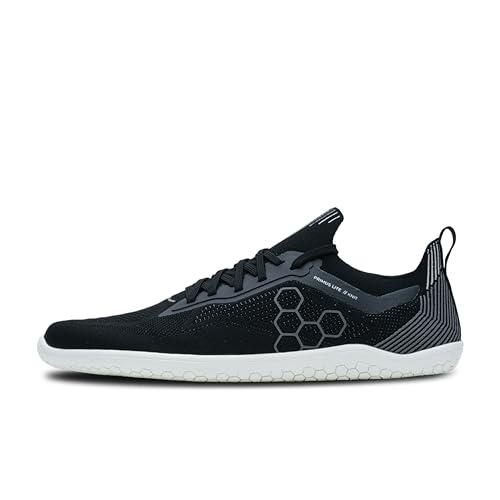
RunRepeat's durability pick and one of only two shoes it scored 83 in this category: a genuine 8.5 mm front and back, 75.7% more flexible than average. RunRepeat also calls it overpriced for a barefoot shoe, and we are not going to argue.
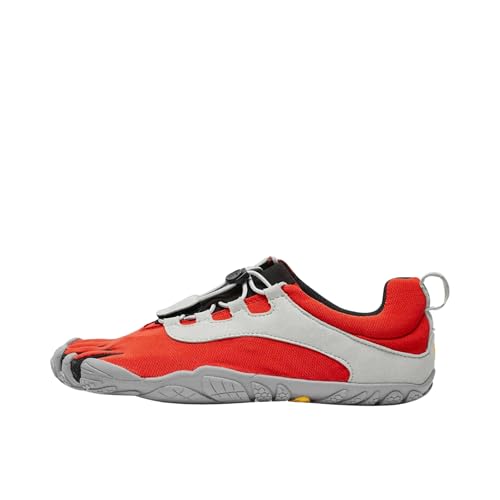
4.6 oz, a lab-measured 7.8 mm heel, a -0.1 mm drop and 94% more pliable than an average running shoe. The most extreme shoe on this page by every measure, and the end of a transition rather than the start of one.
Best with toe pockets, and the lightest at 4.6 oz10K
#ad · Prices come live from Amazon, last checked November 13, 2026. Scores are ours, compiled from published specs and the maker's intended use. Some photos are stock. Tap a row for the full write-up.
Buy the Xero Shoes HFS II first. It is RunRepeat's Best Overall barefoot running shoe and, more usefully, it is the least extreme shoe that still belongs in this category: a lab-measured 13.1 mm heel, a 1.0 mm drop, a 4.5 mm outsole and 86.7 mm of toebox. If you have never run in anything minimal, that combination is the difference between a six-week adaptation and a stress reaction.
If your feet are wide and you want the best weight-to-protection trade here, the Topo Athletic ST-5 is 6.8 oz on 13.7 mm. If you want the cheapest genuinely thin shoe, the Merrell Vapor Glove 6 lists at $90. And if you want the real thing with individual toes, the Vibram FiveFingers V-Run is 4.6 oz on a 7.8 mm stack.
Who this page is for
A runner who already runs. Every shoe here has a 10K or half-marathon level fit and none has a Couch-to-5K one, and that is a deliberate editorial decision rather than an oversight — see why this is not a beginner page below.
The usual reasons runners end up here are good ones: you want your foot to do more of the work, you have never got on with a 10 mm drop, your toes are cramped in every normal shoe, or you want a shoe for short strength-focused runs alongside a cushioned trainer. All of those are served by this list. "I read that cushioning causes injuries" is not, and the research below is the reason.
Barefoot, minimalist, zero drop: three different claims
The words get used interchangeably in marketing and they mean different things:
Zero drop means the heel and forefoot are the same height off the ground. It says nothing about how much foam is under either. The Altra range is the clearest example: the Altra Torin 9 is zero drop on a 28 mm stack, which is a cushioned daily trainer that happens to be level.
Minimalist means a low stack, a flexible sole and a wide toebox, usually at a low drop. The Xero Shoes HFS II at 13.1 mm and the Topo ST-5 at 13.7 mm are minimalist.
Barefoot means as little as a shoe can be: single-digit stack, almost no torsional rigidity, a sole you can roll up. The Merrell Vapor Glove 6 at 7.6 mm and the Vibram V-Run at 7.8 mm are barefoot shoes.
The barefoot end. The Vapor Glove's 2.2 N bend force is against a 26.8 N average for running shoes.
Two things jump out of those tables. First, the spread is enormous for a category sold as one thing: 7.6 mm to 13.7 mm of stack is nearly a doubling, and 4.6 oz to 8.6 oz is nearly a doubling again. Second, weight and protection are not related here the way they are elsewhere on this site — the Topo ST-5 is lighter than the Vivobarefoot while having 5 mm more stack.
The transition: what the research says
This is the part of the category that actually hurts people, so it gets the most careful paragraph on the page.
Ridge and colleagues (Medicine & Science in Sports & Exercise, 2013, 45(7): 1363-1368) took 36 experienced recreational runners, MRI-scanned their feet, and asked half of them to transition gradually into Vibram FiveFingers over 10 weeks while the other half kept their normal shoes. Ten of the 19 runners in the Vibram group showed increased bone marrow edema in at least one bone of the foot afterwards, significantly more than the control group. The authors' own conclusion, in the university's summary of the study, was not that minimalist shoes are bad — it was that runners should transition over a longer period than 10 weeks and at a lower weekly mileage than the study used.
Which gives a practical rule we are comfortable printing:
Do not replace your trainer. Add a minimalist shoe alongside it. Our rotation guide is the framework.
Start at one short run a week. A mile or two, on a surface you know, at an easy effort.
Add distance before you add frequency. And add it in single-digit percentages, not jumps.
Expect calf and foot soreness, and treat new bone pain differently. Muscle soreness that fades is adaptation. A specific, point-tender spot on a bone is not, and it is the thing the 2013 study was measuring.
Take months, not weeks. The study's own authors said 10 weeks was too fast.
The AAOS's general athletic shoe guidance is worth reading alongside that: its advice is about fit, about the shoe suiting the activity, and about replacing worn shoes — not about stack height in either direction.
The ladder, in millimeters
If you are coming out of a normal cushioned trainer — call it a 35 to 40 mm stack and an 8 to 12 mm drop — here is the order that makes sense, each rung sourced to the figure that defines it:
28 mm, zero drop. The Altra Torin 9: level, but with a real midsole. Covered in our Altra roundup. This rung is where most runners should spend a season before going lower.
13.7 mm, -0.2 mm drop. The Topo Athletic ST-5. Half the stack, still a sole.
13.1 mm, 1.0 mm drop, 4.5 mm outsole. The Xero Shoes HFS II. The best-protected shoe that is genuinely minimalist.
8.5 mm, true zero drop. The Vivobarefoot Primus Lite Knit.
7.6 mm, 0.0 mm drop, 2.2 N to bend. The Merrell Vapor Glove 6.
7.8 mm, -0.1 mm drop, 4.6 oz, toe pockets. The Vibram FiveFingers V-Run. The end of the ladder.
Nobody has to climb all of it. Plenty of runners find rung two or three is the shoe they actually wanted and stop there, which is a completely good outcome.
Which one to buy
Your first minimalist shoe, from a cushioned trainer. Xero Shoes HFS II. The most stack and the thickest outsole in the category.
Wide feet. Topo Athletic ST-5, measured at 79.0 mm across the widest part of the forefoot. Our wide toe box roundup covers the cushioned options if you want both.
$90 is the budget. Merrell Vapor Glove 6, with the leather-listing caveat noted on its card.
You want it to last. Vivobarefoot Primus Lite Knit, RunRepeat's durability pick.
You actively want toe pockets. Vibram FiveFingers V-Run. Nothing else here is close, and nothing else looks like it.
You want zero drop but not low stack. You want an Altra, not this page. Start with the Altra roundup.
Why this is not a beginner page
We write separately for runners at each level, and a Couch-to-5K runner is the one reader we would actively steer away from this list. Two reasons, neither of them about whether minimalist shoes work.
First, there is nothing to transition from. The 2013 study above transitioned experienced runners and still produced more bone marrow edema than the control group. A runner in week three of the NHS Couch to 5K plan is already asking their feet and calves to absorb a new load; stacking a footwear change on top of that is two adaptations at once.
Second, a beginner cannot yet tell adaptation soreness from injury pain, because they have no baseline for either. That skill arrives with mileage. Our beginner shoe roundup is the right page for a first pair, and this one will still be here in a year.
In detail
The picks, in full
1
Best barefoot running shoe overall, and the first pair to buy
Xero Shoes HFS II
C25K10KHALFMARATHON
8.9 /10
RunRepeat's Best Overall in the category. A lab-measured 13.1 mm heel, a 1.0 mm drop, 86.7 mm of toebox and the thickest outsole here at 4.5 mm. It is the most shoe you can have and still be running minimalist - which is exactly what a first pair should be.
+RunRepeat's Best Overall pick in the barefoot category
+13.1 mm of lab-measured heel stack: more shoe than anything else here except the Topo, which makes it the sanest first pair
+A 4.5 mm outsole, the thickest in this group, so road grit is less of an event
+86.7 mm of toebox width, measured, and 62.6% more flexible than an average running shoe
+A measured 1.0 mm drop rather than a claimed zero, which is the honest version of the same thing
Good to know
Choose something else if you want the real barefoot experience rather than a bridge to it; the Merrell Vapor Glove 6 is half the stack and the Vibram V-Run is half the weight.
#ad · Price as of November 13, 2026 · Affiliate disclosure for the link to Xero Shoes HFS II
2
Stock photo
Best wide toebox, and the best weight-to-stack ratio
Topo Athletic ST-5
C25K10KHALFMARATHON
8.9 /10
6.8 oz with 13.7 mm of stack, a measured -0.2 mm drop, and a forefoot RunRepeat measured at 79.0 mm across its widest point. The pick if your feet are wide and you still want something under your heel.
+6.8 oz with 13.7 mm of stack: the best weight-to-protection ratio of anything in this group
+A forefoot measured at 79.0 mm across its widest point, 7.9% above the average running shoe
+74.5% more flexible than an average shoe, so the foot still does the work
+RunRepeat scored it 78 (Good) and describes the price as fair, which not everything in this category manages
Good to know
Choose something else if you need a measured positive drop or the thickest outsole you can get; the Xero Shoes HFS II measures 1.0 mm of drop on a 4.5 mm outsole.
#ad · Price as of November 13, 2026 · Affiliate disclosure for the link to Topo Athletic ST-5
3
Budget pick, and the thinnest real shoe here - $90
Merrell Vapor Glove 6
C25K10KHALFMARATHON
8.7 /10
The cheapest shoe on this page at a $90 list price, with a lab-measured 7.6 mm stack front and back and 2.2 N to bend to 90 degrees against a 26.8 N average. Be aware the live Amazon listing is the leather version, which will weigh more than the 5.6 oz tested figure.
#ad · Price as of November 13, 2026 · Affiliate disclosure for the link to Merrell Vapor Glove 6
4
Best durability
Vivobarefoot Primus Lite Knit
C25K10KHALFMARATHON
8.7 /10
RunRepeat's durability pick and one of only two shoes it scored 83 in this category: a genuine 8.5 mm front and back, 75.7% more flexible than average. RunRepeat also calls it overpriced for a barefoot shoe, and we are not going to argue.
#ad · Price as of November 13, 2026 · Affiliate disclosure for the link to Vivobarefoot Primus Lite Knit
5
Best with toe pockets, and the lightest at 4.6 oz
Vibram FiveFingers V-Run
C25K10KHALFMARATHON
8.5 /10
4.6 oz, a lab-measured 7.8 mm heel, a -0.1 mm drop and 94% more pliable than an average running shoe. The most extreme shoe on this page by every measure, and the end of a transition rather than the start of one.
+4.6 oz: the lightest shoe in RunRepeat's barefoot guide by 2.2 oz
+94% more pliable than an average running shoe, which is as close to unshod as a shoe gets
+Individual toe pockets let the toes splay and grip independently
+A lab-measured 7.8 mm heel and -0.1 mm drop confirm what the look promises
Good to know
Choose something else if you have any doubt about toe pockets, or your current shoe has a 10 mm drop and a 35 mm stack; this is the end of the transition, not the start.
#ad · Price as of November 13, 2026 · Affiliate disclosure for the link to Vibram FiveFingers V-Run
How to choose a barefoot running shoe
Decide which of the three words you actually want. Zero drop, minimalist or barefoot. They are different purchases and only one of them is this page's subject at full strength.
Read the lab stack, not the brand's. Caliper figures in this category routinely differ from marketing copy, and single-digit millimeters are the whole product.
Buy up the ladder, not down it. Pick the thickest shoe that still counts as minimal for you. You can always go lower next year; a stress reaction costs a season.
Check the toebox figure if your toes are the problem. RunRepeat publishes 86.7 mm for the HFS II and 79.0 mm at the widest point for the ST-5, measured differently, so compare each against your own foot rather than against each other.
Keep your cushioned trainer. This is a second shoe. Every rule above assumes you still have a first one - and if you do not, buy that first, from under $150 or under $200, before you buy anything on this page.
Check the listing, not just the model. This category is full of variants — leather versus mesh, men's versus women's, trail versus road versions of the same name. The buy buttons here show the current price for the exact listing we verified.
Common mistakes
Switching rather than adding. The single biggest cause of trouble. Replace one run a week, not the whole rotation.
Going to the thinnest shoe first. The Vibram V-Run is where the ladder ends. Starting there is the exact scenario the 2013 study was measuring.
Treating zero drop as minimalist. An Altra Torin 9 is zero drop on 28 mm of foam. It is a normal cushioned trainer and it is a perfectly good first rung.
Ignoring bone pain because "it is just the adaptation". Muscle soreness that eases over days is adaptation. A point-tender spot on a bone is a reason to stop and get it looked at.
Expecting it to make you faster. Nothing in the published data on these shoes promises that. They change what your foot does; your tempo shoe is where speed gets bought.
The short answer, again
Our recommendation
If you only take one thing from this page, take the first of these two.
Buy this one
Xero Shoes HFS II
Best barefoot running shoe overall, and the first pair to buy
#ad · Price as of November 13, 2026 · Affiliate disclosure for the link to Topo Athletic ST-5
How we chose these
Researched, compared, scored for your level
We start from what a published training plan actually asks of a runner at your level, compare every model's published specs (stack height, drop, weight, plate, stability features, widths) against that job, and score each pick on a public rubric. Each spec links to where it came from, so you can shortlist in minutes and buy with the numbers in front of you.
The Xero Shoes HFS II. It is RunRepeat's Best Overall pick in the category and the most sensible first pair: a lab-measured 13.1 mm heel stack, a 1.0 mm drop, the thickest outsole here at 4.5 mm, and 86.7 mm of toebox width. If you want something genuinely thinner, the Merrell Vapor Glove 6 measures 7.6 mm front and back at a $90 list price.
What is the difference between barefoot, minimalist and zero-drop shoes?+
Zero drop only means the heel and forefoot sit at the same height — the Altra Torin 9 is zero drop on a 28 mm stack, which is a fully cushioned trainer. Minimalist means a low stack, a flexible sole and a wide toebox, like the Xero Shoes HFS II at 13.1 mm. Barefoot means a single-digit stack and almost no torsional rigidity, like the Merrell Vapor Glove 6 at 7.6 mm or the Vibram FiveFingers V-Run at 7.8 mm.
How long does it take to transition to barefoot running shoes?+
Months rather than weeks. Ridge and colleagues (Medicine & Science in Sports & Exercise, 2013) transitioned experienced runners into Vibram FiveFingers over 10 weeks and found increased foot bone marrow edema in 10 of 19 of them; the authors' own conclusion was that runners should transition over longer than 10 weeks and at lower weekly mileage. Start with one short easy run a week alongside your normal shoe.
Are barefoot running shoes good for beginners?+
No, and that is why no shoe on this page carries a Couch-to-5K level fit. A new runner has nothing to transition from, is already adapting to the running load itself, and has no baseline for telling adaptation soreness from injury pain. Start with a cushioned trainer from our beginner roundup and revisit minimalist shoes after a year of consistent running.
What is the lightest barefoot running shoe?+
The Vibram FiveFingers V-Run at 4.6 oz (130 g), which is the lightest shoe in RunRepeat's barefoot guide by 2.2 oz. The Merrell Vapor Glove 6 is next at 5.6 oz, then the Topo Athletic ST-5 at 6.8 oz. Lighter is not automatically better here: the V-Run also has the least shoe between your foot and the road.
Every figure above is traceable. Specs come from the maker's own pages or the named reviewer's published measurements (linked above); level definitions come from published training plans; prices come from Amazon's own API and carry the date they were checked, so you buy on a current number. Read the full method.