Marathon · Guide
Marathon Gear Checklist: What You Need for Training and Race Day
Marathon training is where gear stops being optional. Twenty-mile long runs need a water plan, fuel, socks that don't blister and a watch that lasts. Here's the full kit list, what each item is for, and what you can skip.
We earn a commission if you buy through our links, at no extra cost to you. It never decides the ranking — the method is published · Affiliate disclosure
To run a marathon you need, at minimum: running shoes you've trained in, running-specific socks, wicking clothes you've already worn on long runs, an anti-chafe balm, energy gels you've tested and a way to carry water on long training runs. A GPS watch and a race number belt aren't essential but earn their place over an 18-week plan. Everything below is sorted by when you need it, with our picks and the reasoning behind them.
We haven't worn or tested this gear. Picks are chosen from published specs, the maker's stated use and guidance from race organizers and the training plan we cite.
The marathon gear checklist
| Item | Training | Race day | Why it matters at marathon level |
|---|---|---|---|
| Running shoes | Yes | Yes (tested) | Long runs build to 20 miles; race shoes need testing first |
| Running socks | Yes | Yes (tested) | Left/right-specific socks may reduce blistering, per London Marathon Events |
| Wicking shirt, shorts or tights | Yes | Yes (already worn) | Race-day clothes should be ones you trained in |
| Anti-chafe balm | Yes | Yes | Long runs expose every rub point |
| Energy gels | Yes (practice) | Yes (the ones you practiced with) | Runs go well past an hour |
| Water carry (vest, belt or handheld) | Yes, on long runs | Optional | Unsupported long runs; races usually have aid stations |
| GPS watch | Recommended | Recommended | Pacing long runs and holding back early in the race |
| Race number belt | No | Optional | No safety pins through your shirt; gel loops |
| Old layer for the start | No | Yes | Start areas can be cold while you wait |
Shoes
Shoes are the one item with no substitute. Hal Higdon's Novice 1 Marathon plan runs 18 weeks with long runs from 6 to 20 miles; by our arithmetic from the schedule, that is roughly 435 miles before race day. Buy your training shoe before week 1. For picks, see our best marathon training shoes; if you want a separate race-day shoe, our marathon race shoe ranking covers it. Either way, don't race 26.2 in a pair you haven't taken on at least one longer run.
Clothing
London Marathon Events' kit guidance for marathon training is practical: choose shorts and shirts made from wicking fabrics that draw sweat away, look for quick-drying, lightweight jackets with reflective materials for dark-month training, and consider Lycra tights, which it says prevent the chafing that shorts can cause. It also suggests lightweight gloves, because cold hands are an uncomfortable distraction, and for race day, clothes you've already worn during training.
- Shirt and shorts or tights in wicking fabric (two sets, so one is always clean for the long run)
- A supportive sports bra, if you wear one, tested on long runs
- A light jacket with reflective detail for early or late runs
- Lightweight gloves and a hat for cold starts
Socks and anti-chafe
London Marathon Events warns that basic sports socks can move around in your shoes and cause blisters, and says running-specific socks that are anatomically fitted (left- and right-foot specific) should reduce the risk. That is why our sock pick is the Feetures Elite Light Cushion No Show Tab: Feetures lists a right/left-specific design, a seamless toe, a seamless heel and a double-thick heel tab. For more options, see our best running socks.
For chafing, London Marathon Events' first-marathon advice is to apply Vaseline to your armpits, nipples, between your thighs and your ankles before the start. A stick balm does the same job with less mess: Body Glide says its balm goes on dry and is designed for high-friction zones like thighs, underarms, feet and waistband lines. Use it on every long run, not just race day.
A GPS watch
You can finish a marathon without a watch. But Higdon's plan asks for long runs at a comfortable, conversational pace, and a watch makes that pace easy to check. Battery matters at this level: by simple arithmetic, 20 miles at 9 to 15 minutes a mile is three to five hours, and you'll want the watch to last the week between charges.
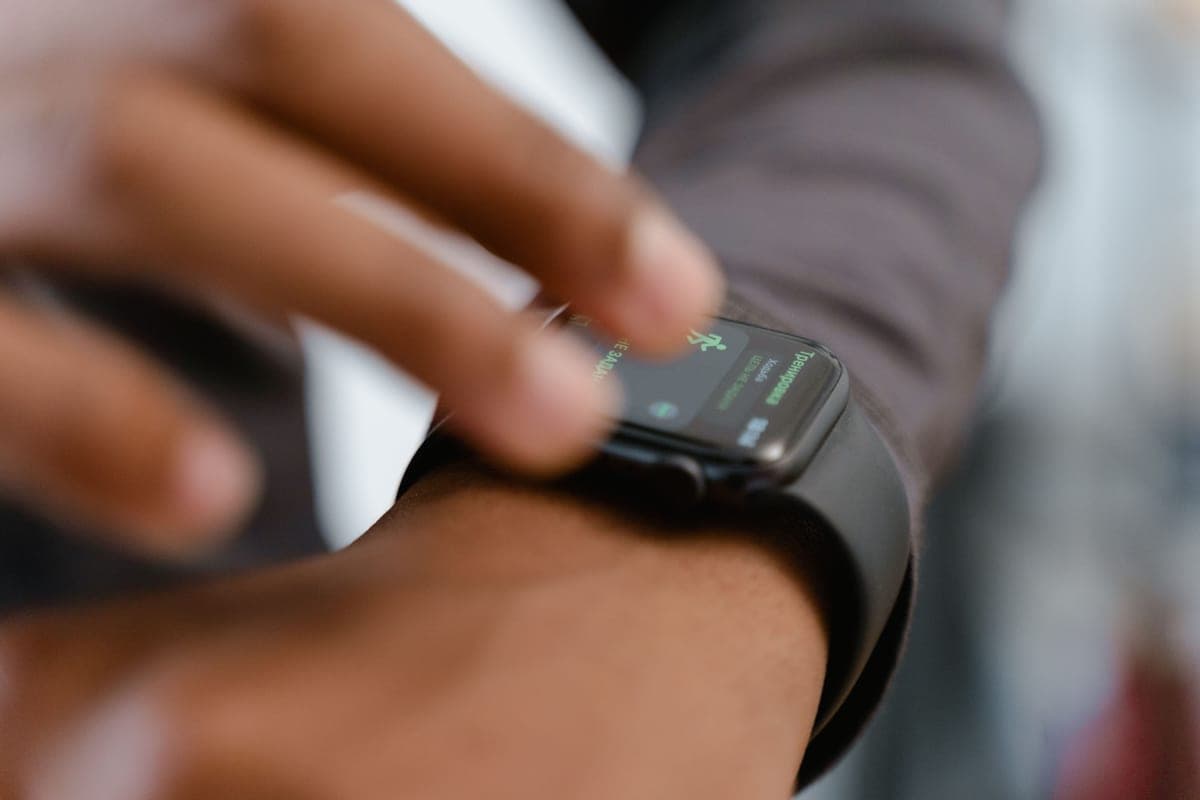
Our pick is the COROS Pace 4. COROS lists up to 31 hours of GPS in all-systems dual-frequency mode (41 hours in all-systems mode), up to 19 days of daily use, training plans and downloadable maps, at 40 g on a silicone band. For a ranked list, see our best GPS watch for marathon training.
Water and fuel
On race day, aid stations do most of the work. Higdon suggests walking through them because it is easier to drink while walking than while running. London Marathon Events' medical advice is to drink to thirst, not more, and it warns that drinking too much can cause hyponatremia (water intoxication).
Training is different: long runs often have no aid stations, so you carry your own. For 18- and 20-milers, a hydration vest is the simplest way to carry enough. Our pick is the Salomon ADV Skin 5 Set, which Salomon rates for marathon distance: two 500 ml soft flasks up front, 5 liters of storage, a 7 oz vest in six unisex sizes. If you'd rather wear a belt, see hydration vest vs belt; for route planning and how much to carry, see how to carry water while running.
For fuel, London Marathon Events says energy gels replenish your carbohydrate stores, suggests about one every 45 to 60 minutes, and says to test them in training first. GU's own guide for efforts over an hour is one gel every 20 to 30 minutes with a few sips of water. The advice varies, so use your long runs to find the rhythm your stomach handles, then race with exactly that.
Vest, belt or handheld?
All three work; the right one depends on how much you carry and what you'll tolerate on your body for three to five hours. Examples from our registry, with the maker's figures:
| Carry style | Example | What it holds | Best for |
|---|---|---|---|
| Hydration vest | Salomon ADV Skin 5 Set | Two 500 ml soft flasks, 5 L of storage, room for a 2 L reservoir (not included) | 18- and 20-milers with no water stops |
| Flask belt | Nathan Peak Hydration Waist Pack | One 18 oz flask plus a zippered phone pocket | Runners who don't want anything on their shoulders |
| Two-flask belt | Salomon Pulse Belt | Two pockets sized for 500 ml soft flasks | More water at the waist, slim fit |
| Handheld | Nathan SpeedDraw 2 Insulated | An 18 oz bottle with a phone pocket | Routes with a refill point partway |
Whichever you choose, wear it on long runs well before race day. For a ranked list of belts, see our best running belts.
Picks for this job
Training kit for a marathon block
The three items that do the most work across 18 weeks: water carry for unsupported long runs, a watch that lasts the week, and socks built to limit blisters.
 Stock photo
Half and marathon long runs: the default vest
Salomon ADV Skin 5 Set
Salomon rates it for marathon distance; two 500 ml flasks up front for 18- and 20-mile long runs.
Check price · Amazon#ad · Price set by Amazon · Affiliate disclosure for the link to Salomon ADV Skin 5 Set
 Stock photo
10K to marathon: long battery, light case
COROS Pace 4
Up to 31 hours of dual-frequency GPS per COROS, so a week of marathon training rarely needs a charge.
Check price · Amazon#ad · Price set by Amazon · Affiliate disclosure for the link to COROS Pace 4
 Stock photo
All levels: the all-round no-show
Feetures Elite Light Cushion No Show Tab
Right/left-specific, seamless toe and heel: the fitted running sock London Marathon Events describes.
Check price · Amazon#ad · Price set by Amazon · Affiliate disclosure for the link to Feetures Elite Light Cushion No Show Tab
Phone, keys and ID
On a three- to five-hour long run, you'll want your phone. Check the pocket before you buy: Nathan says the Peak waist pack's zippered stretch pocket fits most large-format smartphones, while SPIbelt lists specific phones (such as the iPhone 13 Pro) for its Performance Series, which also carries four gels on elastic loops. A vest like the ADV Skin 5 has chest pockets as well. For every option, see how to carry your phone while running.
Race-day extras
- Your gels, the brand and flavors you practiced with. London Marathon Events says to test gels in training first to avoid stomach problems on the day.
- Anti-chafe balm, applied before you leave. A pocket-size stick is handy for a top-up.
- A race number belt (optional). The Nathan Race Number Belt has three bib attachments and three gel loops, so you can skip safety pins and carry fuel at your waist.
- An old layer for the start. London Marathon Events suggests bringing an old top to the start line to stay warm while you wait.
- Dress for the weather. Its medical advice: layer up, hat and gloves when it's cold or wet; light, breathable kit when it's hot, and start slower.
The full night-before and race-morning routine is in our marathon race week checklist.
Picks for this job
Race-day small stuff
Three small items that solve race-morning problems: chafing, fuel and where to put your bib.
 Stock photo
Every runner's kit; stocking stuffer
Body Glide Original Anti-Chafe Balm
Goes on dry; the maker lists thighs, underarms, feet and waistband lines as target zones. Comes in a pocket size.
Check price · Amazon#ad · Price set by Amazon · Affiliate disclosure for the link to Body Glide Original Anti-Chafe Balm
- Stock photo
Half and marathon fueling practice
GU Original Energy Gel (24-count mixed box)
100 calories and 21 to 23 g of carbohydrate per packet. Practice with them on long runs first.
Check price · Amazon#ad · Price set by Amazon · Affiliate disclosure for the link to GU Original Energy Gel (24-count mixed box)
- Stock photo
Race-day add-on
Nathan Race Number Belt
Three bib attachments and three gel loops; one size. Nathan pitches it at marathons and halves.
Check price · Amazon#ad · Price set by Amazon · Affiliate disclosure for the link to Nathan Race Number Belt
When to buy each item
Mapped to Hal Higdon's Novice 1 schedule. The plan's weeks and distances are Higdon's; the buying order is our suggestion, built on one idea: everything should have long runs on it before race day.
| When | Long run that week | Have by then |
|---|---|---|
| Week 1 | 6 miles | Training shoes, running socks, wicking shirt and shorts |
| Weeks 4-5 | 9 to 10 miles | Anti-chafe balm, first gels to test, a watch if you want one |
| Week 7 | 12 miles | Your water carry (vest, belt or handheld) |
| Week 8 | Half marathon (suggested) | Race number belt, if you'll use one; practice your race-day routine |
| Weeks 10-13 | 12 to 18 miles | Settle on your gels and flavors; buy enough for race day |
| Weeks 13-15 | 14 to 20 miles | Race-day shoes (if different) and race-day outfit, worn on at least one long run |
| Weeks 16-18 | Taper | Nothing new; replace only what has worn out, with the same model |
What you can skip
London Marathon Events' advice to first-timers includes "Don't get obsessed with all the add-ons": build your kit slowly and intentionally. You don't need compression gear, a second watch, a massage gun or special race-day clothing to finish a marathon. You do need the items above to be tested before race day.
How we chose these
Shoes we claim to have lab-tested: 0
Plenty of sites say they ran hundreds of miles in every shoe. We didn't, and we say so. What we do instead: start from what a published training plan actually asks of a runner at your level, compare each model's published specs (stack height, drop, weight, plate, stability features, widths) against that job, and score every pick on a public rubric. Each spec links to where it came from.
Scores are editorial judgments from that documented research, not lab results. Nobody pays for placement and we don't accept free products. The rubric and weights are on the How We Pick page.
Questions
Frequently asked
What gear do you need to run a marathon?
Do I need a hydration vest for a marathon?
How many gels do I need for a marathon?
Where do you put Vaseline or anti-chafe balm for a marathon?
Do I need a GPS watch for a marathon?
Keep going
Related reading
- Marathon race week checklistThe night before and race morning, step by step.
- Best marathon training shoesThe most important item on the list.
- Best GPS watch for marathon trainingSeven watches ranked for an 18-week block.
- Best hydration vestsVests for unsupported long runs.
- Half marathon gear checklistOne rung down: what the half needs.
Receipts
Sources
- Hal Higdon — Novice 1 Marathon training program (fetched 2026-09-19)
- London Marathon Events — Essential kit for marathon training (fetched 2026-09-19)
- London Marathon Events — 10 things you need to know before running your first marathon (fetched 2026-09-19)
- London Marathon Events — Medical advice (fetched 2026-09-19)
We don't lab-test shoes or gear and we don't pretend to. Specs come from the maker's own pages or the named reviewer's published measurements (linked above); level definitions come from published training plans. Prices are set by Amazon and change often, so we don't print them. Where a figure isn't published, we say so. Read the full method.