Running Gear · Guide
Do I Need a Running Watch? What Your Phone Covers at Each Level
Not to start. Your phone can run a Couch-to-5K coach, record GPS and play music. A watch earns its place as the distances grow. Here is where that line falls, level by level.
We earn a commission if you buy through our links, at no extra cost to you. It never decides the ranking — the method is published · Affiliate disclosure
No, you don't need a running watch to start running. A phone can play the NHS Couch to 5K coach, record your route and pace in an app like Strava, and play music. In a 2021 track study, a phone app's distance error was only slightly larger than two GPS watches'. A watch starts to earn its place once your plan is written in miles rather than minutes, from about the 10K stage, and by marathon training it's the easier tool for most of what you'll track.
The short answer, by level
| Level | What the plan asks | Is the phone enough? | What a watch adds |
|---|---|---|---|
| C25K | NHS Couch to 5K: 9 weeks, three runs a week, timed run/walk intervals building to 30 minutes of running | Yes. The coach plays through the app on your phone | A heart-rate readout and a log; nice, not needed |
| 10K | Higdon Novice 10K: 8 weeks, runs written in miles, weekend run building from 3 to 5.5 miles | Yes, if you're happy to carry it and check it | Distance and time at a glance, without pulling the phone out |
| HALF | Higdon Novice 1 Half: 12 weeks, long run building to 10 miles | It works, but it's clumsy on long runs | Pace and distance on the wrist for the long run; music without the phone on some models |
| MARATHON | Higdon Novice 1 Marathon: 18 weeks, long run peaking at 20 miles, about 15 to 40 miles a week (our arithmetic) | Possible, not ideal | Battery for long runs, training-load tools and race-day pacing |
What your phone already does
It coaches. The NHS Couch to 5K app is the plan: it builds week by week, offers a choice of trainers, and works with your music player. The NHS kit advice is built around it: "You'll need your phone to hear your Couch to 5K coach, so if you don't have a pocket, a running armband can help."
It records. Strava's help center says "the simplest way to get an activity onto Strava is to record it directly in the iOS or Android app." The app tracks your route and stats as you run and uploads when you finish. No watch involved.
It keeps you reachable. The Road Runners Club of America's runner safety tips call your cell phone "the best safety tool you own" and suggest slipping ID into the phone case. That is a reason to carry it even after you own a watch.
What the phone doesn't do well is sit where you can see it. Checking pace means pulling it out of a pocket, belt or armband mid-stride. On a 30-minute Couch-to-5K session that hardly matters, because the coach tells you what to do. On a 10-mile long run you'll check the numbers more often. Our guide to carrying your phone while running covers belts, armbands and the options without an armband.
Watch vs phone: is a watch more accurate?
A little, in the one head-to-head study we found, and not by enough to change what you buy. A 2021 validation study in the journal Sensors had 36 adults run on a 400 m stadium track while wearing two watches (a Garmin Forerunner 945 and a Polar Ignite) and carrying a phone app (Polar Beat on an iPhone 7). On a 3 km run, the mean absolute percentage error in distance was 1.44% for the Garmin, 1.88% for the Polar watch and 2.67% for the phone app. On a 1.6 km interval run it was 1.65%, 2.66% and 3.35%.
So the watches were ahead, but everything stayed under 4% in that test. On a 5K run, a 3% error is less than a tenth of a mile, by our arithmetic. Watches aren't perfect either: a 2020 study of eight sport watches from Apple, Coros, Garmin, Polar and Suunto found mean absolute percentage errors from 3.2% to 6.1%, with distances generally underestimated in urban and forest areas.
When a watch starts to help
- When your plan is written in miles. Higdon's Novice 10K asks for runs of set distances. The watch tells you when you've covered them, which beats guessing or stopping to check a phone.
- When you want numbers at a glance. Higdon tells novices to run at a pace that lets you "converse comfortably." A watch shows your pace on your wrist, so you can check you haven't drifted faster without breaking stride.
- When you want a plan on your wrist. Garmin lists its running coach and daily suggested workouts on the Forerunner 70, so the watch tells you what today's run should be.
- When long runs get long. By the half, the long run reaches 10 miles; by the marathon, 20. Dedicated running watches list battery in days: Garmin rates the Forerunner 70 at up to 13 days as a smartwatch.
- When you'd like to leave the phone behind. Watches with music storage, like the Garmin Forerunner 170 Music, can play music without the phone. Weigh that against the RRCA's advice to carry it.
A good moment to buy is Couch-to-5K graduation, or the day you sign up for a 10K. Our best running watches for beginners ranks six watches for exactly that point.
Running with just your phone: how to make it work
Plenty of runners never buy a watch, and nothing in the Couch-to-5K or Novice 10K plans requires one. If you're staying phone-only for now, a few habits make it easier.
- Carry it low and snug. A phone bouncing in a loose pocket is the most common complaint. In its running-belt guide, iRunFar says the most common cause of a bouncing belt is wearing it in the wrong place, and that tube belts work best lower on the hips, over the widest part of the pelvic bone.
- Start the app before you start running. Open the NHS coach or Strava while you're still at the door, so the first interval or the first mile isn't spent fiddling with a screen.
- Don't chase exact distance. Higdon tells novices not to worry about speed and to cover the distance, or approximately the distance, suggested each day. A phone reading 3.4 miles on a 3.5-mile day is fine.
- Keep the volume down. The RRCA suggests keeping music low enough that you can stay aware of your surroundings, and texting a friend or family member so they know you're out.
When those habits start to feel like work, usually around the first long runs of a half-marathon plan, that is the sign a watch will make running simpler.
Is the Apple Watch good for running?
Yes, for many runners, with two catches. Apple's Series 12 spec page lists Training Load, custom workouts, Pacer, Race Route and running power, plus running form metrics including cadence, stride length, ground contact time and vertical oscillation. It uses Precision L1 GPS (GPS, GLONASS, Galileo, QZSS and BeiDou) and offers offline maps.
The first catch is battery. Apple rates the Series 12 for up to 24 hours of normal use (up to 38 in Low Power Mode) and up to 10 hours of outdoor workout, so most owners charge it daily. The second is compatibility: it requires an iPhone 11 or later on iOS 27 or later.
Running watch vs Apple Watch, then: if you already wear an Apple Watch and your runs are 5K to half marathon, it's a capable running watch and you don't need a second one. For an 18-week marathon build, a dedicated running watch that lasts days between charges is the easier partner. The best GPS watches for marathon training are ranked with that in mind.
If you buy one: what to look for
- Coaching you'll follow. A new runner gets the most from a watch that suggests the day's run. Garmin lists running coach on its Forerunner 70 and 170 Music.
- Days between charges. Check the smartwatch figure, not just GPS hours, and note what the maker says the always-on display costs. The Forerunner 70 is up to 13 days, or 5 with the display always on.
- Music, if you want to go phone-free. The Forerunner 70 has no music storage; the 170 Music does. Garmin lists up to 7.5 hours GPS-only while playing music on the 170.
- Your phone. The Apple Watch is iPhone-only. Check the maker's compatibility list before buying any watch.
- Features you'll use this year. Maps and multi-band GPS are marathon features. If you are weighing brands, our Garmin vs COROS comparison goes model by model.
Picks for this job
If you decide you want a watch
Three watches for runners between Couch-to-5K graduation and a first half, depending on whether you want coaching, music or one watch for everything.
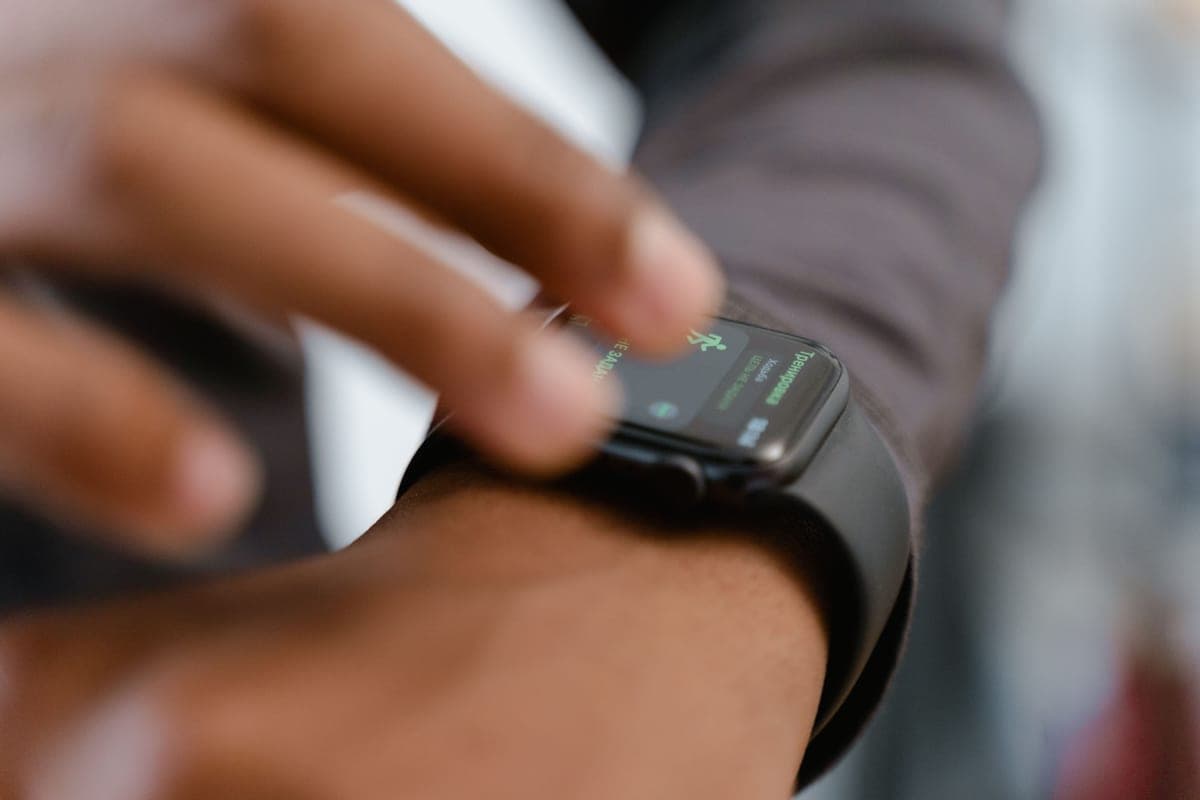 Stock photo
C25K to 10K: the simplest Garmin start
Garmin Forerunner 70
The simplest way to add a watch: Garmin running coach and daily suggested workouts, up to 23 hours GPS-only and up to 13 days between charges.
Check price · Amazon#ad · Price set by Amazon · Affiliate disclosure for the link to Garmin Forerunner 70
- Stock photo
C25K to half: beginner Garmin with music
Garmin Forerunner 170 Music
Stores music and adds Wi-Fi, so the phone can stay home once you've graduated from the app coach. Up to 7.5 hours GPS-only with music playing.
Check price · Amazon#ad · Price set by Amazon · Affiliate disclosure for the link to Garmin Forerunner 170 Music
- Stock photo
C25K to half: the iPhone all-in-one
Apple Watch Series 12
The one-watch answer for iPhone owners: running power, custom workouts and a pacer. Plan to charge it most days.
Check price · Amazon#ad · Price set by Amazon · Affiliate disclosure for the link to Apple Watch Series 12
Do you need a running watch for Strava?
No. Strava records runs directly in its iOS and Android apps, and says that for wearables like Garmin and Apple Watch, "most devices sync to Strava automatically once they're connected." So you can start on the phone and add a watch later without losing your history on Strava. COROS lists sync with Strava and TrainingPeaks for the Pace 4 as well.
If you're still at the start, sort the essentials first: shoes, something to carry the phone, and the plan. Our Couch-to-5K gear checklist lists what a first-time runner actually needs.
How we chose these
Shoes we claim to have lab-tested: 0
Plenty of sites say they ran hundreds of miles in every shoe. We didn't, and we say so. What we do instead: start from what a published training plan actually asks of a runner at your level, compare each model's published specs (stack height, drop, weight, plate, stability features, widths) against that job, and score every pick on a public rubric. Each spec links to where it came from.
Scores are editorial judgments from that documented research, not lab results. Nobody pays for placement and we don't accept free products. The rubric and weights are on the How We Pick page.
Questions
Frequently asked
Do I need a running watch to start running?
Is a running watch more accurate than a phone?
Is the Apple Watch good for running?
Do you need a running watch for Strava?
Can I leave my phone at home if I have a watch?
When should a beginner buy a running watch?
Keep going
Related reading
- Best running watch for beginnersSix watches ranked for Couch-to-5K and first-10K runners.
- Garmin vs COROS for runningThe two biggest running-watch brands, compared model by model.
- How to carry a phone while runningBelts, armbands and the options without an armband.
- Best GPS watch for marathon trainingWhen the long run reaches 20 miles.
- Couch-to-5K gear checklistWhat a first-time runner actually needs.
- How long to train for a 10KThe stage where a watch starts to earn its place.
Receipts
Sources
- NHS — Get running with Couch to 5K
- Hal Higdon — Novice 10K training program
- Hal Higdon — Novice 1 Half Marathon training program
- Hal Higdon — Novice 1 Marathon training program
- Budig M, Keiner M, Stoohs R, Hoffmeister M, Höltke V. Heart Rate and Distance Measurement of Two Multisport Activity Trackers and a Cellphone App in Different Sports. Sensors, 2021 (PMC8749603)
- Gilgen-Ammann R, Schweizer T, Wyss T. Accuracy of Distance Recordings in Eight Positioning-Enabled Sport Watches. JMIR mHealth and uHealth, 2020 (PMC7381051)
- Strava Help Center — How do I get my activities to Strava?
- Apple — Apple Watch Series 12 Tech Specs
- Road Runners Club of America — Runner Safety Tips
- iRunFar — Best Running Belts of 2026 (updated April 12, 2026)
We don't lab-test shoes or gear and we don't pretend to. Specs come from the maker's own pages or the named reviewer's published measurements (linked above); level definitions come from published training plans. Prices are set by Amazon and change often, so we don't print them. Where a figure isn't published, we say so. Read the full method.