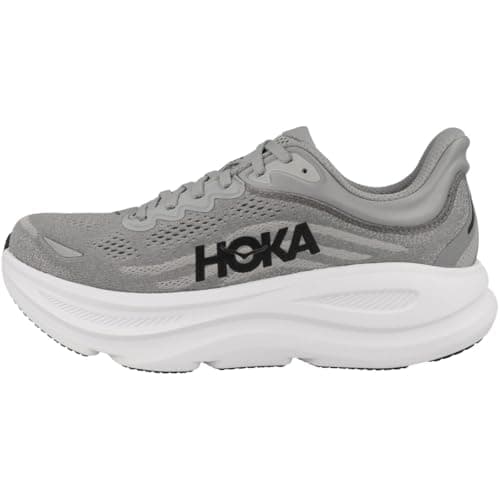
HOKA's two best-selling trainers look like the same idea at two sizes, and the lab says otherwise. RunRepeat measured both: the heel stacks are within 0.1 mm of each other, yet the Bondi 9 is markedly softer with 2.5 mm more forefoot foam, while the Clifton 11 is 1.3 oz lighter and far better ventilated. Here's which one your mileage actually wants.
9.4 oz in RunRepeat's lab, a 93 BR breathability score and a firmer 31.1 AC midsole. The honest cons: RunRepeat measured the drop at 11.7 mm against HOKA's listed 8 mm, the toebox is a narrow 70.9 mm, and heel energy return came in at 46.8%.
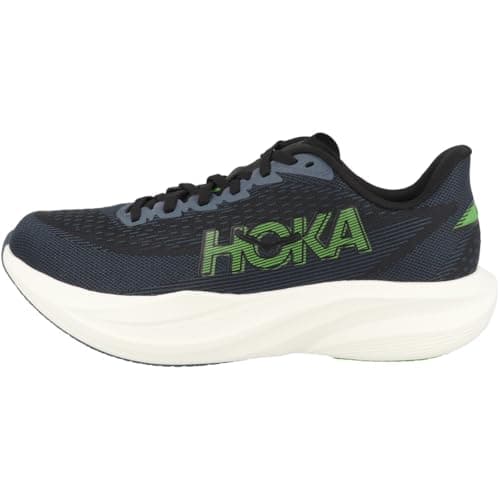
43.0 AC foam, 2.5 mm more forefoot stack and 60.3% energy return, on a platform HOKA sells in four widths. The cons: 10.7 oz (men's) is heavy, RunRepeat scored breathability 3 out of 5, and the measured 9.1 mm drop is nothing like HOKA's listed 5 mm.
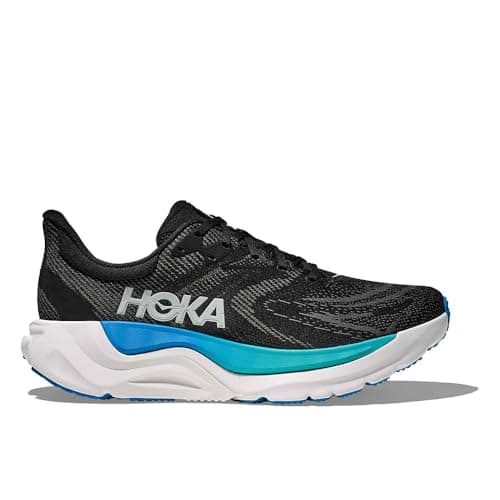
7.49 oz lab-measured, supercritical EVA and no plate, so it can take easy miles and strides in the same shoe. The cons: much less foam than either shoe above for marathon long runs, a 7.9 mm measured drop against a listed 5 mm, and only Regular and Wide.
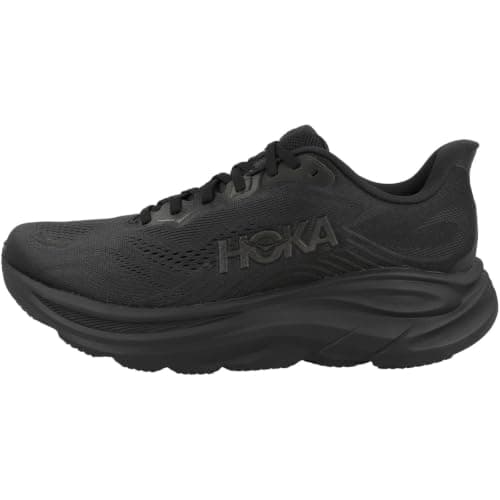
9.3 oz on a 41 mm / 33 mm stack with HOKA's H-Frame guidance instead of a post, in extra-wide for both genders. The cons: support is deliberately subtle, and the Arahi 9 is already out, so sizes in this version will thin out.
#ad · Price as of October 12, 2026 · Sold on Amazon through third-party sellers · Affiliate disclosure for the link to HOKA Arahi 8
The short answer
HOKA markets the Clifton as its everyday trainer and the Bondi as its max-cushion one, and shoppers reasonably read that as “Bondi is the Clifton with more foam.” The lab does not support that reading. What separates them is the character of the foam, not the height of it: the Bondi runs soft and heavy, the Clifton runs firmer, lighter and cooler.
If you are buying your first pair of running shoes for a run/walk plan, either works and our best running shoes for beginners page explains the trade-off at that level. If you already run four or five times a week, the question is whether this shoe is your do-everything trainer (Clifton) or the protected end of a rotation (Bondi).
The same-lab numbers
Comparing numbers across different reviewers is mostly noise, because labs disagree with each other and with the brands. RunRepeat measured both of these shoes in one lab, which makes this comparison unusually clean. Every figure below is theirs, not ours — this site does not test shoes.
RunRepeat lab measurement
Clifton 11
Bondi 9
Weight (men's)
9.4 oz (266 g)
10.7 oz (303 g)
Heel stack
41.4 mm
41.3 mm
Forefoot stack
29.7 mm
32.2 mm
Measured drop
11.7 mm (8 mm listed)
9.1 mm (5 mm listed)
Midsole softness (durometer)
31.1 AC
43.0 AC
Energy return
46.8% heel / 50.1% forefoot
60.3%
Longitudinal stiffness
13.5N
16.5N
Toebox width
70.9 mm
72.5 mm
Breathability
93 BR
3 / 5
Outsole wear after test
0.9 mm
0.9 mm
Sources: RunRepeat's Clifton 11 review and its Bondi 9 review. Two rows deserve a second look. The heel stacks are effectively identical, which kills the “more foam” story. And the softness readings run the opposite way to most people's assumption about HOKA: it is the Bondi that measures soft, at 43.0 AC, while the Clifton 11 came in at 31.1 AC.
Softness: 31.1 AC vs 43.0 AC
This is the headline of the comparison. RunRepeat rates the Clifton 11 “Great” at 85/100 and praises its “plush cushioning for easy miles” while criticizing “very low energy return” — and the energy numbers back that up, at 46.8% at the heel and 50.1% at the forefoot. The Bondi 9 scored 86/100 with 60.3% energy return and a supercritical EVA midsole that Running Warehouse describes as new for this version.
In practice: the Bondi gives way under you and keeps giving, which is exactly what a recovery day or a slow 18-miler wants. The Clifton pushes back sooner, which is what makes it usable at a range of paces. Neither is bouncy in the super-shoe sense — if you want a lively ride for workouts, that is a different category and our best tempo running shoes page covers it.
Softer is not automatically better, and this is where the Bondi's 16.5N stiffness reading matters: more foam that bends less is a shoe you ride rather than steer. RunRepeat's own criticism is that the Bondi “still feels heavy and clunky underfoot.” If that sounds like a deal-breaker, you want the Clifton.
Weight and breathability
1.3 oz separates these shoes (9.4 oz vs 10.7 oz, men's). That is not a rounding error over the course of an hour, and it is the clearest practical argument for the Clifton as a daily shoe.
The ventilation gap is bigger than the weight gap. RunRepeat scored the Clifton 11 at 93 BR — near the top of its breathability scale — and gave the Bondi 9 a 3 out of 5. If you run through summer, or you are the kind of runner whose socks are wrung out at the end of every run, that one row of the table may decide this for you. Our best running socks page covers the other half of that problem.
Women's weights run lower, as always: RunRepeat lists the Bondi 9 at 9.3 oz (263 g) for women against 10.7 oz for men, so a women's Bondi is roughly a men's Clifton in weight terms.
Drop, forefoot and the rocker
Both shoes list a drop their lab measurement disagrees with, and in both cases the real figure is higher than the sticker:
Clifton 11: HOKA lists 8 mm; RunRepeat measured 11.7 mm. Our registry entry also carries RTINGS' independent measurement of 10.2 mm, so two labs agree the real drop is above the listed one while disagreeing on how far.
Bondi 9: HOKA lists 5 mm; RunRepeat measured 9.1 mm. That is the larger discrepancy of the two, and it means a runner choosing the Bondi because it is a low-drop shoe is buying a figure that does not survive the lab.
Those gaps are normal rather than scandalous — brand drop is measured on a spec sheet, lab drop on a finished shoe after the foam compresses — and heel drop and stack height explained covers why the two numbers so rarely match and what each one does and does not predict.
Forefoot stack is the other half of the geometry story: 32.2 mm on the Bondi against 29.7 mm on the Clifton. Combine that with the softer foam and you get the Bondi's reputation among forefoot and midfoot strikers on long runs. Both shoes use a HOKA rocker — Running Warehouse lists the Clifton's as a MetaRocker, and RunRepeat describes the Bondi's as a moderate rocker — so in both cases the shoe is designed to roll you forward rather than to flex underfoot.
Registry figures for all four shoes, each value linked to the lab or retailer that published it. Labs differ: the heads-up comparison above uses RunRepeat for both shoes so the numbers are measured the same way.
Fit, widths and toebox
Neither shoe is generous in the forefoot by current standards. RunRepeat measured the Clifton 11's toebox at 70.9 mm and calls it narrow; the Bondi 9 came in at 72.5 mm, with “restrictive fit for wider feet” still listed among its cons. The 1.6 mm difference is real but small — if your feet are wide, the answer is a width, not a model.
On widths the Bondi wins outright. RunRepeat's spec table lists it in narrow, standard, wide and extra wide; the Clifton 11 comes in Regular, Wide and Extra-Wide with no narrow. Both are unusually good by industry standards, and both are covered on our best running shoes for wide feet page.
One more fit note on the Bondi: RunRepeat flags a non-gusseted tongue, which is the kind of detail that only matters if you are the person it bothers. Try the lacing fix before you return the shoe — how to break in new running shoes covers it.
Durability and price
Durability is a wash. RunRepeat's wear test removed 0.9 mm of outsole from both shoes, and it measured the Bondi's outsole rubber at 76.5 HC. Treat both as normal-lifespan trainers and track them by mileage rather than by looks — when to replace running shoes has the wear signs.
On price, the Bondi sits a bracket above the Clifton at list, and both sit in the premium half of the daily trainer market rather than at the top of it. We do not print a price in the text here because the number on the buy button is the live one; if your budget is the constraint, best running shoes under $150 is the better starting page.
Level by level
This site picks shoes by pace and weekly mileage rather than by brand, so here is the same comparison read through the four tiers.
Level
The pick
Why
Couch to 5K
Either, leaning Clifton
The NHS Couch to 5K plan is run/walk at low volume. Both shoes are forgiving; the Clifton is lighter and cooler, which matters more at this stage than maximum foam.
10K
Clifton 11
At 20-25 miles a week with the occasional faster effort, you want one shoe that does not fight you when you pick it up. The 9.4 oz weight and firmer midsole do that; the Bondi does not.
Half marathon
Clifton as the trainer, Bondi as the long-run shoe
This is where a second pair starts to earn its keep. The Clifton takes the midweek miles; the Bondi takes the 10-13 mile Sunday run and the day after it.
Marathon
Bondi 9 for long and recovery, something lighter for the rest
Hal Higdon's Novice 1 builds to 20-mile long runs. That is the Bondi's job. Pair it with the Mach 7 or a tempo shoe rather than running everything in 10.7 oz of foam.
Can you own both?
Yes, and it is a better rotation than it looks. The two shoes overlap in height but not in character, so they do not do the same job: the Clifton is the one you reach for by default, and the Bondi is the one you put on when your legs are beaten up or the run is going to be long and slow. What that pair does not give you is speed — neither shoe is quick, and both are built on a rocker rather than a plate.
If you are buying two pairs and you want range instead of redundancy, the honest answer is one of these plus something fast: a Clifton and a tempo shoe will serve a half-marathon block better than a Clifton and a Bondi will. Our running shoe rotation guide works through when a second pair is worth buying, and daily trainer vs tempo shoe explains what the quick pair adds.
The two alternatives in this range
Plenty of runners come to this comparison and find that neither answer fits. Two HOKAs sit either side of it:
The Mach 7 if both of these feel like too much shoe. RTINGS measured it at 7.49 oz with a 37.1 mm / 29.2 mm stack, so you give up foam at the heel and gain nearly 2 oz of lightness over the Clifton. It is plate-free, which means it can take easy miles and strides without committing you to a super trainer.
The Arahi 8 if you want this ride with support. It is 9.3 oz on a 41 mm / 33 mm stack and uses HOKA's H-Frame rather than a medial post, which Running Warehouse describes as guidance rather than correction. If you do not know whether you need support, neutral vs stability running shoes is the page to read first.
And if you are weighing HOKA against the other obvious brand at this price, HOKA vs Brooks compares the two line-ups directly, while Brooks Ghost vs HOKA Clifton puts the Clifton 11 against its closest rival outside the HOKA range.
Who should buy which
Buy the Clifton 11 if: you want one shoe for most of your running; you run in heat; you notice weight; you sometimes pick up the pace; you are new to running and want a shoe that is forgiving without feeling unstable.
Buy the Bondi 9 if: your priority is protection on easy and long miles; you are a heavier runner who wants the widest, softest platform HOKA makes; you need a narrow or an extra-wide fit; you want a recovery-day shoe that also works for standing all day.
Buy neither if: you want a responsive ride. Both shoes returned middling energy in the lab, both are rockered rather than flexible, and neither is the shoe for a workout. That is a reason to pair one with something quicker, not a reason to avoid them.
In detail
The contenders, in full
The lighter, airier one
HOKA Clifton 11
C25K10KHALFMARATHON
8.0 /10
9.4 oz in RunRepeat's lab, a 93 BR breathability score and a firmer 31.1 AC midsole. The honest cons: RunRepeat measured the drop at 11.7 mm against HOKA's listed 8 mm, the toebox is a narrow 70.9 mm, and heel energy return came in at 46.8%.
#ad · Price as of October 12, 2026 · Sold on Amazon through third-party sellers · Affiliate disclosure for the link to HOKA Clifton 11
The softer, more protective one
HOKA Bondi 9
C25K10KHALFMARATHON
7.8 /10
43.0 AC foam, 2.5 mm more forefoot stack and 60.3% energy return, on a platform HOKA sells in four widths. The cons: 10.7 oz (men's) is heavy, RunRepeat scored breathability 3 out of 5, and the measured 9.1 mm drop is nothing like HOKA's listed 5 mm.
#ad · Price as of October 12, 2026 · Sold on Amazon through third-party sellers · Affiliate disclosure for the link to HOKA Bondi 9
If both feel too slow
HOKA Mach 7
C25K10KHALFMARATHON
8.0 /10
7.49 oz lab-measured, supercritical EVA and no plate, so it can take easy miles and strides in the same shoe. The cons: much less foam than either shoe above for marathon long runs, a 7.9 mm measured drop against a listed 5 mm, and only Regular and Wide.
#ad · Price as of October 12, 2026 · Sold on Amazon through third-party sellers · Affiliate disclosure for the link to HOKA Mach 7
If you want the same ride with support
HOKA Arahi 8
C25K10KHALFMARATHON
8.3 /10
9.3 oz on a 41 mm / 33 mm stack with HOKA's H-Frame guidance instead of a post, in extra-wide for both genders. The cons: support is deliberately subtle, and the Arahi 9 is already out, so sizes in this version will thin out.
#ad · Price as of October 12, 2026 · Sold on Amazon through third-party sellers · Affiliate disclosure for the link to HOKA Arahi 8
How we chose these
Researched, compared, scored for your level
We start from what a published training plan actually asks of a runner at your level, compare every model's published specs (stack height, drop, weight, plate, stability features, widths) against that job, and score each pick on a public rubric. Each spec links to where it came from, so you can shortlist in minutes and buy with the numbers in front of you.
No. RunRepeat measured the heel stacks within 0.1 mm of each other (41.4 mm for the Clifton 11, 41.3 mm for the Bondi 9). The Bondi is softer (43.0 AC vs 31.1 AC), has 2.5 mm more forefoot foam and weighs 1.3 oz more, but it is not a taller shoe at the heel.
Which is better for beginners, the Clifton or the Bondi?+
The Clifton 11 for most beginners: it is lighter, much more breathable and still heavily cushioned, which suits the run/walk intervals of a Couch to 5K plan. The Bondi makes more sense for a beginner who is heavier or who is coming back from a long layoff and wants the most protected platform available.
Is the Bondi 9 good for marathon training?+
For the long and recovery runs in a marathon block, yes — that is the job it is built for. For everything else in the week it is a lot of shoe at 10.7 oz, so most runners are better off pairing it with a lighter trainer such as the Mach 7. Our best marathon training shoes page sets out the whole rotation.
Why does the Bondi 9 measure a 9.1 mm drop when HOKA lists 5 mm?+
Brand drop comes off a spec sheet; lab drop is measured on a finished shoe, and foam under the heel reads differently once it is built, broken in and compressed by the test. Both of these shoes measured higher than their listed drop in RunRepeat's lab (11.7 mm vs 8 mm for the Clifton, 9.1 mm vs 5 mm for the Bondi). It is common across the industry rather than specific to HOKA.
Which one is better for wide feet?+
The Bondi 9, on two counts: RunRepeat measured its toebox 1.6 mm wider (72.5 mm vs 70.9 mm) and lists it in four widths including narrow and extra wide, while the Clifton 11 offers Regular, Wide and Extra-Wide. Both still get called narrow for the category, so order the width rather than hoping the standard fit stretches.
Can you run fast in either shoe?+
Not comfortably. Both returned middling energy in RunRepeat's tests (46.8% / 50.1% for the Clifton, 60.3% for the Bondi), and both are rockered rather than snappy. For strides, tempo work and race day, read tempo shoe vs race shoe and keep these for easy miles.
Are HOKA shoes sold directly by Amazon?+
Current HOKA models on Amazon are listed by third-party sellers rather than by HOKA itself, which is why our cards say so. Check the seller and the return terms on the listing before you buy, and if the size or colorway you want is not there at a sensible price, buy it from a running retailer instead — we would rather say that than push you at a bad listing.
Every figure above is traceable. Specs come from the maker's own pages or the named reviewer's published measurements (linked above); level definitions come from published training plans; prices come from Amazon's own API and carry the date they were checked, so you buy on a current number. Read the full method.