Best Running Shoes for Men, Ranked by Weekly Mileage
Nine men's running shoes, each chosen for one job: the first pair, the everyday workhorse, the long-run cruiser, the support shoe, the maximum-support shoe and the one fast shoe worth owning. Every number links to the lab or maker that published it.
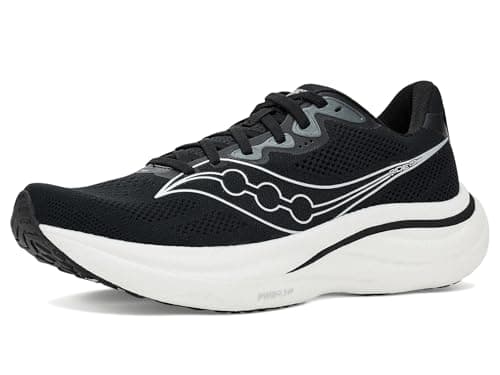
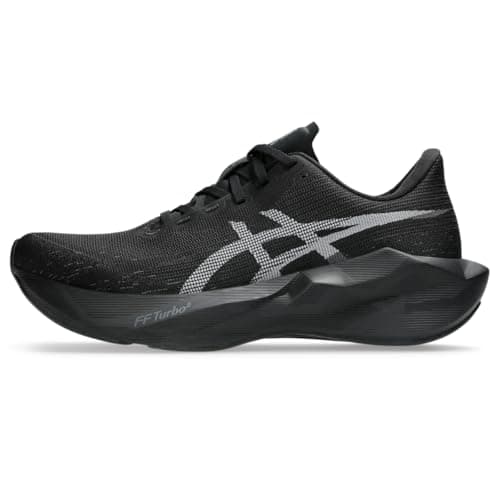
Our highest-scoring daily trainer: 8.74 oz on RTINGS' scale with a 41.9 mm heel and an FF TURBO-squared forefoot. One shoe that covers easy miles, long runs and the odd faster day.
Steadier and lower than the Novablast at 9.09 oz and 37.6 mm of heel, in Regular and Wide. The least surprising shoe here, which is what you want in a first pair.
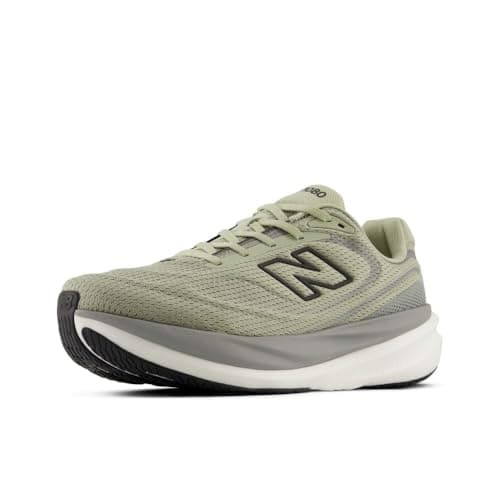
A 41.4 mm lab-measured heel and four widths to Extra Wide. RTINGS measured the drop at 11.7 mm against ASICS' listed 8 mm, so it rides higher at the heel than the box says.
Best traditional cushioned trainerC25K10KHALFMARATHON
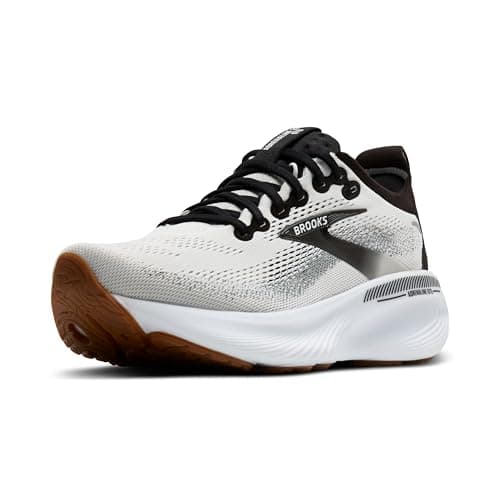
7.9 oz of full-length Lightstrike Pro with no plate. The shoe to buy once a plan hands you a weekly tempo session and you do not want to spend race-shoe money.
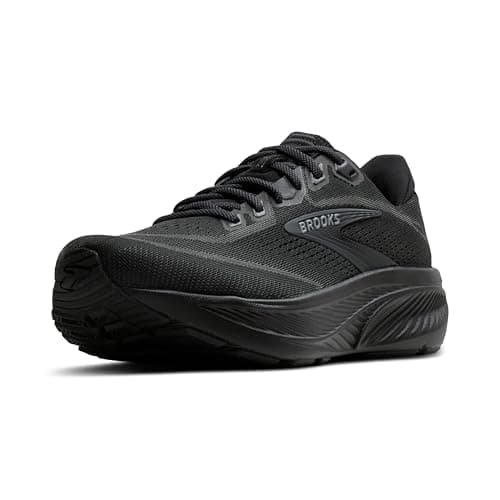
12.5 oz, a 12 mm drop, GuideRails, a broad base and widths to 4E, with a roomy upper Brooks lists as orthotic-friendly. The most structure Brooks makes.
#ad · Prices come live from Amazon, last checked October 11, 2026. Scores are ours, compiled from published specs and the maker's intended use. Product photos come from Amazon. Tap a row for the full write-up.
The best running shoe for most men is the ASICS Novablast 6: 8.74 oz on RTINGS' scale with a 41.9 mm heel, light enough for a faster day and tall enough for a long run, which is the rare combination that lets one pair cover a whole training week. If you are buying your first proper pair, the Saucony Ride 19 is the steadier, less surprising choice. If your feet are hard to fit, the Brooks Ghost 18 comes in four widths and is the shoe to start from.
Why this list is ordered by mileage, not by brand
A man running three 25-minute sessions on the NHS Couch to 5K plan and a man in the 20-mile week of Hal Higdon's Novice 1 Marathon are not shopping for the same shoe, even though generic "best running shoes for men" lists hand them the same five. Weekly mileage decides how much foam you need under you and how many pairs you should own. That is the whole organizing idea of this site, and it is set out in running shoes by pace and mileage.
Pick by your weekly mileage
Under 10 miles a week (Couch to 5K). Ride 19, Ghost 18 or Gel-Cumulus 28. One pair, nothing exotic, the right width. Our full beginner list is best running shoes for beginner men.
10–20 miles a week (5K to 10K). Novablast 6 or Ride 19. Higdon's Novice 10K peaks at a 5-mile long run, well inside one versatile shoe.
20–30 miles a week (half marathon). Novablast 6 for most runs, 1080 v15 for the long one Higdon takes to 10 miles. The Evo SL if your plan has a tempo day.
30–40 miles a week (marathon). Two pairs minimum: 1080 v15 or Gel-Cumulus 28 for long and easy, Novablast 6 or Mach 7 for everything else. See best marathon training shoes.
Any mileage, but you need support. Adrenaline GTS 25, or the Beast GTS 26 if you are a heavier runner or you wear orthotics.
Men's widths, as published
Most returns are width problems wearing a size costume. Here is every pick's published men's width range, sourced.
Shoe
Published men's widths
Source
Brooks Adrenaline GTS 25
Narrow (1B), Medium (1D), Wide (2E), Extra Wide (4E)
The long-run pair, the traditional cushioned pair, the light daily and the fast one.
The three numbers that matter
Weight. There is 3 oz between the Mach 7 at 7.49 oz and the Beast GTS 26 at 12.5 oz. That gap is the difference between a shoe that feels quick and a shoe that feels planted; neither is better in the abstract.
Heel stack. From 36.6 mm on the Ghost 18 to 41.9 mm on the Novablast 6. More foam protects long runs; less foam gives you more road feel and a steadier platform.
Measured drop, not listed drop. RTINGS measured 11.7 mm on the Gel-Cumulus 28 against ASICS' listed 8 mm, and 10.8 mm on the Ghost 18. If drop affects your calves or Achilles, read the lab figure. Our heel drop and stack height guide explains why the two numbers disagree.
Do you need a support shoe?
Probably less often than a shop will tell you. The 2022 Cochrane review found weak evidence that matching shoe type to foot posture prevents injury, and Cleveland Clinic frames the decision around comfort. The practical test: run in a neutral shoe. If your ankle feels like it is collapsing inward late in a run, or a neutral shoe has repeatedly given you inner-shin pain, buy the Adrenaline GTS 25. If you are a heavier runner or you wear orthotics, start with the Beast GTS 26 and its 4E width. Our neutral vs stability guide works through it properly.
In detail
The picks, in full
1
Best overall for men
ASICS Novablast 6
C25K10KHALFMARATHON
8.5 /10
Our highest-scoring daily trainer: 8.74 oz on RTINGS' scale with a 41.9 mm heel and an FF TURBO-squared forefoot. One shoe that covers easy miles, long runs and the odd faster day.
#ad · Price as of October 11, 2026 · Affiliate disclosure for the link to ASICS Novablast 6
2
Best first proper pair
Saucony Ride 19
C25K10KHALFMARATHON
8.3 /10
Steadier and lower than the Novablast at 9.09 oz and 37.6 mm of heel, in Regular and Wide. The least surprising shoe here, which is what you want in a first pair.
+Brooks pitches it both as a daily driver in a training rotation and as a safe go-to for runners just starting out, and lists walking as a use
+Four widths in each gender, from Narrow to Extra Wide (4E men's, 2E women's)
+GuideRails support system, which Brooks says helps keep excess movement in check, paired with more nitrogen-infused cushioning in the heel and forefoot than before
+RunRepeat's lab measured a 36.1 mm heel and 25.9 mm forefoot: solid cushion without a towering stack
What it doesn't
−10.6 oz for the men's shoe is heavy for faster running
−A 10 mm drop is on the high side if you prefer a flatter, lower-drop shoe
−Brooks rates the cushion 'Balanced'; runners who want Brooks' 'Plush' tier with GuideRails need the Glycerin GTS 23
Skip this if…
…you want a light, bouncy shoe for tempo days; this is a steady 10.6 oz support trainer built for everyday miles
#ad · Price as of October 11, 2026 · Affiliate disclosure for the link to Brooks Adrenaline GTS 25
6
Best traditional cushioned trainer
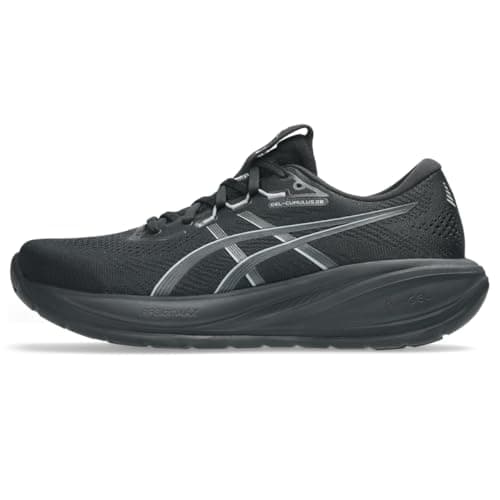
ASICS Gel-Cumulus 28
C25K10KHALFMARATHON
8.0 /10
A 41.4 mm lab-measured heel and four widths to Extra Wide. RTINGS measured the drop at 11.7 mm against ASICS' listed 8 mm, so it rides higher at the heel than the box says.
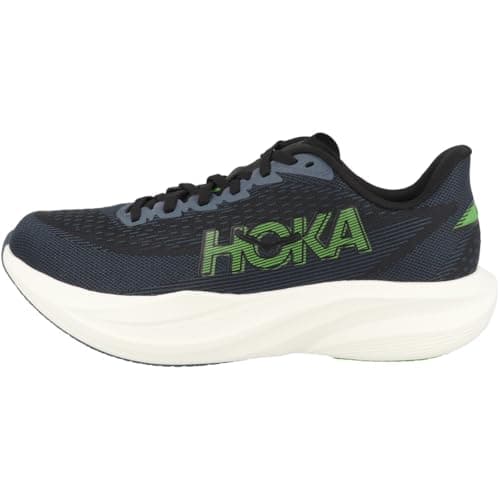
#ad · Price as of October 11, 2026 · Sold on Amazon through third-party sellers · Affiliate disclosure for the link to HOKA Mach 7
8
Best fast shoe for training
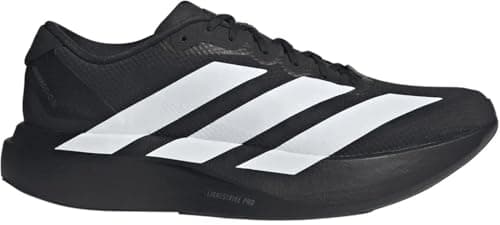
adidas Adizero Evo SL
C25K10KHALFMARATHON
8.4 /10
7.9 oz of full-length Lightstrike Pro with no plate. The shoe to buy once a plan hands you a weekly tempo session and you do not want to spend race-shoe money.
#ad · Price as of October 11, 2026 · Affiliate disclosure for the link to adidas Adizero Evo SL
9
Best maximum-support shoe
Brooks Beast GTS 26
C25K10KHALFMARATHON
7.5 /10
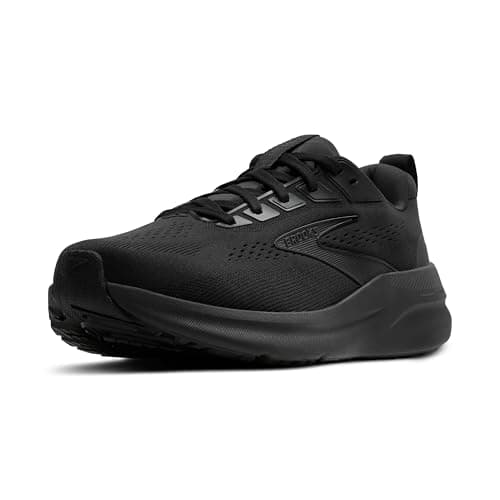
12.5 oz, a 12 mm drop, GuideRails, a broad base and widths to 4E, with a roomy upper Brooks lists as orthotic-friendly. The most structure Brooks makes.
Buying wide when you need longer. A shoe that pinches at the ball of the foot needs a 2E; a shoe that bruises your toenails needs another half size. They are different problems.
Running every mile in one pair at 30+ miles a week. The AAOS puts a shoe's life at about 500 miles. Two pairs split the load; see our rotation guide.
Replacing a shoe by the calendar. Replace on wear and feel, not on months — when to replace running shoes lists the signs.
How we chose these
Researched, compared, scored for your level
We start from what a published training plan actually asks of a runner at your level, compare every model's published specs (stack height, drop, weight, plate, stability features, widths) against that job, and score each pick on a public rubric. Each spec links to where it came from, so you can shortlist in minutes and buy with the numbers in front of you.
The ASICS Novablast 6 for most men: 8.74 oz with a 41.9 mm lab-measured heel, which is light enough for faster days and tall enough for long runs. The Saucony Ride 19 is the steadier first pair, and the Brooks Ghost 18 is the one to buy if you need a Narrow or an Extra Wide.
Which men's running shoes come in 4E extra wide?+
On this page: the Brooks Adrenaline GTS 25 (4E), the Brooks Beast GTS 26 (4E) and the New Balance 1080 v15 (4E). The Brooks Ghost 18 and ASICS Gel-Cumulus 28 both go to Extra Wide as well. Our wide-feet roundup covers the category in full.
How many running shoes should a man own?+
One pair under about 20 miles a week. Above that, two: a cushioned pair for long and easy runs and a lighter pair for faster days. The AAOS puts a shoe's useful life at roughly 500 miles, and rotating two pairs spreads that load.
Do men need a different running shoe from women?+
Not a different category of shoe — a different size run. Men's widths run B (narrow), D (medium), 2E (wide) and 4E (extra wide), where a women's D is already a wide. Buy from the size run that fits your foot.
Is a heavier runner better off in a max-cushion shoe?+
Often, but width and platform matter more than stack height. The Beast GTS 26 at 12.5 oz with a broad base and a 4E option is the most structured option here; our heavy-runner roundup goes into the trade-offs.
Every figure above is traceable. Specs come from the maker's own pages or the named reviewer's published measurements (linked above); level definitions come from published training plans; prices come from Amazon's own API and carry the date they were checked, so you buy on a current number. Read the full method.