Skip to content
Pace & Pavement

Shoes · Our picks

Best Running Shoes for Bunions

A bunion needs room at the front of the shoe and a seam that does not sit on top of it. That rules out most racing shoes and narrows the field fast. Seven shoes with genuinely wide toe boxes or real width options, and what orthopaedic guidance actually says.

Written for:
By Mike M.Updated How we pick
#ad

We earn a commission if you buy through our links, at no extra cost to you. It never decides the ranking — the method is published · Affiliate disclosure

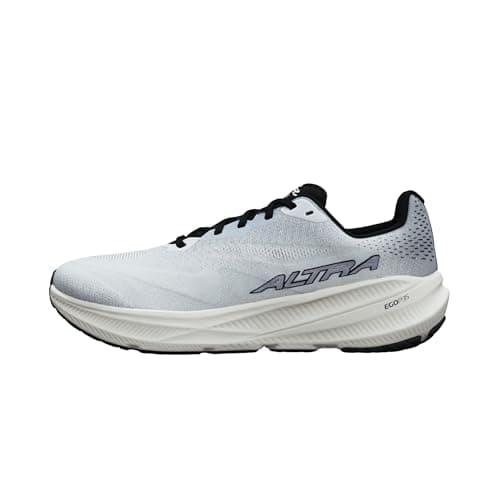
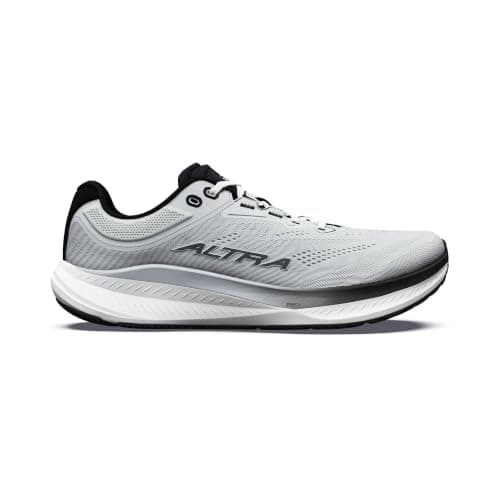
Altra Torin 9

Our top pick · Best for Bunions

Altra Torin 9

Best toe-box shape

9.0 /10

Altra's FootShape toe box is the widest front end in mainstream running, which is exactly the dimension a bunion needs.

$140.93$160.00−12%See the Torin 9

#ad · Price as of November 13, 2026 · Affiliate disclosure for the link to Altra Torin 9

The short answer

Quick picks

#ProductBest forScorePrice
1
Altra Torin 9
Altra Torin 9

Altra's FootShape toe box is the widest front end in mainstream running, which is exactly the dimension a bunion needs. Good to know: a zero-drop platform is a real adjustment if you are coming from an 8-10 mm shoe, so transition slowly.

Best toe-box shape9.0 /10$140.93Amazon
2
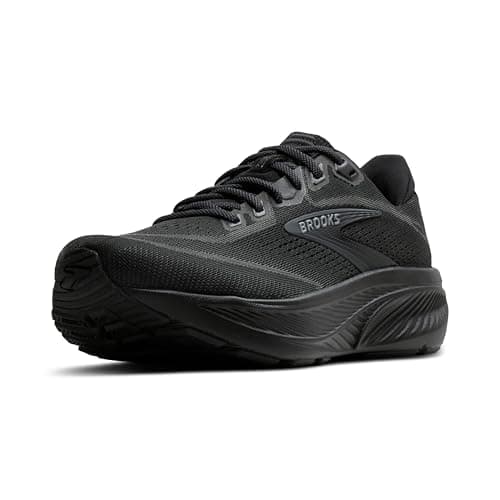
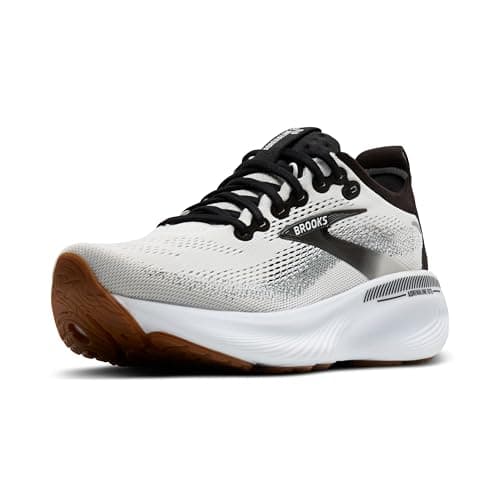
Brooks Ghost 18
Brooks Ghost 18

A soft, forgiving engineered upper on a neutral daily trainer, available Narrow through Extra Wide in both men's and women's. Good to know: the toe box is roomy rather than foot-shaped, so a severe bunion may still want the Altra.

Best all-rounder with four widths9.3 /10$125.20Amazon
3
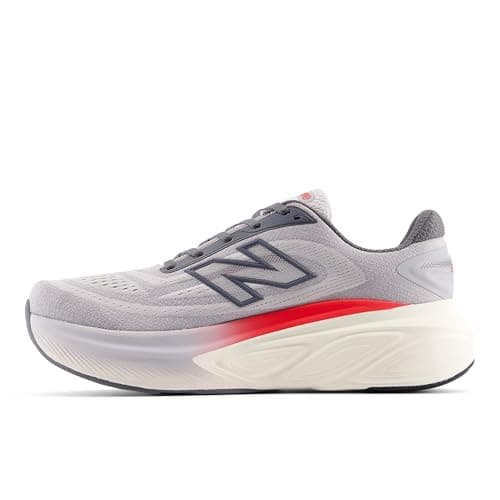
New Balance Fresh Foam X More v6

A very high stack with a wide platform and a soft knit upper, in multiple widths. Good to know: it is a lot of shoe, and the tall stack takes getting used to.

Most cushioned with room9.1 /10$115.15Amazon
4
Altra Experience Flow 3

The same foot-shaped front end with a touch of drop rather than zero, which makes the transition from a conventional shoe far easier. Good to know: less cushioning than the Torin.

Altra with a small drop8.9 /10Check price on Amazon
5
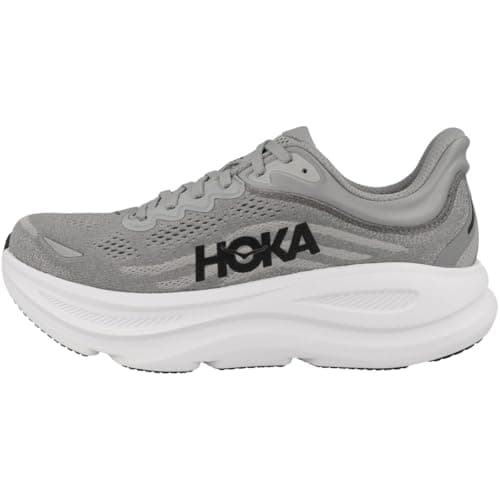
HOKA Bondi 9
HOKA Bondi 9

Max cushioning with a soft, stretchy upper and an available wide, so there is little structure pressing on the joint. Good to know: HOKA's standard width is narrow through the midfoot for some runners.

Most forgiving upper9.2 /10$154.60Amazon
6
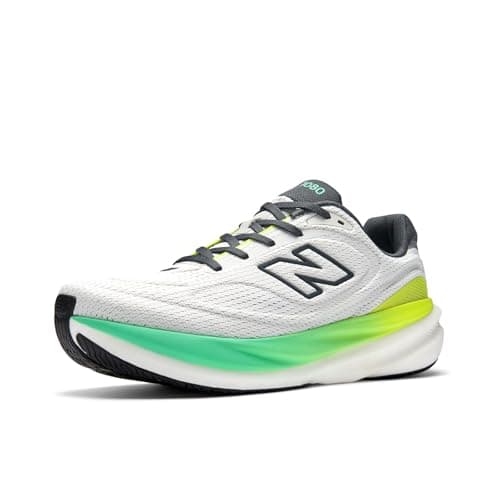
New Balance 1080 v15

A seamless knit upper with almost no overlays near the forefoot, in several widths. Good to know: the knit is soft but not endlessly stretchy, so size the width properly.

Best knit upper9.4 /10$169.95Amazon
7
Brooks Adrenaline GTS 25

The same four-width run as the Ghost with GuideRails support, for runners who want guidance and room at once. Good to know: heavier at 10.6 oz, and the structure is wasted if you do not want it.

If you need support as well9.4 /10$124.95Amazon

#ad · Prices come live from Amazon, last checked November 13, 2026. Scores are ours, compiled from published specs and the maker's intended use. Product photos come from Amazon. Tap a row for the full write-up.

The short answer

The best running shoe for bunions is the Altra Torin 9, because its FootShape toe box is genuinely foot-shaped rather than merely wide — the front of the shoe is widest at the toes, which is where a bunion needs space. If a zero-drop platform does not appeal, the Brooks Ghost 18 is the safest conventional answer: a soft upper and four widths in both men's and women's.

The thing to optimise for is not cushioning. It is the shape and softness of the front of the shoe, and whether anything structural sits across the joint.

What orthopaedic guidance says

The American Academy of Orthopaedic Surgeons is clear on three points worth repeating exactly:

  • Footwear helps with pain, not with the bunion. Non-surgical care “cannot actually reverse a bunion,” but “it can help reduce pain and keep the bunion from getting worse.”
  • The shoe to look for has “a wide or open toe box that does not squeeze your toes,” and more generally “wide insteps, broad toe boxes, soft soles, and plenty of stability.”
  • Shoes are a contributing factor, not the cause. AAOS notes that up to 70% of people who develop bunions have a family history, and that genetics play a large role — alongside poorly fitting shoes, especially narrow, pointed ones.

So: a better shoe is worth buying because it hurts less, and it is not a cure. Anyone selling you a running shoe as a bunion treatment is overselling it.

What we ranked on

  1. Toe box shape. Not just “wide” — whether the widest part of the shoe is at the toes, where your foot is widest, or further back where shoe lasts traditionally put it.
  2. Upper softness and overlays. A seam, a plastic overlay or a stiff logo sitting across the joint is what actually causes the pain on a run.
  3. Published width options, because room at the front is worth little if the shoe is tight across the ball of the foot.
  4. Cushioning, last. It matters, but it is not what makes a bunion hurt.

Toe box shape beats width alone

This is the distinction that most pages on this topic miss. A conventional running shoe is widest at the ball of the foot and tapers toward a centred point at the toe — which pushes the big toe inward, exactly the direction a bunion already goes. Altra's FootShape last keeps the widest point at the toes instead.

A 4E in a conventional last and a standard width in a foot-shaped last are solving different problems. If your issue is the whole forefoot, buy width; if it is specifically the big-toe joint, buy shape. Many runners need both, which is why the Altras lead this page and the four-width Brooks sit right behind them.

Best running shoes with a wide toe box goes deeper on shape, and what shoe width letters mean decodes 2E and 4E.

What to avoid

  • Racing shoes. Carbon-plated super shoes are built narrow and snug on purpose. They are the worst category here, and no amount of cushioning compensates.
  • Shoes with structural overlays across the forefoot. Run a finger around the inside of the shoe at the joint; if you can feel a seam or a welded overlay, it will find the bunion.
  • Sizing up for room. A longer shoe gives you a sloppy heel and puts the flex point in the wrong place. Buy the width or the shape instead.
  • Anything that needs “breaking in.” A running shoe should be comfortable in the store. See how to break in new running shoes for what that actually means.

In detail

The picks, in full

1
Altra Torin 9

Best toe-box shape

Altra Torin 9

9.0 /10

Altra's FootShape toe box is the widest front end in mainstream running, which is exactly the dimension a bunion needs. Good to know: a zero-drop platform is a real adjustment if you are coming from an 8-10 mm shoe, so transition slowly.

Scored on

  • Level fit30%
  • Mileage protection25%
  • Stability & fit range15%
  • Pace responsiveness15%
  • Rotation versatility15%

Why we picked it

  • Standard FootShape fit: room for your toes with a secure midfoot, per Altra
  • A Wide width on top of the roomy toe box, in men's and women's
  • Vibram XS DURA outsole that Altra says is 8.5% grippier than the Torin 8's
  • Carries the APMA Seal of Acceptance, per Altra

Good to know

Choose something else if you want a traditional heel-to-toe drop or built-in stability; the Torin 9 is zero drop and neutral.

$140.93$160.00−12%See the Torin 9

#ad · Price as of November 13, 2026 · Affiliate disclosure for the link to Altra Torin 9

2
Brooks Ghost 18

Best all-rounder with four widths

Brooks Ghost 18

9.3 /10

A soft, forgiving engineered upper on a neutral daily trainer, available Narrow through Extra Wide in both men's and women's. Good to know: the toe box is roomy rather than foot-shaped, so a severe bunion may still want the Altra.

Scored on

  • Level fit30%
  • Mileage protection25%
  • Stability & fit range15%
  • Pace responsiveness15%
  • Rotation versatility15%

Why we picked it

  • Four widths (Narrow, Medium, Wide, Extra Wide): one of the broadest fit ranges in this group
  • A 10 mm listed drop keeps a traditional heel-to-toe geometry, familiar to runners coming from everyday sneakers
  • Running Warehouse pitches it for daily mileage, long steady efforts, recovery runs and walks
  • No plate: a conventional build with nothing unusual to adapt to

Good to know

Choose something else if you want a light, bouncy shoe for tempo work, or you prefer a low-drop (under 8 mm) geometry.

$125.20$149.95−17%See the Ghost 18

#ad · Price as of November 13, 2026 · Affiliate disclosure for the link to Brooks Ghost 18

3
New Balance Fresh Foam X More v6

Most cushioned with room

New Balance Fresh Foam X More v6

9.1 /10

A very high stack with a wide platform and a soft knit upper, in multiple widths. Good to know: it is a lot of shoe, and the tall stack takes getting used to.

Scored on

  • Level fit30%
  • Mileage protection25%
  • Stability & fit range15%
  • Pace responsiveness15%
  • Rotation versatility15%

Why we picked it

  • RunRepeat notes its 38.5 mm lab-measured forefoot is taller than the heel of most shoes it has tested
  • Four widths, narrow through extra wide
  • Running Warehouse positions it for recovery runs and long runs at easy pace
  • Lowest listed drop in this group (4 mm) for runners who prefer a flatter platform

Good to know

Choose something else if you want a firm, stable ride or plan to run faster than easy pace in it.

$115.15$159.99−28%See the Fresh Foam X More v6

#ad · Price as of November 13, 2026 · Affiliate disclosure for the link to New Balance Fresh Foam X More v6

4
Altra Experience Flow 3

Altra with a small drop

Altra Experience Flow 3

8.9 /10

The same foot-shaped front end with a touch of drop rather than zero, which makes the transition from a conventional shoe far easier. Good to know: less cushioning than the Torin.

Scored on

  • Level fit30%
  • Mileage protection25%
  • Stability & fit range15%
  • Pace responsiveness15%
  • Rotation versatility15%

Why we picked it

  • A 4 mm drop is a middle ground between zero-drop Altras and conventional 8-10 mm shoes
  • Altra's rocker shape is designed for an efficient toe-off
  • 9 oz (men's) is lighter than the Torin 9 and Torin ST
  • Roomy FootShape toe box with a secure midfoot

Good to know

Choose something else if you need a Wide width or built-in support; the Torin 9 offers Wide and the Torin ST adds GuideRail guidance.

See today's price on the Experience Flow 3

#ad · Price as of November 13, 2026 · Affiliate disclosure for the link to Altra Experience Flow 3

5
HOKA Bondi 9

Most forgiving upper

HOKA Bondi 9

9.2 /10

Max cushioning with a soft, stretchy upper and an available wide, so there is little structure pressing on the joint. Good to know: HOKA's standard width is narrow through the midfoot for some runners.

Scored on

  • Level fit30%
  • Mileage protection25%
  • Stability & fit range15%
  • Pace responsiveness15%
  • Rotation versatility15%

Why we picked it

  • Four widths, narrow through extra wide
  • New supercritical EVA midsole for version 9, per Running Warehouse
  • Moderate rocker rather than an aggressive one, aimed at smooth, steady easy miles
  • RunRepeat's spec table lists jogging, walking and all-day wear among its uses, a fit for run/walk plans

Good to know

Choose something else if you want a shoe you can also use for strides or tempo work; the Bondi is built for slow, protected miles.

$154.60See the Bondi 9

#ad · Price as of November 13, 2026 · Sold on Amazon through third-party sellers · Affiliate disclosure for the link to HOKA Bondi 9

6
New Balance 1080 v15

Best knit upper

New Balance 1080 v15

9.4 /10

A seamless knit upper with almost no overlays near the forefoot, in several widths. Good to know: the knit is soft but not endlessly stretchy, so size the width properly.

Scored on

  • Level fit30%
  • Mileage protection25%
  • Stability & fit range15%
  • Pace responsiveness15%
  • Rotation versatility15%

Why we picked it

  • All-new Infinion midsole, a supercritical TPEE and EVA blend
  • The widest width range here: men's B to 4E, women's 2A to 2E
  • 9.1 oz (men's size 9) for a 37 mm lab-measured heel
  • A 6 mm drop for runners who prefer a flatter geometry than the Ghost or Pegasus

Good to know

Choose something else if you want a firmer, more stable platform (the 880 v15 is the steadier New Balance) or a true stability shoe.

$169.95See the 1080 v15

#ad · Price as of November 13, 2026 · Affiliate disclosure for the link to New Balance 1080 v15

7
Brooks Adrenaline GTS 25

If you need support as well

Brooks Adrenaline GTS 25

9.4 /10

The same four-width run as the Ghost with GuideRails support, for runners who want guidance and room at once. Good to know: heavier at 10.6 oz, and the structure is wasted if you do not want it.

Scored on

  • Level fit30%
  • Mileage protection25%
  • Stability & fit range15%
  • Pace responsiveness15%
  • Rotation versatility15%

Why we picked it

  • Brooks pitches it both as a daily driver in a training rotation and as a safe go-to for runners just starting out, and lists walking as a use
  • Four widths in each gender, from Narrow to Extra Wide (4E men's, 2E women's)
  • GuideRails support system, which Brooks says helps keep excess movement in check, paired with more nitrogen-infused cushioning in the heel and forefoot than before
  • RunRepeat's lab measured a 36.1 mm heel and 25.9 mm forefoot: solid cushion without a towering stack

Good to know

Choose something else if you want a light, bouncy shoe for tempo days; this is a steady 10.6 oz support trainer built for everyday miles.

$124.95$154.95−19%See the Adrenaline GTS 25

#ad · Price as of November 13, 2026 · Affiliate disclosure for the link to Brooks Adrenaline GTS 25

The short answer, again

Our recommendation

If you only take one thing from this page, take the first of these two.

Buy this one

Altra Torin 9

Best toe-box shape

9.0 /10

Altra's FootShape toe box is the widest front end in mainstream running, which is exactly the dimension a bunion needs.

$140.93Amazon

#ad · Price as of November 13, 2026 · Affiliate disclosure for the link to Altra Torin 9

The runner-up

Brooks Ghost 18

Best all-rounder with four widths

9.3 /10

A soft, forgiving engineered upper on a neutral daily trainer, available Narrow through Extra Wide in both men's and women's.

$125.20Amazon

#ad · Price as of November 13, 2026 · Affiliate disclosure for the link to Brooks Ghost 18

How we chose these

Researched, compared, scored for your level

We start from what a published training plan actually asks of a runner at your level, compare every model's published specs (stack height, drop, weight, plate, stability features, widths) against that job, and score each pick on a public rubric. Each spec links to where it came from, so you can shortlist in minutes and buy with the numbers in front of you.

Scores are our editorial judgments from that documented research, and rankings are earned on the rubric alone — placement is never for sale. The rubric and weights are on the How We Pick page.

Questions

Frequently asked

What are the best running shoes for bunions?
The Altra Torin 9, because its FootShape toe box is widest at the toes rather than at the ball of the foot — which is the dimension a bunion needs. If zero drop does not suit you, the Brooks Ghost 18 is the best conventional option, with a soft upper and four widths in both men's and women's.
Can running shoes fix a bunion?
No. The American Academy of Orthopaedic Surgeons states that non-surgical care “cannot actually reverse a bunion,” but that it “can help reduce pain and keep the bunion from getting worse.” A well-shaped shoe is worth buying for comfort, not as a cure.
Should I buy wide shoes or wide toe box shoes for bunions?
They solve different problems. A wide (2E, 4E) shoe gives more room across the whole forefoot; a foot-shaped toe box keeps the widest point at the toes so the big toe is not pushed inward. If your discomfort is specifically at the big-toe joint, shape matters more. Many runners want both.
Do running shoes cause bunions?
They are one contributing factor rather than the cause. AAOS lists poorly fitting shoes — especially narrow, pointed ones — alongside heredity and inflammatory conditions, and notes that up to 70% of people who develop bunions have a family history.
Can I keep running with a bunion?
Many people do, in shoes that do not press on the joint. If the joint hurts at rest, is red or swollen, or the pain is worsening, that is a reason to see a doctor or podiatrist rather than to buy another pair of shoes.

Keep going

Receipts

Sources

Every figure above is traceable. Specs come from the maker's own pages or the named reviewer's published measurements (linked above); level definitions come from published training plans; prices come from Amazon's own API and carry the date they were checked, so you buy on a current number. Read the full method.