ASICS Gel-Kayano 33 vs Brooks Adrenaline GTS 25: The Support Is the Same, the Ride Is Not
These are the two default support shoes in almost every running store in America, and runners agonize over which one has more support. One lab measured both: stability 8.4 vs 8.2, forefoot width 9.3 vs 9.4, arch width 9.8 vs 9.9. The support is a coin flip. What actually separates them is cushioning, energy return and a 2.5 mm difference in measured drop.
7.7 cushioning and 3.8 energy return in RTINGS' lab, with a 41.5 mm measured heel and 7.3 for long runs. The cons: 295.9 g made it the heavier shoe on the lab's scale, a measured 11.1 mm drop against a listed 8, and no women's extra wide.
8.8 for external shape, 9.8 for forefoot firmness and four widths in both men's and women's, with a 9.6 true-to-size score. The cons: 6.2 cushioning and 2.4 energy return (1.8 at the heel), 4.7 forefoot long-run cushioning and a measured 13.6 mm drop.
ASICS' lighter support trainer, listed at 9.1 oz men's against the Kayano's 10.4. The cons: less foam underfoot and a shorter width run than the Kayano's 4E.
#ad · Price as of November 2, 2026 · Affiliate disclosure for the link to Brooks Glycerin GTS 23
The short answer
If you walk into a running store in the United States and say the word “support,” you will be handed one of these two shoes. The Gel-Kayano and the Adrenaline GTS have been the default stability pick for two decades, they sit at the same price, they live on the same shelf, and the question runners actually ask about them — which one gives me more support? — turns out to have a boring answer. One lab measured both. Stability: 8.4 for the Kayano, 8.2 for the Adrenaline. That is noise.
So the decision moves somewhere more useful: how the two shoes ride. There the gap is real and it is one-sided. The Kayano is softer, bouncier and better for long runs. The Adrenaline is firmer, flatter through the forefoot and, on the lab's own scale, the shoe you would pick if you wanted a support trainer to feel planted rather than lively.
The one place the Adrenaline wins outright is sizing, and for some runners that outranks everything else. Brooks publishes four widths for both genders. ASICS publishes three for men and three for women, with no women's extra wide at all. If you need a 2E women's, this comparison is already over.
The same-lab numbers
Comparing figures from two different reviewers is mostly comparing their equipment. Both of these shoes went through RTINGS, which means one set of scales, one durometer and one scoring scheme, so the gaps below are gaps between the shoes rather than between two laboratories. Men's US 9 in both cases.
RTINGS measurement or score
Gel-Kayano 33
Adrenaline GTS 25
Measured weight
295.9 g (10.44 oz)
289.1 g (10.20 oz)
Measured heel stack
41.5 mm
40.9 mm
Measured heel-to-toe drop
11.1 mm
13.6 mm
Stability
8.4
8.2
Cushioning (overall)
7.7
6.2
Heel cushioning
7.8
7.2
Forefoot cushioning
7.6
5.2
Forefoot long-run cushioning
7.1
4.7
Energy return
3.8
2.4
Forefoot fit: width
9.3
9.4
Forefoot fit: height
6.6
6.8
Arch fit: width
9.8
9.9
Daily training
7.7
7.1
Long run
7.3
6.1
Half / full marathon racing
6.4
5.4
5K / 10K racing
6.0
5.9
Read the table as three findings. The support scores are tied. The fit scores are tied — 0.1 apart on forefoot width, 0.2 on forefoot height, 0.1 on arch width, which is as close as two different shoes get. And the ride scores are not close at all: 1.5 apart on cushioning, 1.4 on energy return and 2.4 on forefoot long-run cushioning.
The support is a coin flip
These shoes get to their 8.4 and 8.2 by completely different routes, which is worth understanding even though the totals match.
The Adrenaline uses GuideRails, raised foam walls either side of the heel that Brooks describes as keeping excess movement in check. RTINGS scored its external shape 8.8 and its forefoot firmness 9.8 — the second of those is the highest single number either shoe produced, and it tells you how the Adrenaline feels steady: the front of the shoe barely compresses.
The Kayano uses ASICS' FluidSupport system under a two-layer midsole, FF BLAST MAX over FF BLAST PLUS, which Running Warehouse describes as gently guiding the footstrike rather than blocking it. It gets to 8.4 while still scoring 7.6 for forefoot cushioning, which is the harder trick.
The practical translation: if “support” to you means firm and planted, the Adrenaline delivers that feeling more literally. If it means steady without being hard, the Kayano does. There is no version of this where one of them is meaningfully more supportive than the other, and if a shop tells you otherwise, ask what they are measuring. Our neutral vs stability running shoes page covers the bigger question of whether you need either.
Cushioning and energy return: 7.7 vs 6.2
This is the section that decides the page. Same lab, same scale, two shoes within 0.6 mm of each other on measured heel stack — and a 1.5-point gap in cushioning.
The forefoot is where it really shows. The Kayano scored 7.6 for forefoot cushioning and 7.1 for forefoot long-run cushioning. The Adrenaline scored 5.2 and 4.7. That second pair of numbers is RTINGS' estimate of how the forefoot holds up once the shoe has been running a while, and a 2.4-point gap at mile 12 of a long run is not a subtlety — it is the difference between a shoe you forget about and one you notice.
Energy return follows the same shape: 3.8 against 2.4. Neither of these is a bouncy shoe, and nobody should buy a 10-ounce support trainer expecting one. But the Adrenaline's breakdown is unusually low — 2.6 for forefoot compression and 1.8 at the heel, which is close to the floor of the scale. Brooks rates the Adrenaline's cushion “Balanced” rather than “Plush,” and the lab agrees with Brooks.
One honest counterpoint for the Adrenaline: it was the lighter shoe on the lab's scale, 289.1 g against 295.9 g, even though Brooks lists it heavier than ASICS lists the Kayano. That is a genuine point in its favor and the only place the Kayano's extra foam costs it anything measurable.
Drop: 11.1 mm vs 13.6 mm measured
Both shoes are sold on a drop figure that the lab did not reproduce. ASICS lists the Kayano 33 at 8 mm; RTINGS measured 11.1 mm. Brooks lists the Adrenaline GTS 25 at 10 mm; RTINGS measured 13.6 mm.
Two things to take from that. First, in both cases the measured drop ran about 3 mm higher than the listed one, so the direction of the error is consistent — which is a known pattern across the industry and the reason our heel drop and stack height explained page tells you to treat brand drop numbers as a category, not a measurement. Second, and more usefully, the gap between the two shoes survives either way you read it: listed, the Adrenaline is 2 mm steeper; measured, it is 2.5 mm steeper. The Adrenaline is the higher-drop shoe of the pair, and at 13.6 mm measured it is one of the steepest trainers on this site.
If you are coming off a low-drop shoe, or you know your calves complain when a shoe tips you forward, that 2.5 mm points at the Kayano. If you are a clear heel striker who likes the feeling of the heel being well under you, it points the other way.
Figures as published by the maker or the named reviewer; each value links to its source. A dash means the figure isn't in our cited sources.
These are the brands' and retailers' published figures, which is a different thing from the lab column above. We print both rather than choosing whichever reads better for the shoe we prefer.
Fit and widths: the real decider
In the lab the two shoes fit almost identically: forefoot width 9.3 vs 9.4, forefoot height 6.6 vs 6.8, arch width 9.8 vs 9.9. The Adrenaline also scored 9.6 for true-to-size and a perfect 10 for length fit, so order your normal size in either.
What is not identical is how many shapes you can buy that fit in:
Widths published
Gel-Kayano 33
Adrenaline GTS 25
Men's
D, 2E, 4E
Narrow (1B), Medium (1D), Wide (2E), Extra Wide (4E)
Women's
2A, B, D
Narrow (2A), Medium (1B), Wide (1D), Extra Wide (2E)
Brooks offers four widths in each gender; ASICS offers three. The specific gap that matters is the women's extra wide: Brooks publishes a 2E, and the Kayano's women's run stops at D. For a woman who needs an extra wide support shoe, the Adrenaline is not the better choice on this page — it is the only choice on this page. Our best running shoes for wide feet page covers the wider field.
On the other side, ASICS publishes a men's D through 4E too, so a wide-footed man is well served either way, and the Kayano's women's 2A gives a narrow-footed woman an option the Adrenaline matches at 2A as well. The asymmetry is at the wide end of the women's run and nowhere else.
When two labs disagree
Worth flagging because it affects how you should read any shoe review, including this one. RTINGS measured the Adrenaline GTS 25's heel stack at 40.9 mm. RunRepeat, measuring its own sample of the same shoe, got 36.1 mm. That is a 4.8 mm disagreement between two labs that both cut shoes open for a living.
We do not know which is right and we are not going to pretend to. What it means in practice is simple: use lab figures to compare two shoes measured by the same lab, which is exactly what the table at the top of this page does, and treat any single absolute number — from a brand or a lab — as approximate. The comparison between 7.7 and 6.2 cushioning holds because one lab produced both. A 41-versus-36 mm argument about one shoe does not.
Level by level
This site picks shoes by pace and weekly mileage, so here is how the pair sorts by where you actually are.
Couch to 5K. The NHS Couch to 5K plan is nine weeks of run/walk intervals three times a week, and either shoe handles that easily. Pick on fit in the store, not on the numbers above — at 20 to 30 minutes per session, a 1.5-point cushioning gap is not something you will feel. Brooks explicitly pitches the Adrenaline as a safe first shoe, and it lists walking as a use, which fits the run/walk weeks. Our how to choose running shoes guide covers the fitting itself.
First 10K. Still close to a coin flip. If you have added a faster session, the Kayano's 3.8 energy return is marginally the better place to do it, but neither shoe is a tempo tool and that is fine.
Half marathon. The Kayano. Running Hal Higdon's Novice 1 Half takes you to 10-mile long runs, and 7.1 against 4.7 for forefoot long-run cushioning is the number that starts mattering around mile eight.
Marathon. The Kayano, and not by a small margin: Higdon's Novice 1 Marathon is 18 weeks to a 20-mile long run, and the lab scored the two shoes 7.3 vs 6.1 for long runs and 6.4 vs 5.4 for half and full marathon use. Either way, a support trainer is the easy-mileage half of a rotation — our marathon training mileage and shoe rotation guide covers the rest of it.
The two support shoes to buy instead
If the pair above is nearly tied on everything you care about and the deciding factor is something neither shoe does, these two are the obvious next moves — both already in our registry and both reviewed on this site.
ASICS GT-2000 15. The Kayano's feel with less of it. Running Warehouse lists it at 9.1 oz men's against the Kayano's 10.4, which is the single biggest weight saving available inside ASICS' support line. You give up foam and some of the width run.
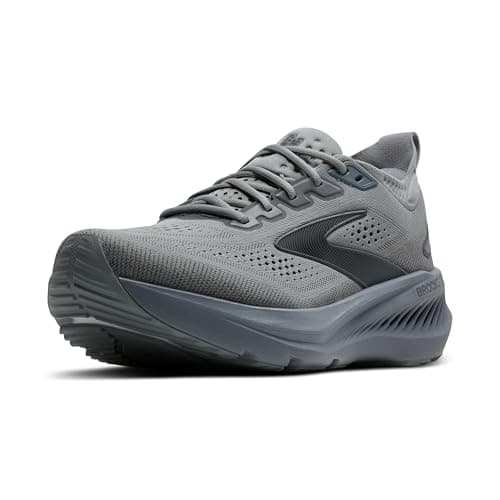
Brooks Glycerin GTS 23. GuideRails with Brooks' “Plush” cushion tier rather than “Balanced,” which is the direct answer to the Adrenaline's 6.2 cushioning score. It costs more and it is more shoe than a 30-minute easy run needs.
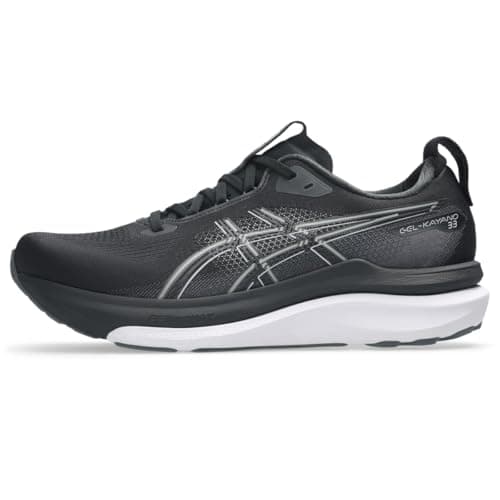
Buy the ASICS Gel-Kayano 33 if: you want the better ride for easy and long miles (7.7 cushioning, 3.8 energy return, 7.3 for long runs); you are building toward a half or a marathon; you prefer a lower-feeling drop and 11.1 mm measured beats 13.6 mm for you; you need a men's 4E or a women's narrow 2A.
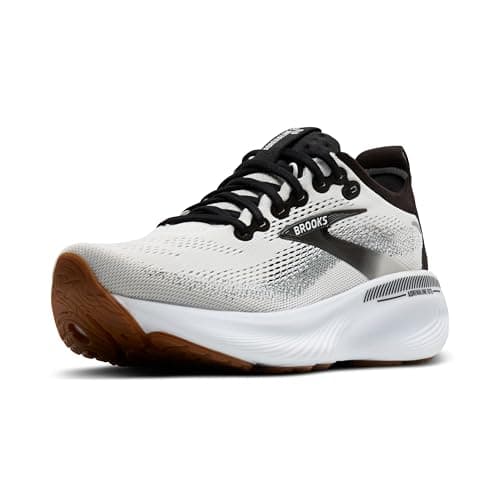
Buy the Brooks Adrenaline GTS 25 if: you need a women's extra wide (2E), which ASICS does not publish; you specifically want a firmer, more planted shoe and a 9.8 forefoot-firmness score reads as a feature; you are a clear heel striker who likes a steep drop; you have run in Adrenalines for years and nothing is wrong; or you want the lighter shoe on the lab's scale by 6.8 g.
In detail
The contenders, in full
The softer, livelier one
ASICS Gel-Kayano 33
C25K10KHALFMARATHON
8.2 /10
7.7 cushioning and 3.8 energy return in RTINGS' lab, with a 41.5 mm measured heel and 7.3 for long runs. The cons: 295.9 g made it the heavier shoe on the lab's scale, a measured 11.1 mm drop against a listed 8, and no women's extra wide.
#ad · Price as of November 2, 2026 · Affiliate disclosure for the link to ASICS Gel-Kayano 33
The firmer, flatter, four-width one
Brooks Adrenaline GTS 25
C25K10KHALFMARATHON
8.3 /10
8.8 for external shape, 9.8 for forefoot firmness and four widths in both men's and women's, with a 9.6 true-to-size score. The cons: 6.2 cushioning and 2.4 energy return (1.8 at the heel), 4.7 forefoot long-run cushioning and a measured 13.6 mm drop.
+Brooks pitches it both as a daily driver in a training rotation and as a safe go-to for runners just starting out, and lists walking as a use
+Four widths in each gender, from Narrow to Extra Wide (4E men's, 2E women's)
+GuideRails support system, which Brooks says helps keep excess movement in check, paired with more nitrogen-infused cushioning in the heel and forefoot than before
+RunRepeat's lab measured a 36.1 mm heel and 25.9 mm forefoot: solid cushion without a towering stack
What it doesn't
−10.6 oz for the men's shoe is heavy for faster running
−A 10 mm drop is on the high side if you prefer a flatter, lower-drop shoe
−Brooks rates the cushion 'Balanced'; runners who want Brooks' 'Plush' tier with GuideRails need the Glycerin GTS 23
Skip this if…
…you want a light, bouncy shoe for tempo days; this is a steady 10.6 oz support trainer built for everyday miles
#ad · Price as of November 2, 2026 · Affiliate disclosure for the link to Brooks Adrenaline GTS 25
If you want the Kayano's feel, lighter
ASICS GT-2000 15
C25K10KHALFMARATHON
8.4 /10
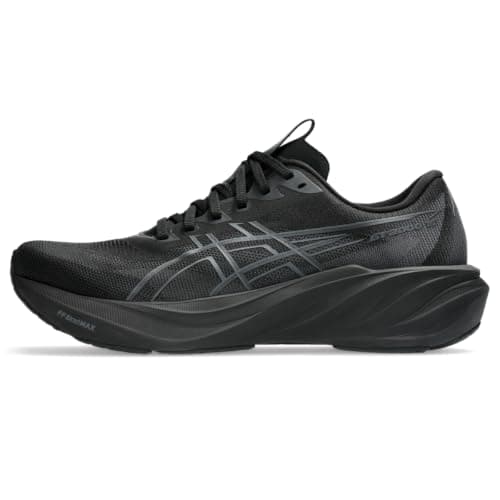
ASICS' lighter support trainer, listed at 9.1 oz men's against the Kayano's 10.4. The cons: less foam underfoot and a shorter width run than the Kayano's 4E.
#ad · Price as of November 2, 2026 · Affiliate disclosure for the link to Brooks Glycerin GTS 23
How we chose these
Researched, compared, scored for your level
We start from what a published training plan actually asks of a runner at your level, compare every model's published specs (stack height, drop, weight, plate, stability features, widths) against that job, and score each pick on a public rubric. Each spec links to where it came from, so you can shortlist in minutes and buy with the numbers in front of you.
Which has more support, the Kayano 33 or the Adrenaline GTS 25?+
Neither, meaningfully. RTINGS scored the Kayano 33 at 8.4 for stability and the Adrenaline GTS 25 at 8.2 — a 0.2 gap on a 10-point scale, from the same lab. They reach that score differently (GuideRails and a 9.8 forefoot-firmness score for Brooks; FluidSupport under a softer two-layer midsole for ASICS), but the amount of support is effectively the same. Choose on ride, fit and width instead.
Which is more cushioned?+
The Kayano 33, clearly. In RTINGS' lab it scored 7.7 overall for cushioning against the Adrenaline's 6.2, with the biggest gaps in the forefoot: 7.6 vs 5.2, and 7.1 vs 4.7 for forefoot long-run cushioning. Both shoes measured within 0.6 mm of each other on heel stack, so this is foam behavior rather than shoe height.
Which one is lighter?+
The Adrenaline GTS 25, on the lab's scale: 289.1 g against the Kayano's 295.9 g in men's US 9. That is the opposite of what the brands' own figures suggest (Brooks lists 10.6 oz, Running Warehouse lists the Kayano at 10.4 oz), which is a good reminder that listed weights come off different samples.
What is the real heel-to-toe drop on each?+
Measured, 11.1 mm for the Kayano 33 and 13.6 mm for the Adrenaline GTS 25. Listed, 8 mm and 10 mm. Both ran about 3 mm steeper than advertised in the same lab, so the gap between the two shoes holds either way: the Adrenaline is the higher-drop shoe by 2 to 2.5 mm.
Which comes in more widths?+
The Adrenaline GTS 25. Brooks publishes four widths for men (1B, 1D, 2E, 4E) and four for women (2A, 1B, 1D, 2E). ASICS publishes three for men (D, 2E, 4E) and three for women (2A, B, D). The decisive gap is the women's extra wide, which Brooks lists and ASICS does not.
Do I size the same in both?+
Yes, in all likelihood. The two shoes scored 9.3 and 9.4 for forefoot width, 6.6 and 6.8 for forefoot height and 9.8 and 9.9 for arch width in the same lab, and the Adrenaline took 9.6 for true-to-size with a perfect 10 for length fit. Order your usual size and let width, not length, be the variable.
Which is better for a marathon?+
The Kayano 33 for the training miles: 7.3 vs 6.1 for long runs and 6.4 vs 5.4 for half and full marathon use in RTINGS' scoring, driven by that forefoot long-run cushioning gap. Neither is a race shoe — both are 10-ounce support trainers, and both sit on the easy-mileage side of a rotation.
Why do RunRepeat and RTINGS report different stack heights for the Adrenaline?+
Because they measured different samples with different equipment: RTINGS got a 40.9 mm heel, RunRepeat got 36.1 mm. We cannot tell you which is correct, which is why every head-to-head number on this page comes from one lab measuring both shoes. Treat any single absolute stack figure as approximate.
Every figure above is traceable. Specs come from the maker's own pages or the named reviewer's published measurements (linked above); level definitions come from published training plans; prices come from Amazon's own API and carry the date they were checked, so you buy on a current number. Read the full method.