Outdoors, the thing you most need from a pair of headphones is the sound they let in. Open-ear designs leave the ear canal clear, so traffic, bikes and footsteps still reach you. Three Shokz pairs, compared on the specs the maker publishes.
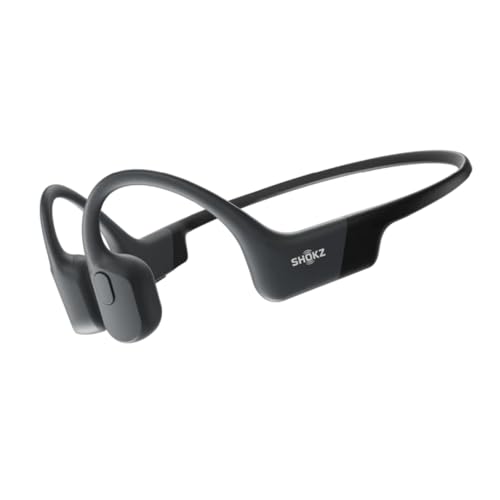
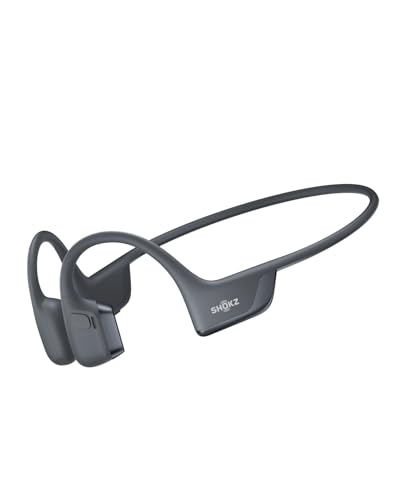
The flagship: 12 hours of battery on a one-hour charge, a titanium band in Standard and Mini, and a second air-conduction driver for the bass that bone conduction alone never had.
The flagship: 12 hours of battery on a one-hour charge, a titanium band in Standard and Mini, and a second air-conduction driver for the bass that bone conduction alone never had. Good to know: IP55, so the cheaper OpenRun is the more weatherproof pair.
Best overall for outdoor runningC25K10KHALFMARATHON
IP67 against the Pro 2's IP55, 26.4 g, Bluetooth 5.1 and $50 less. Good to know: 8 hours of battery rather than 12, and the older single-driver design.
Best value, and the most weatherproofC25K10KHALFMARATHON
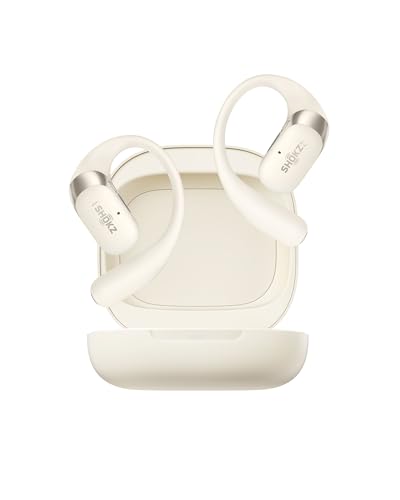
Clip-on earbuds that hook over the ear instead of wrapping behind your head, with 48 hours of total runtime via the case and MultiPoint pairing. Good to know: a clip holds less securely than a band when you are running hard.
Best if you don't want a headbandC25K10KHALFMARATHON
#ad · Prices come live from Amazon, last checked November 13, 2026. Scores are ours, compiled from published specs and the maker's intended use. Product photos come from Amazon. Tap a row for the full write-up.
The short answer
The best headphones for running outdoors are open-ear, and the Shokz OpenRun Pro 2 is the pair to buy. Nothing goes into your ear canal, so the car behind you, the bike coming up on your shoulder and the dog you did not see all still reach your ears at full volume. Shokz publishes 12 hours of battery on a one-hour charge, and the 2 adds an air-conduction bass driver alongside the bone-conduction one.
If the weather where you run is the problem, buy the Shokz OpenRun instead: it is rated IP67 against the Pro 2's IP55, weighs 26.4 g and costs $50 less. If a band across the back of your head is the reason you have never tried open-ear, the Shokz OpenFit 2 clips over the ear instead.
Why open-ear, outdoors
A road run is a listening task. You are reading traffic you cannot see, and almost all of that information arrives as sound. The Road Runners Club of America puts it plainly in its runner safety tips: “Always be aware of your surroundings and what is going on nearby,” “Run against traffic,” and, on music specifically, “Keep the volume low enough that you can maintain awareness of your surroundings.”
A sealed in-ear bud is built to do the opposite. It occludes the canal on purpose, because isolation is what makes a small driver sound big. That is the right design on a treadmill or a plane and the wrong one on a shoulder of road. An open-ear headphone takes the trade the other way: it gives up isolation and bass depth and gives you back the street.
Bone conduction vs air conduction
Both of the open-ear approaches on this page keep the canal open; they get the sound to you differently.
Bone conduction (OpenRun Pro 2, OpenRun) sends vibration through the cheekbone to the inner ear. Nothing covers the ear at all. Shokz calls the Pro 2's version 10th-gen DualPitch, which pairs a decoupled bone-conduction driver with an air-conduction one specifically to add the bass the category has always lacked. The OpenRun uses the earlier 8th-generation PremiumPitch 2.0+ with no second driver.
Air conduction (OpenFit 2) is a tiny speaker aimed into the ear from outside it. Shokz states plainly that the OpenFit 2 is not a bone-conduction headphone; its DirectPitch technology uses phase cancellation to cut how much of your music the person next to you hears. The upside is fuller, more conventional sound. The downside is that it is a clip rather than a band.
Neither is “more aware” than the other in any way the makers quantify. Choose on fit and battery, not on the technology name.
What actually matters outdoors
Water rating, and it is not close. This is the spec runners under-weight and regret. The OpenRun is IP67; the Pro 2 and the OpenFit 2 are both IP55. IP55 covers sweat and a light shower. IP67 covers a genuine soaking. If you run through winters, that is the whole decision.
Battery against your actual week. 12 hours (Pro 2) versus 8 (OpenRun) is the difference between charging fortnightly and charging weekly for most people. The OpenFit 2 is 11 hours on the buds but 48 with its case, which is the longest total here.
Whether the band fits. A wraparound band cannot be adjusted, which is why Shokz sells both the Pro 2 and the OpenRun in a Mini size. Measure before you guess. The OpenFit 2 sidesteps this entirely.
Weight, last. 30.3 g, 26.4 g, or 9.4 g a side. All three disappear within a mile. This is the spec that sells headphones and decides the least.
Note what is missing: noise cancelling. On this page it is not a feature, it is a disqualification. If you want ANC for indoor miles, that is a second pair and a different page — see treadmill running shoes for home use for the rest of the indoor kit.
The three, side by side
Every figure below is published by Shokz on the linked product page, and each value links to its source.
Figures as published by Shokz on each product page, checked November 13, 2026. Each value links to its source.
Headphones on race day
Most big-city races allow them, but read your own race's rules rather than assuming. The Bank of America Chicago Marathon is a useful template: “Music devices with headphones are permitted for use on the course,” and then the exception that catches people out — “Music devices with headphones are not permitted for use by athletes in the High Performance Program.” The same race asks that “participants must be alert to their surroundings at all times” and pay attention to course announcements, which is its own argument for an open-ear pair.
Open-ear does not exempt you from the arithmetic of loudness. NIOSH sets a recommended exposure limit of 85 A-weighted decibels averaged over an eight-hour day, and halves the allowed duration for every 3 dBA above that. A long run with music turned up to beat wind noise is not a workplace, but the physics are the same, and the RRCA's “low enough that you can maintain awareness” is a good practical rule for both reasons at once.
The flagship: 12 hours of battery on a one-hour charge, a titanium band in Standard and Mini, and a second air-conduction driver for the bass that bone conduction alone never had. Good to know: IP55, so the cheaper OpenRun is the more weatherproof pair.
#ad · Shokz list price $179.95 as of November 13, 2026 · Affiliate disclosure for the link to Shokz OpenRun Pro 2
2
Best value, and the most weatherproof
Shokz OpenRun
C25K10KHALFMARATHON
9.4 /10
IP67 against the Pro 2's IP55, 26.4 g, Bluetooth 5.1 and $50 less. Good to know: 8 hours of battery rather than 12, and the older single-driver design.
+IP67 is the highest water rating of the three here, and it costs the least
+26.4 g — the lightest of the two bands, and you stop noticing it
+Open ear canal, so you keep every traffic cue a closed earbud removes
+Bluetooth 5.1 published, which the Pro 2 page does not state
+Standard and Mini bands, so the fit is a choice rather than a gamble
Good to know
Choose something else if you want the fullest sound the open-ear category offers, or you charge your headphones rarely — the OpenRun Pro 2 adds a bass driver and four more hours.
#ad · Shokz list price $129.95 as of November 13, 2026 · Affiliate disclosure for the link to Shokz OpenRun
3
Best if you don't want a headband
Shokz OpenFit 2
C25K10KHALFMARATHON
9.2 /10
Clip-on earbuds that hook over the ear instead of wrapping behind your head, with 48 hours of total runtime via the case and MultiPoint pairing. Good to know: a clip holds less securely than a band when you are running hard.
+No headband — they hook over the ear, so nothing crosses the back of your skull or fights a ponytail
+48 hours with the case is the longest total runtime here, and 10 minutes buys two more hours
+Air conduction gives fuller sound than bone conduction, and still leaves the ear canal open
+MultiPoint pairing holds a phone and a watch at once
+9.4 g per bud, and they fold into a pocketable case rather than a band that will not
Good to know
Choose something else if you want the most secure fit for hard efforts, or you run in bad weather — a wraparound OpenRun or OpenRun Pro 2 stays put better and the OpenRun is rated IP67.
#ad · Shokz list price $179.95 as of November 13, 2026 · Affiliate disclosure for the link to Shokz OpenFit 2
The short answer, again
Our recommendation
If you only take one thing from this page, take the first of these two.
Buy this one
Shokz OpenRun Pro 2
Best overall for outdoor running
9.6 /10
The flagship: 12 hours of battery on a one-hour charge, a titanium band in Standard and Mini, and a second air-conduction driver for the bass that bone conduction alone never had.
#ad · Shokz list price $129.95 as of November 13, 2026 · Affiliate disclosure for the link to Shokz OpenRun
How we chose these
Researched, compared, scored for your level
We start from what a published training plan actually asks of a runner at your level, compare every model's published specs (stack height, drop, weight, plate, stability features, widths) against that job, and score each pick on a public rubric. Each spec links to where it came from, so you can shortlist in minutes and buy with the numbers in front of you.
What are the best headphones for running outdoors?+
Open-ear ones, and the Shokz OpenRun Pro 2 leads here: 12 hours of battery on a one-hour charge, a titanium band in Standard and Mini, and a dual bone-plus-air-conduction driver. The Shokz OpenRun is the value pick and is rated IP67 rather than IP55, which makes it the better bad-weather buy.
Are open-ear headphones safer for running in traffic?+
They leave the ear canal open, so the traffic sounds you would hear without headphones mostly still reach you. That is a design fact rather than a safety guarantee — volume still masks the street. The RRCA's advice holds either way: keep the volume low enough that you can maintain awareness of your surroundings, and run against traffic.
Is bone conduction better than air conduction for running?+
Neither is clearly better. Bone conduction (OpenRun Pro 2, OpenRun) covers nothing at all and uses a wraparound band, which holds more securely at speed. Air conduction (OpenFit 2) sounds fuller and clips over the ear with no headband. Decide on fit and battery rather than on the technology.
Can I run in the rain with Shokz headphones?+
The OpenRun is rated IP67, which Shokz describes as waterproof though not recommended for swimming — that is the pair for wet weather. The OpenRun Pro 2 and OpenFit 2 are both IP55, which Shokz rates as sweatproof and protected against low-pressure splashes. None of the three is a swimming headphone.
Are headphones allowed in races?+
Usually, but check your own race. The Chicago Marathon permits music devices with headphones on the course but bars them for athletes in its High Performance Program, and asks all participants to stay alert to their surroundings and to course announcements. Elite and championship fields are the common exception.
Every figure above is traceable. Specs come from the maker's own pages or the named reviewer's published measurements (linked above); level definitions come from published training plans; prices come from Amazon's own API and carry the date they were checked, so you buy on a current number. Read the full method.