5K & 10K · Guide
Miles vs Kilometers: The Runner's Conversion Guide
One mile is 1.609344 kilometers; one kilometer is 0.621371 miles. The rest of this page is why American runners end up using both at once, and the handful of numbers worth knowing by heart so you never have to do the arithmetic mid-run.
We earn a commission if you buy through our links, at no extra cost to you. It never decides the ranking — the method is published · Affiliate disclosure
The short answer
1 mile = 1.609344 kilometers. 1 kilometer = 0.621371 miles. Those are exact, not rounded: the international mile has been defined as exactly 1,609.344 metres since 1959, which is why the conversion never drifts.
For running, two rough versions are all you need: a kilometer is about six tenths of a mile, and a mile is about one and six tenths kilometers. Everything below is built on those two.
Why runners use both
If you run in the United States this feels like a conspiracy, and the explanation is simply that the two systems arrived from different places. Race distances are metric because competitive athletics is governed internationally — a 5K is five thousand metres, a 10K is ten thousand, and the marathon is 42.195 km. Training logs are imperial because American roads, treadmills and school tracks grew up in miles.
So an American runner ends up training in miles for a race measured in kilometers, and a watch that reports both. There is nothing to fix here — you just need the conversion to be automatic.
The one exception worth knowing: the half marathon and marathon are not round numbers in either system. 13.1 miles and 26.2 miles are themselves rounded from 21.0975 km and 42.195 km.
Every race distance in both units
| Race | Kilometers | Miles | Metres |
|---|---|---|---|
| 5K | 5 km | 3.107 mi | 5,000 m |
| 10K | 10 km | 6.214 mi | 10,000 m |
| 15K | 15 km | 9.321 mi | 15,000 m |
| 10 miles | 16.093 km | 10 mi | 16,093 m |
| Half marathon | 21.0975 km | 13.109 mi | 21,097.5 m |
| Marathon | 42.195 km | 26.219 mi | 42,195 m |
| 50K | 50 km | 31.069 mi | 50,000 m |
Our race distances in miles page goes through each of these in more detail, including how long each one actually takes at ordinary paces.
Pace equivalents worth memorizing
This is the table that matters, because pace is where the conversion bites. A pace per mile is slower-sounding than the same effort expressed per kilometer, and people confuse themselves constantly.
| Per mile | Per kilometer | 5K finish | Marathon finish |
|---|---|---|---|
| 7:00 | 4:21 | 21:45 | 3:03:32 |
| 8:00 | 4:58 | 24:51 | 3:29:45 |
| 9:00 | 5:36 | 27:58 | 3:55:58 |
| 10:00 | 6:13 | 31:04 | 4:22:11 |
| 11:00 | 6:50 | 34:11 | 4:48:24 |
| 12:00 | 7:27 | 37:17 | 5:14:38 |
Finish times assume you hold that pace the whole way, which almost nobody does — treat them as the arithmetic, not a prediction. If you want to know where a given pace puts you, is a 10-minute mile good? compares it against real race results.
The mental math that actually works
- Kilometers to miles: take 60%, then add a bit. 10 km → 6 miles plus a bit (6.2). 21 km → 12.6 plus a bit (13.1). Close enough for every decision you make while running.
- Miles to kilometers: add half, then a bit. 6 miles → 9 plus a bit (9.7). 10 miles → 15 plus a bit (16.1).
- Pace per km to pace per mile: add 60% of the km pace. 5:00/km → 5:00 plus 3:00 = 8:00/mi. It is exact enough to be useful.
- The one to just memorize: a 5K is 3.1 miles, a 10K is 6.2, a half is 13.1, a marathon is 26.2. Those four numbers cover 95% of the conversions a runner ever needs.
Setting your watch
Pick one unit and stay in it. Switching back and forth is where people lose the thread of their own training, because a “good week” in one unit looks like a bad week in the other.
Our advice for US runners: log in miles, race in kilometers, and let the watch do the conversion at the finish line. Every watch below reports distance and pace in either unit, and switches in two taps.
Picks for this job
Watches that handle both units well
Any running watch converts units. These three are the ones we would put a new runner, a 10K runner and a long-distance runner in, and all three let you set distance and pace units independently.
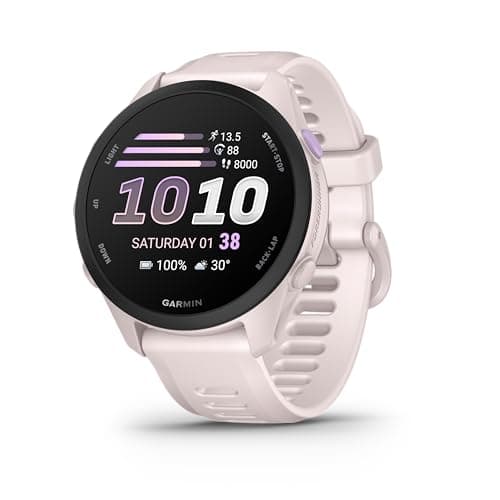
C25K to 10K: the simplest Garmin start
Garmin Forerunner 70
The simplest Garmin start: a 1.2-inch AMOLED touchscreen, Garmin running coach and up to 23 hours of GPS-only tracking. Set it to miles and never think about it again.
$249.99Amazon#ad · Price as of November 13, 2026 · Affiliate disclosure for the link to Garmin Forerunner 70
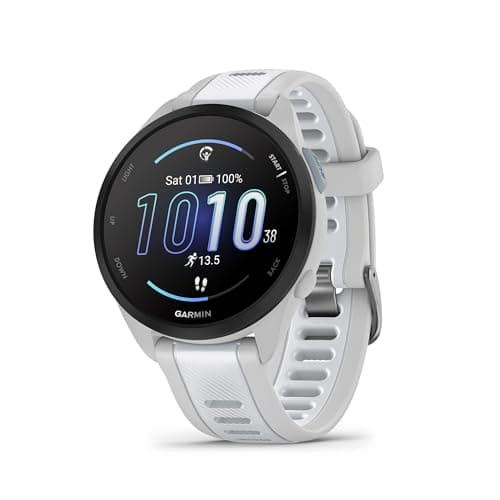
C25K to 10K: proven previous-gen pick
Garmin Forerunner 165
The step up for a 10K-to-half runner, with Garmin's training tools and a clear display for pace at a glance.
$197.00Amazon#ad · Price as of November 13, 2026 · Affiliate disclosure for the link to Garmin Forerunner 165
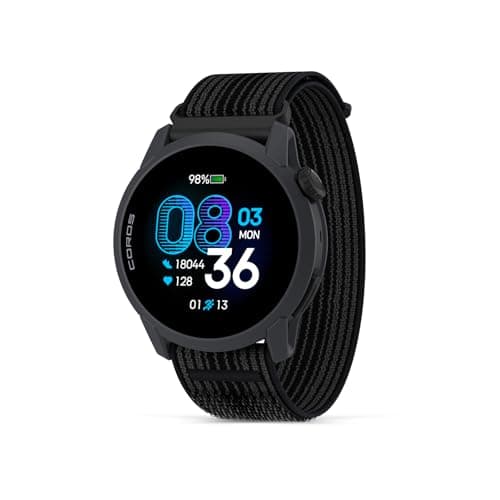
10K to marathon: long battery, light case
COROS Pace 4
Up to 41 hours with all systems on and 32 g on the nylon band — the one for anyone whose long runs have started to get genuinely long.
$249.00Amazon#ad · Price as of November 13, 2026 · Affiliate disclosure for the link to COROS Pace 4
If you are still choosing a distance to aim at, the NHS Couch to 5K plan ends at 5 km and Hal Higdon's Novice 10K takes it to 10. Our how long to train for a 10K guide has the timeline.
How we chose these
Researched, compared, scored for your level
We start from what a published training plan actually asks of a runner at your level, compare every model's published specs (stack height, drop, weight, plate, stability features, widths) against that job, and score each pick on a public rubric. Each spec links to where it came from, so you can shortlist in minutes and buy with the numbers in front of you.
Scores are our editorial judgments from that documented research, and rankings are earned on the rubric alone — placement is never for sale. The rubric and weights are on the How We Pick page.
Questions
Frequently asked
How many kilometers are in a mile?
Is a 5K 3 miles or 3.1 miles?
How do I convert my pace from kilometers to miles?
Should I train in miles or kilometers?
Why is a marathon 26.2 miles and not a round number?
Keep going
Related reading
Receipts
Sources
- NIST — Unit conversion (the international mile is exactly 1,609.344 m)
- World Athletics — Book of Rules, standard competition distances
- NHS — Get running with Couch to 5K
- Hal Higdon — Novice 10K training program
Every figure above is traceable. Specs come from the maker's own pages or the named reviewer's published measurements (linked above); level definitions come from published training plans; prices come from Amazon's own API and carry the date they were checked, so you buy on a current number. Read the full method.