Garmin Forerunner 165 vs 265: Which One Your Training Actually Needs
Two AMOLED Garmins with the same running coach and a real gap in the middle. The 265 adds training readiness, multi-band GPS and music storage in a bigger case; the 165 does the basics well. Every figure here comes from Garmin's own spec pages.
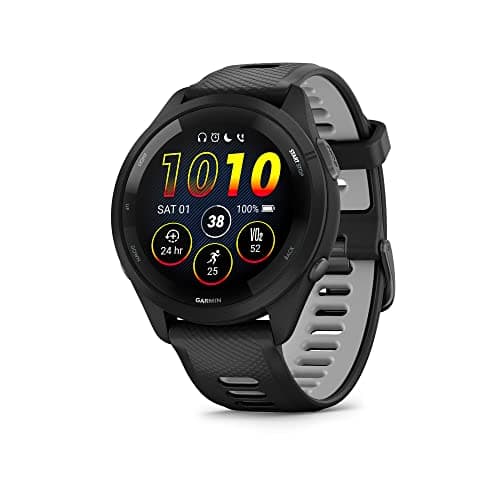
Training readiness, SatIQ multi-band GNSS and 8 GB of music storage, with up to 20 hours of GPS-only battery in a 46.1 mm case (or 41.7 mm as the 265S).
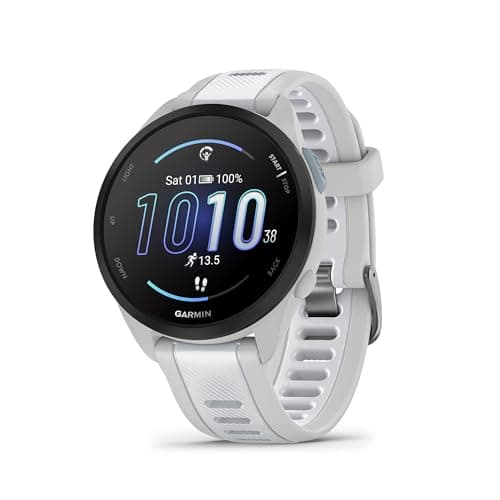
The same Garmin running coach, daily suggested workouts, HRV status and PacePro pacing in a smaller 43 mm, 39 g case, with up to 19 hours of GPS-only battery.
#ad · Price as of October 11, 2026 · Affiliate disclosure for the link to Garmin Forerunner 165
Why these two get compared
They look almost identical: both are AMOLED touchscreen Forerunners, both run Garmin's running coach, and both last long enough for any road race. The 265 sits one tier up, which in Garmin's line-up means more training analytics, better satellite reception and music. Whether that tier is worth it depends entirely on whether your training plan generates data worth analyzing.
Both columns are Garmin's own published specifications, each value linked to its Garmin product page.
The four differences that matter, in order:
Training analytics. The 265 lists training readiness and improved training status. The 165 lists HRV status and daily suggested workouts but not training readiness — Garmin reserves that for the 265 and above.
Satellite reception. The 265 has SatIQ multi-band GNSS; the 165 runs GPS-only or all-systems without multi-band.
Music. The 265 has 8 GB of onboard storage. The 165 as listed does not — that is the Forerunner 170 Music's job in the current range.
Case and weight. The 165 is 43 x 43 x 11.6 mm and 39 g. The 265 is 46.1 x 46.1 x 12.9 mm and 47 g, with a 41.7 mm, 39 g version sold as the 265S.
Battery is almost a wash: Garmin lists up to 19 hours of GPS-only tracking on the 165 and up to 20 on the 265. Both cover a marathon several times over.
What both watches do identically
Garmin running coach and daily suggested workouts — the adaptive plan feature that is the main reason to buy a Garmin at all.
HRV status for overnight recovery tracking.
Running power and a race predictor.
PacePro pacing strategies, which is the feature that helps most on race day.
A 1.2–1.3-inch AMOLED touchscreen with an optional always-on mode.
If your shortlist is really "a Garmin that coaches me", both do it, and the cheaper one does it in a smaller case.
Training readiness: the real upgrade
This is the feature the 265 is actually sold on. Training readiness combines sleep, recovery time, HRV and recent load into a single morning score suggesting how hard you can train today. It is only useful when there is a decision to make — which is to say when your plan has both hard and easy days in it. Working through the NHS Couch to 5K plan, the answer is always "do today's session": three runs a week with walk breaks does not need an algorithm. By the time you are in Higdon's Novice 1 Marathon, with a 20-mile long run and back-to-back quality days, the score starts earning its keep.
Multi-band GPS, and when it matters
Multi-band (dual-frequency) reception uses two satellite frequencies to cut the reflection errors that cause drift between tall buildings and under tree cover. It matters if you run in a dense city or wooded trails and care about accurate splits; it is close to irrelevant on an open suburban loop. Note the trade-off Garmin publishes: on the 265, all-systems with multi-band enabled cuts battery from up to 20 hours down to up to 14. If you need accuracy and a long battery, that is an argument for looking at COROS instead — see Garmin vs COROS.
Case size and music
Do not skip this part. The 265 is 46.1 mm across and 47 g; the 165 is 43 mm and 39 g. On a smaller wrist that is a noticeable difference, and the 265S exists precisely for it at 41.7 mm and 39 g. Garmin lists the same feature set on the 265S as on the 265, so the small case is not a downgrade — it just has less room for battery reserve.
On music: the 265 stores 8 GB, which means running without your phone. The 165 as listed does not include music storage; if that is the deciding feature at the lower tier, the Forerunner 170 Music is the one to look at, and our best running watch with music page covers the whole category.
Which one for your distance
Couch to 5K. Forerunner 165, comfortably. You want GPS, a timer and the coach; the NHS plan generates no data that needs a readiness score. Our beginner watch roundup has cheaper options again.
10K. Forerunner 165. Higdon's Novice 10K peaks at a 5-mile long run and one quality session a week.
Half marathon. Either. The 265 starts to pay off if your plan has structured tempo work, as Novice 1 Half builds toward 10 miles.
Marathon. Forerunner 265, or the 265S for a smaller wrist. Training readiness plus multi-band GPS plus music is the right package for a 16-week block. See best GPS watch for marathon training.
Two watches to consider instead
Both of these are real alternatives rather than filler. The COROS Pace 4 lists up to 41 hours of all-systems GPS and up to 31 hours with dual-frequency enabled, against the 265's 14 hours with multi-band on — a different order of magnitude, in a 40 g case with offline maps. The Garmin Forerunner 170 Music sits between these two: the 165's size with training readiness, music and Wi-Fi added. Both appear in best running watch under $200 and Garmin vs COROS.
In detail
The contenders, in full
Buy this if you are training for a half or marathon
Garmin Forerunner 265
C25K10KHALFMARATHON
8.3 /10
Training readiness, SatIQ multi-band GNSS and 8 GB of music storage, with up to 20 hours of GPS-only battery in a 46.1 mm case (or 41.7 mm as the 265S).
#ad · Price as of October 11, 2026 · Affiliate disclosure for the link to Garmin Forerunner 265
Buy this if you are building to 5K or 10K
Garmin Forerunner 165
C25K10KHALFMARATHON
7.9 /10
The same Garmin running coach, daily suggested workouts, HRV status and PacePro pacing in a smaller 43 mm, 39 g case, with up to 19 hours of GPS-only battery.
#ad · Price as of October 11, 2026 · Affiliate disclosure for the link to Garmin Forerunner 165
How we chose these
Researched, compared, scored for your level
We start from what a published training plan actually asks of a runner at your level, compare every model's published specs (stack height, drop, weight, plate, stability features, widths) against that job, and score each pick on a public rubric. Each spec links to where it came from, so you can shortlist in minutes and buy with the numbers in front of you.
Is the Garmin Forerunner 265 worth it over the 165?+
For half marathon and marathon training, yes: training readiness, SatIQ multi-band GNSS and 8 GB of music storage are the three real additions. For Couch to 5K or a first 10K, no — both watches run the same Garmin running coach and daily suggested workouts, and the 165 is smaller and lighter.
What is the battery difference between the Forerunner 165 and 265?+
Barely anything in GPS-only mode: Garmin lists up to 19 hours on the 165 and up to 20 on the 265. The gap opens when you enable multi-band on the 265, which drops it to up to 14 hours. In smartwatch mode the 265 lists up to 13 days against the 165's 11.
Does the Garmin Forerunner 165 have training readiness?+
No. Garmin lists HRV status, daily suggested workouts, running power, PacePro and a race predictor on the 165, but training readiness starts at the 265 in this part of the range. The Forerunner 170 Music is the smaller-case watch that does list it.
Does the Forerunner 165 play music?+
Not as listed. The 265 carries 8 GB of onboard music storage. If you want music in a smaller, cheaper Forerunner, the Forerunner 170 Music is the model to look at.
Is the Forerunner 265 too big for a small wrist?+
It is 46.1 x 46.1 x 12.9 mm and 47 g, against the 165's 43 x 43 x 11.6 mm and 39 g. Garmin sells the 265S at 41.7 mm and 39 g with the same feature set, which is the answer if you want the 265's features in a smaller case.
Every figure above is traceable. Specs come from the maker's own pages or the named reviewer's published measurements (linked above); level definitions come from published training plans; prices come from Amazon's own API and carry the date they were checked, so you buy on a current number. Read the full method.